




The Great Escape from City Skies
The primary driver behind this trend is a simple, pervasive problem: light pollution. For the vast majority of people living in and around cities, the night sky is a washed-out, hazy dome where only a few dozen of the brightest stars are visible. The glow
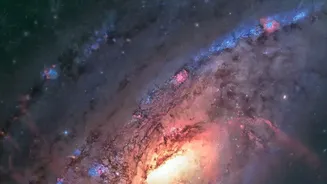
from streetlights, buildings, and advertising creates a phenomenon called 'skyglow', which dramatically reduces the contrast needed to see fainter celestial objects. This makes it nearly impossible to witness, let alone photograph, the awe-inspiring sight of the Milky Way, distant nebulae, or a dense field of stars. Frustrated by these limitations, photographers are increasingly seeking 'dark sky' locations, a quest that often leads them far from the urban jungle. This desire for natural darkness is becoming a major travel trend, as people look to experience a sky that has become a scarce commodity.
The Allure of Altitude
It’s not just about escaping horizontal light; it's also about getting above the atmospheric soup. High-altitude locations offer a distinct advantage because the air is thinner, drier, and contains fewer pollutants and dust particles. This means less atmospheric turbulence and haze to scatter light and distort images, resulting in sharper, clearer, and more vibrant cosmic photos. Destinations in India like Hanle and elsewhere in Ladakh, Spiti Valley, and parts of the Aravalli Range are becoming hotspots for this reason. Hanle, situated at an altitude of 4,500 metres, is even home to the Indian Astronomical Observatory and was designated India’s first official Dark Sky Reserve, offering some of the best stargazing conditions in Asia. At such elevations, you are literally above a significant portion of the Earth’s atmosphere, bringing you that much closer to the stars.
Gear, Guidance, and Social Glory
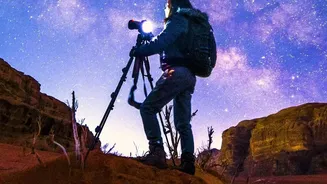
This trend is also fuelled by technology and community. The barrier to entry for quality astrophotography has dropped significantly. Modern mirrorless cameras and even high-end smartphones now possess the low-light capabilities needed to capture the night sky in stunning detail. This accessibility empowers a new generation of creators to experiment with long exposures and creative compositions, like silhouetting an ancient monastery against the Milky Way in Spiti. Furthermore, the rise of astro-tourism has led to guided workshops and stargazing tours in places like Ladakh and Spiti, where local experts help photographers find the best spots and dial in their settings. The ultimate prize is often a breathtaking image shared on social media, a digital trophy that showcases not just technical skill but also a spirit of adventure and a connection to something profound.
More Than Just a Photograph
While a stunning photo is the goal, the motivation often runs deeper. For many young travellers, this pursuit is a form of 'slow travel', an intentional move away from hectic itineraries toward more mindful, restorative experiences. It’s an antidote to the constant connectivity and demands of modern life. The process itself is meditative: the patience of waiting for the perfect moment under a silent, star-filled sky; the solitude found in remote landscapes; and the humbling feeling of contemplating the vastness of the universe. This journey offers a powerful connection to nature and a sense of awe that a city skyline simply cannot replicate. It’s an adventure that provides emotional and spiritual restoration, not just a picture for a feed.
The Challenges of the Chase
This celestial chase is not without its difficulties. High-altitude environments are demanding, both for the photographer and their equipment. Acclimatising to the thin air to avoid altitude sickness is crucial and requires time. Photographers must also contend with extreme cold, which can drain camera batteries rapidly, and the logistical challenge of carrying heavy gear to remote locations, sometimes requiring miles of hiking. Astrophotography demands immense patience; it can take hours to set up and capture the right shot, often in freezing temperatures. These challenges, however, are often seen as part of the appeal, adding a layer of grit and accomplishment to the final, hard-won image.