

More Than Just an Accessory
Before it became a staple of the 'balletcore' and 'coquette' aesthetics, the hair ribbon had a rich and varied history stretching back thousands of years. Ancient civilizations like the Sumerians, Egyptians, and Greeks all used ribbons to adorn their
hair, sometimes crafted from precious metals like gold to signify wealth and status. In many cultures, the color and style of a ribbon could communicate complex social cues, from a person's marital status to their family affiliation. For centuries, ribbons were not exclusively feminine. In 16th-century France, men wore a 'lovelock'—a long plait of hair draped over the heart and tied with a ribbon to show romantic devotion. Later, in the 17th century, the accessory became popular among noblewomen, famously sparked by a mistress of King Louis XIV who improvised a hairstyle with a ribbon from her dress. The simple act of tying back one's hair became a fashion statement that rippled through the French court and beyond.
The Ribbon's Modern Renaissance
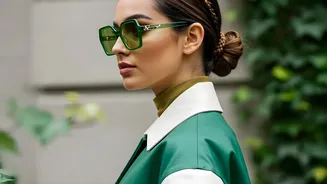
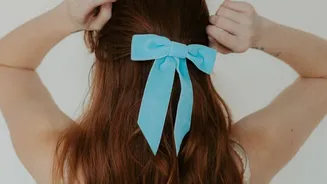
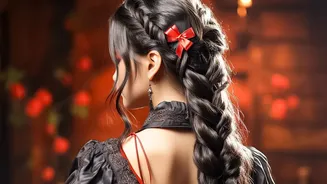
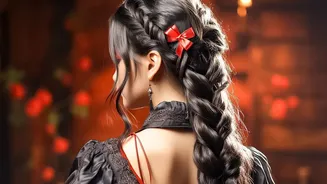
Today, the ribbon's resurgence is tied to a desire for soft, feminine aesthetics that feel both nostalgic and personal. Trends like balletcore embrace the grace and discipline of dance, with sleek buns and plaits often finished with a satin or velvet bow. The 'coquette' trend, meanwhile, focuses on a playful and romantic femininity, where ribbons are a key accessory. From runways to social media, a simple bow or woven ribbon adds a touch of deliberate charm. What makes the trend so enduring is its versatility. A ribbon can transform a simple braid from a practical style into a statement of personality. It offers a pop of color and texture without the permanence of dye, making it an accessible way for anyone to elevate their daily look.
The Classic Three-Strand Weave
This is the perfect entry point into ribbon braiding. The technique is simple and results in a beautiful, classic look. Start by securing your hair in a low ponytail. Fold your ribbon in half and loop it around the hair tie, so you have two ribbon tails. Now, divide your hair into three equal sections. Incorporate one ribbon tail into the left section and the other into the right section. The middle section will be just hair. As you perform a standard three-strand braid, the ribbon will automatically weave through, creating flashes of color. Secure the end with another elastic and, if you like, tie the remaining ribbon ends into a soft bow over the elastic.
An Elegant Fishtail Accent
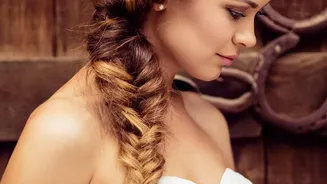
The fishtail braid has an intricate, almost herringbone-like appearance that looks stunning with a ribbon. To incorporate the ribbon, start the same way as a classic weave by securing it at the base of your ponytail. Divide your hair into two main sections. Now, allow the two ribbon tails to hang between them. As you perform the fishtail—taking a small piece from the outside of one section and crossing it over to the inside of the other—pick up one of the ribbon tails and cross it over with the piece of hair. Alternate which ribbon tail you use, or keep them together for a bolder stripe of color. This style looks particularly lovely when kept a little loose and messy, creating a soft, romantic feel perfect for a special occasion.
The 'Corset' Braid
For a more dramatic and eye-catching style, the corset braid is a beautiful choice. This look involves creating two parallel braids—often Dutch braids, which sit on top of the hair—and then lacing a long ribbon between them, much like a corset. Start by creating two neat Dutch braids on either side of your head. Once they are secured at the bottom, take a long ribbon and a tapestry needle or bobby pin. Starting at the top or bottom, thread the ribbon back and forth between the loops of the two braids, creating a crisscross pattern. This technique, seen on fashion runways, turns your hair into a true work of art. You can finish with a bow at either the top or bottom for a final flourish.
Tips for the Perfect Ribbon Braid
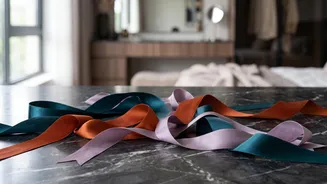
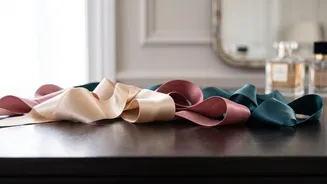
Choosing the right ribbon is key. Satin and silk ribbons glide easily through hair and offer a classic shine, while grosgrain ribbons provide more grip and structure. For a subtler look, choose a thin ribbon about a quarter-inch wide; for a statement, go wider. Always cut the ribbon a bit longer than your hair to leave room for tying a bow at the end. To start, securely anchor the ribbon at the base of your braid. You can tie it to the hair elastic of a ponytail or use a discreet bobby pin to hold it in place at the scalp. As you braid, try to keep the ribbon flat rather than letting it twist into a cord to ensure the color and texture remain visible.