A System Forged in Fire and Ice
The story begins about 4.6 billion years ago, when our solar system was nothing more than a vast, rotating cloud of gas and dust called a protoplanetary disk. At its center, the young Sun blazed, creating a steep temperature gradient across the disk. Closer
to the Sun, it was incredibly hot, while the outer reaches were profoundly cold. This temperature difference created a crucial dividing line that would forever shape the destinies of the planets: the frost line. Located roughly where the asteroid belt is today, the frost line was the boundary where temperatures dropped enough for volatile compounds like water, ammonia, and methane to freeze into solid ice particles.
The Inner Solar System: A Hot Zone
Inside the frost line, it was simply too hot for these ices to condense. They remained in a gaseous state. The only materials that could solidify into building blocks for planets were heavier elements like rock and metal. This is the fundamental reason why the inner planets—Mercury, Venus, Earth, and Mars—are small and dense terrestrial worlds. There just wasn’t as much solid material available to form them. This scarcity of solid, icy material also meant that there was no raw ingredient to form the kind of massive, brilliant ice rings we see around Saturn. Any potential ring material in this region would have been rocky, not icy.
The Blasting Power of a Young Sun
Even if the inner planets had managed to capture some rocky debris into a primitive ring, it would have faced another immense challenge: the Sun itself. A young star is an incredibly active and violent object. Our own Sun would have produced a powerful solar wind, a constant stream of charged particles flowing outwards at immense speeds. This wind would have acted like a sandblaster, effectively stripping away any loose gas, dust, or small particles orbiting the inner planets. Mars, for example, is thought to have lost much of its early atmosphere to this very process over billions of years. A fragile ring system would have stood little chance against this relentless solar pressure.
Where the Giants Built Their Empires
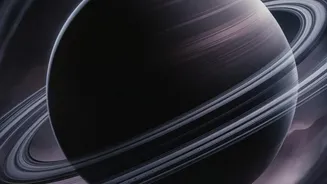
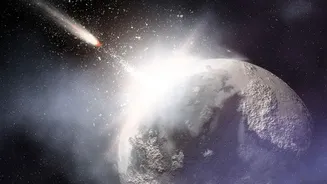
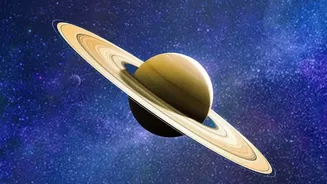
Beyond the frost line, the story was completely different. In this frigid outer realm, water and other compounds froze solid, dramatically increasing the amount of material available for planet formation. This abundance of ice allowed planetary cores to grow much larger, much faster. These massive cores then had enough gravitational pull to capture the vast amounts of hydrogen and helium gas that dominated the outer disk. This is how Jupiter, Saturn, Uranus, and Neptune became the gas and ice giants we know today. Their immense gravity and the sheer quantity of available icy debris gave them everything they needed to form and sustain extensive ring systems. Most planetary rings, like Saturn's, are thought to be relatively young, formed from the shattered remains of moons or comets that strayed too close and were torn apart by the planet's gravity.