





Beyond the Launchpad: A Data Revolution
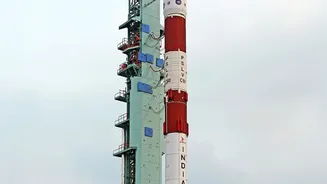
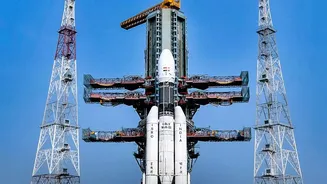
For decades, the Indian Space Research Organisation (ISRO) has made the nation proud with its cost-effective and reliable launch capabilities. Now, the focus is shifting from merely placing satellites in orbit to transforming them into intelligent, decision-making
hubs. The sheer volume of data beamed back by Earth observation, weather, and communication satellites presents a bottleneck. Traditionally, massive datasets are sent to Earth for processing, a time-consuming and bandwidth-intensive process. This is where advanced computing—encompassing Artificial Intelligence (AI), Machine Learning (ML), and high-performance computing (HPC)—steps in to create a paradigm shift. The goal is no longer just to collect data, but to generate real-time, actionable intelligence directly from space.
The Rise of Onboard Intelligence
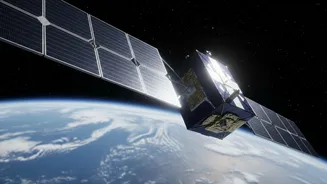
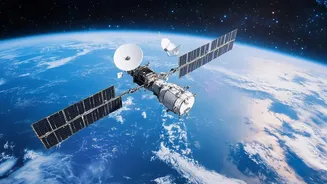
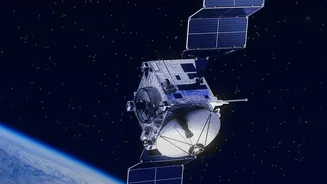
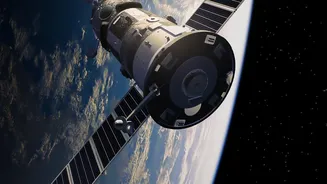
The next generation of Indian satellites will be fundamentally different. Instead of being passive collectors, they will function as powerful computers in orbit. This concept, known as edge computing, allows satellites to process data onboard. An AI algorithm on a satellite could, for example, sift through thousands of images of farmland, identify early signs of crop distress, and only transmit that critical, analysed insight back to Earth. This dramatically speeds up decision-making for farmers, disaster management teams, and military commanders. ISRO has already begun integrating AI into its missions for tasks like autonomous navigation and health monitoring of spacecraft. This move toward onboard intelligence is not just an upgrade; it's a complete re-imagining of what a satellite does.
The Private Sector Takes the Lead
While ISRO lays the strategic groundwork, India's burgeoning private space sector is driving innovation at a rapid pace. Startups are at the forefront of developing these 'orbital data centres'. For instance, companies like Pixxel and Sarvam AI are collaborating on 'Pathfinder', a satellite scheduled for a late 2026 launch that will carry data centre-grade GPUs to process complex AI models in orbit. Other startups like Digantara, Dhruva Space, and AgniKul Cosmos are also building critical components for this new space economy, from AI-powered sensors to orbital platforms. This private-public synergy, fostered by enabling bodies like IN-SPACe, is crucial for India to capture a larger share of the global space market, which is projected to exceed $1 trillion by 2032.
Impact on the Ground
The tangible benefits of this technological leap are vast and varied. For agriculture, it means more precise yield forecasts and optimized irrigation. In disaster management, it translates to faster, more accurate assessments of floods or cyclones, enabling quicker response and saving lives. For national security, it provides real-time surveillance and enhanced navigation capabilities immune to threats like signal spoofing. Even financial transactions could become more secure through the use of quantum technology for encryption, a field being explored for future satellite systems. This downstream impact—where space data fuels everyday applications—is where the true economic value lies, estimated to be nearly three-fourths of the entire space economy.
Challenges on the Final Frontier
The path to a fully intelligent satellite network is not without its hurdles. Operating high-performance computers in the harsh environment of space is a significant technical challenge. Issues like heat dissipation in a vacuum, protection from cosmic radiation, and ensuring a constant power supply must be solved. Furthermore, the economics of launching and maintaining these complex systems must be viable. Cybersecurity is another major concern; as satellites become more powerful and autonomous, they also become more attractive targets for cyberattacks. Addressing these challenges will require sustained investment, cutting-edge research, and robust regulatory frameworks.