
The Moon’s Frozen Treasure
For decades, scientists have theorised that water ice could exist on the Moon, hidden from the Sun's harsh radiation. The confirmation came from missions like India’s Chandrayaan-1 and NASA's Lunar Reconnaissance Orbiter (LRO). They found compelling evidence
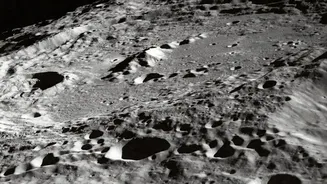
of water, especially at the lunar south pole. This region is home to "permanently shadowed regions" (PSRs) — craters and depressions that haven't seen direct sunlight in billions of years. With temperatures plummeting to nearly -250°C, these craters act as cosmic cold traps, preserving ice that was likely delivered by comets and asteroids long ago. Recent data from orbiters, including India's Chandrayaan-2, has moved beyond simple detection, using advanced radar to probe beneath the surface. This has provided strong evidence of significant subsurface ice deposits, protected by layers of lunar soil, known as regolith.
From Data to Detailed Maps
Knowing the ice is there is one thing; knowing exactly where and how much is another. This is where the latest data becomes revolutionary. By combining information from multiple missions, scientists are now creating the first high-resolution resource maps of another celestial body. This isn't just a general blob on a map; it's a detailed analysis showing the likely concentration and depth of the ice. Techniques borrowed from terrestrial mining, including AI-driven predictive analytics, are being used to process the orbital data. These models layer information on temperature, terrain slope, and subsurface readings to pinpoint the most promising locations for extraction. This turns a vast, unexplored region into a set of specific targets, drastically reducing the risk and guesswork for future missions. This process provides a blueprint, showing which areas have ice that is not only abundant but also accessible to robotic rovers and future mining equipment.
Why Water is Lunar Gold
The focus on water isn't just for thirsty astronauts. Water (H2O) is the key to what experts call in-situ resource utilisation (ISRU) — the ability to live off the land. It can be purified for drinking and growing crops, which is crucial for establishing any long-term human presence. More importantly, its constituent elements can be separated. The oxygen can be used for breathable air, and the hydrogen can be combined with oxygen to create powerful rocket propellant. This means the Moon could become a refuelling station for deeper space missions, including trips to Mars. Being able to manufacture fuel on the Moon would dramatically slash the cost and complexity of space exploration, as rockets would no longer need to carry all their return fuel from Earth. This potential has ignited a new commercial space race, with companies planning not just to explore, but to build a lunar economy.
The New Space Race Heats Up
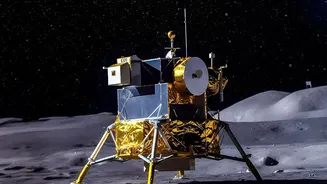
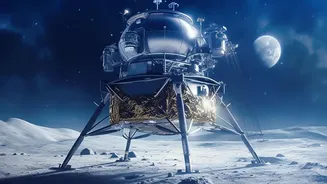
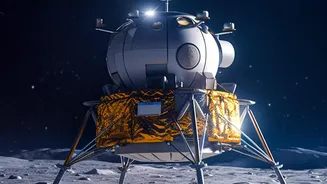
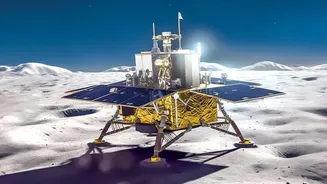
The promise of lunar resources has attracted a host of players. National space agencies like NASA, with its Artemis program, and China are planning long-term bases near the south pole. India’s successful Chandrayaan missions have cemented its position as a major player in lunar science. Alongside these government efforts, a new wave of private companies is emerging. Startups are developing technologies specifically for mining lunar resources, from water ice to other valuable materials like Helium-3, which could be used in future fusion reactors. NASA is actively encouraging this commercial growth through its Commercial Lunar Payload Services (CLPS) initiative, contracting private companies to deliver scientific instruments and, eventually, mining hardware to the Moon. These missions serve as crucial pathfinders, testing the technologies needed to drill for and analyze lunar ice.
From Map to Mining Rig
While the new maps provide a clear path forward, significant challenges remain. Operating in the extreme cold and darkness of the PSRs is technically demanding. Rovers will need robust power systems, likely a combination of solar power gathered from nearby sunlit peaks and advanced batteries to survive the long, frigid shadows. The process of extracting water from the frozen regolith and purifying it has been demonstrated in labs but needs to be proven at scale on the lunar surface. However, the existence of these critical maps marks a fundamental shift. It moves the concept of lunar mining from the realm of science fiction to a tangible engineering problem. The question is no longer if we can find the resources, but how we will build the machines to get them. These maps are the essential first step, guiding the rovers and landers that will lay the foundation for a permanent human foothold beyond Earth.