





The Grapefruit Effect: More Than Just a Sour Note
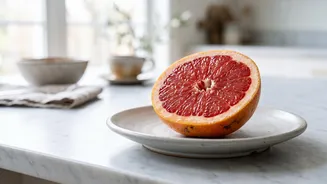
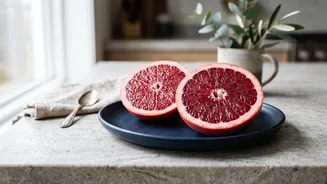
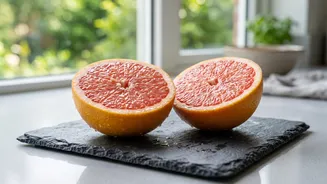
The primary issue lies with grapefruit and a few other citrus fruits like Seville oranges, pomelos, and tangelos. These fruits contain natural chemical compounds called furanocoumarins. These compounds are not inherently harmful, but they interfere with a crucial
part of your body’s drug-processing system. When you swallow a pill, it doesn't all go directly into your bloodstream. Your body uses enzymes to break down, or metabolise, a portion of the medication. One of the most important enzymes for this job is CYP3A4, which is found in the walls of your small intestine. This enzyme acts like a gatekeeper, controlling how much of a drug gets absorbed.
How Juice Hijacks Your System
Furanocoumarins in grapefruit juice block the CYP3A4 enzyme from doing its job. Instead of metabolising the drug, the enzyme is inhibited. This means much more of the medication can pass from your gut into your bloodstream than the intended dose. The result is that a normal dose can effectively become an overdose. This isn't a minor increase; for some drugs, blood levels can rise dramatically, leading to a higher risk of serious side effects. For example, with certain cholesterol-lowering statins, mixing them with grapefruit juice can increase your risk of liver and muscle damage, which in severe cases, could lead to kidney failure. The effect is not brief; a single glass of grapefruit juice can impact the enzyme for up to three days, so simply spacing out your medication and juice won't solve the problem.
What About Orange and Apple Juice?
While grapefruit juice is the main culprit for blocking drug metabolism, orange and apple juices can cause a different kind of problem. Instead of increasing drug levels, these juices can sometimes decrease them. They contain compounds that can block proteins known as drug transporters, which are responsible for helping move certain drugs into your body's cells for absorption. By blocking these transporters, less of the drug gets into your blood, making it less effective. The allergy medication fexofenadine (Allegra) is a well-known example; its effectiveness can be significantly reduced by orange, apple, and grapefruit juice. For this reason, many drug labels specifically advise taking the medication only with water.
Common Medications You Shouldn't Mix
The list of medications that interact with grapefruit is long and includes many common prescriptions. It is crucial to read your medication's warning label and consult a professional, but some key categories include: - Some statins for lowering cholesterol, such as atorvastatin (Lipitor) and simvastatin (Zocor).- Certain blood pressure medications, particularly calcium channel blockers like nifedipine (Procardia).- Some anti-anxiety medications, like buspirone.- Organ transplant rejection drugs, such as cyclosporine.- Some drugs for abnormal heart rhythms, like amiodarone.- Certain antihistamines, like fexofenadine (Allegra), which can be made less effective.
Staying Safe With Your Treatment
Understanding these interactions is key to ensuring your treatment is both safe and effective. The effects can vary widely from person to person because the amount of the CYP3A4 enzyme in the gut is different for everyone. This makes the interaction unpredictable. The safest rule of thumb is to take all medications with a plain glass of water. Before starting any new prescription, make it a habit to ask your doctor or pharmacist specifically about food and drink interactions. Always read the patient information leaflet that comes with your medication, as it will list any known interactions, including those with grapefruit or other juices. Never assume that because a fruit is healthy, it is automatically safe to consume with your medicine.