





The Basics: What is MDR?
For years, the Unified Payments Interface (UPI) revolutionised digital payments in India, largely because it was free for both users and merchants. However, to ensure the long-term financial health of the payment ecosystem, the National Payments Corporation
of India (NPCI) has introduced a Merchant Discount Rate (MDR). MDR is a processing fee that merchants pay to banks and payment service providers for accepting digital payments. Crucially, for consumers, making UPI payments remains completely free; this new charge is borne by the merchant. The government has explicitly advised banks to ensure merchants do not pass this cost on to customers.
The General Rule for Merchant Payments
The new framework, effective October 15, 2026, sets a standard rule for most person-to-merchant (P2M) transactions. Any UPI payment above ₹2,000 will attract an MDR of 0.4% of the transaction value. For example, a payment of ₹3,000 would incur a ₹12 fee for the merchant. To protect businesses from excessive fees on very large transactions, this charge is capped at a maximum of ₹300. This means any payment of ₹75,000 or more will have a flat ₹300 MDR. Importantly, all merchant transactions up to ₹2,000 remain free of any MDR, as do all person-to-person transfers between individuals, regardless of the amount.
The Special Treatment for Fuel Payments
Fuel retailing is considered a low-margin sector where a percentage-based fee could significantly impact operators. Recognising this, the new rules treat fuel payments differently. For UPI transactions above ₹2,000 at petrol pumps, a flat MDR of ₹5 will be applied, instead of the 0.4% rate. This fixed fee protects merchants from rising costs on larger fuel purchases, such as a full tank refill. For any fuel payment of ₹2,000 or less, the MDR remains zero, ensuring that smaller, everyday refuelling costs merchants nothing to process via UPI.
Railways and Utilities: A Flat Fee Approach
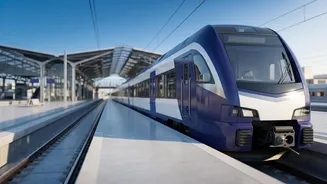
Similar to fuel, other essential services like railway ticket bookings and utility bill payments (such as electricity and water) also fall under a special, concessional rate. When you pay for a railway ticket or a utility bill over ₹2,000 using UPI, the merchant will be charged a flat MDR of ₹5. This flat-rate model is designed to ensure cost stability for critical public services and prevent digital payment processing fees from becoming a burden in these key sectors. This encourages continued digital payment adoption for essential services without levying a variable, and potentially high, fee on the service providers.
Why These Categories Are Different
The differential treatment for fuel, rail, and utilities stems from a strategic decision to balance the sustainability of the UPI ecosystem with the need to keep costs low in essential and thin-margin industries. A percentage-based fee on a high-value railway ticket or a large utility bill could be substantial. The flat ₹5 fee provides cost predictability for merchants in these sectors. This policy acknowledges that a one-size-fits-all approach to MDR wouldn't work across India's diverse economy. By creating special categories, the NPCI aims to support the financial viability of payment processors without discouraging digital payments in sectors critical to the public.