

The Sun's Volatile Power
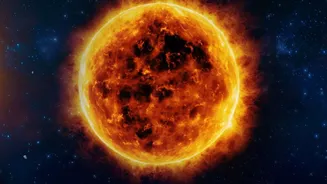
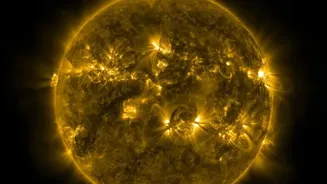
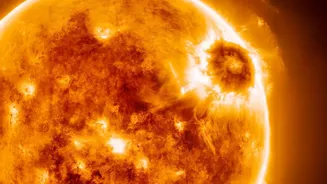
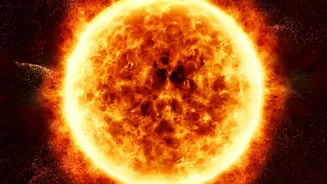
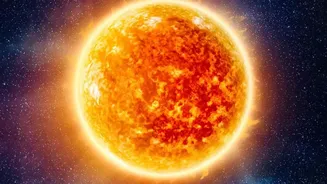
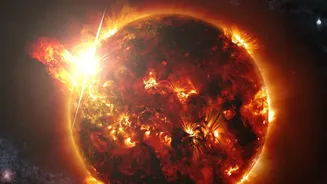
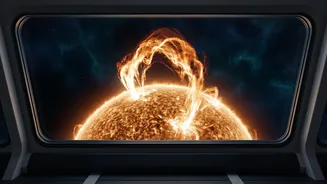
Our Sun isn't just a benign source of light and warmth. It's a dynamic star that occasionally unleashes massive eruptions of energy and matter. The most significant of these are coronal mass ejections (CMEs), which are gigantic clouds of charged particles
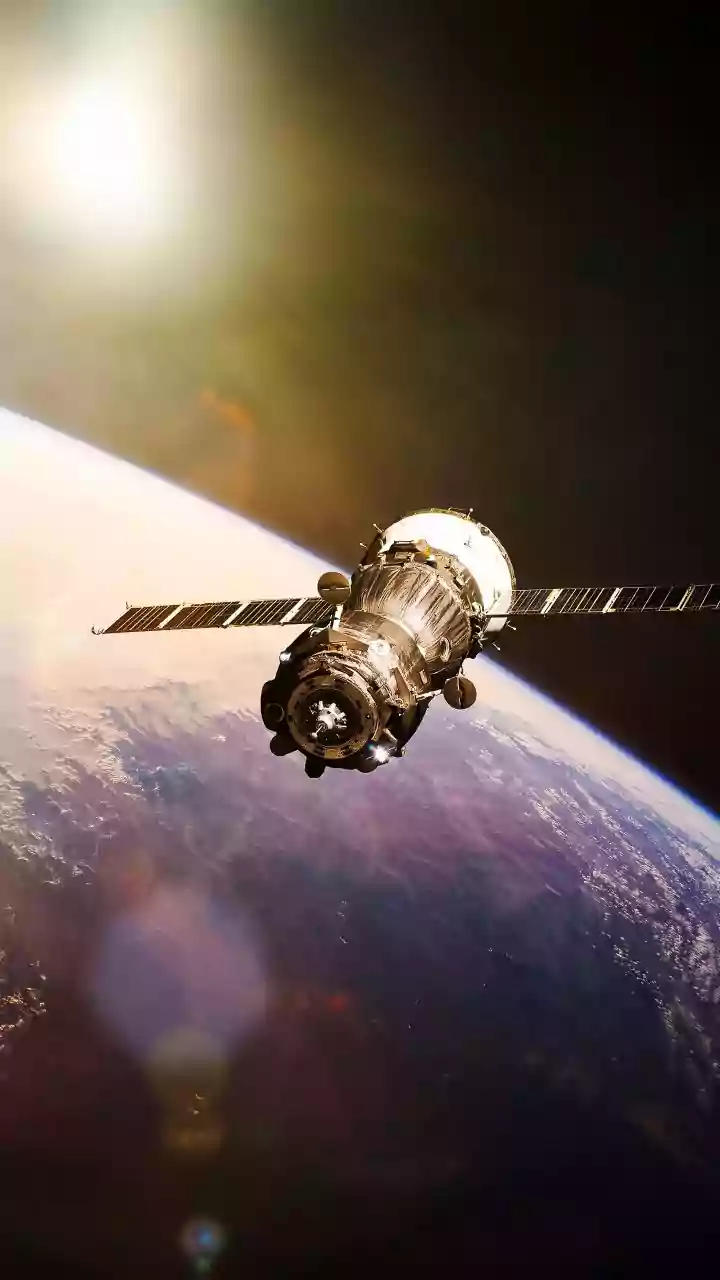
and magnetic fields hurled into space. While many miss our planet, those that do hit can cause a geomagnetic storm by interacting with Earth's magnetic field. The consequences aren't just pretty auroras. A powerful storm could induce currents in our power grids, leading to widespread blackouts, disrupt radio communications, damage crucial satellites that we rely on for GPS and communication, and even pose a risk to astronauts in space.
The Old Challenge of Space Weather Forecasting
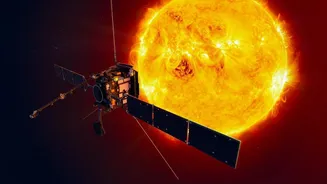
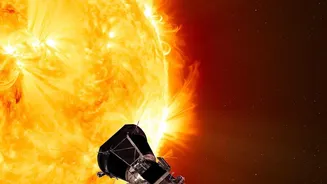
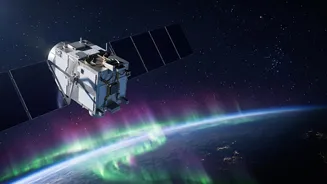
For years, predicting the impact of a CME has been a major challenge. Scientists can see a CME leave the Sun, and they know it will take one to four days to reach Earth. However, knowing which ones will cause a significant geomagnetic disturbance and exactly where the impact will be most severe has been difficult. Satellites like the Deep Space Climate Observatory (DSCOVR) sit between the Sun and Earth, monitoring the solar wind for changes. This provides some warning, but previous models often lacked the speed and location-specific accuracy needed for grid operators and satellite controllers to take decisive action. Global predictions were not timely, and local predictions were not comprehensive enough.
Enter DAGGER: A New AI Watchdog
This is where a new AI model called DAGGER comes in. The name stands for Deep Learning Geomagnetic Perturbation, and it represents a breakthrough in space weather forecasting. Developed by an international team at the Frontier Development Lab in partnership with NASA, DAGGER uses artificial intelligence to analyze real-time data from spacecraft that measure the solar wind. Through a process called deep learning, the AI has been trained to find the subtle connections between solar wind conditions and the resulting geomagnetic disturbances on Earth. This allows it to make rapid and accurate predictions for the entire globe.
The Critical 30-Minute Warning
The most significant advantage of the DAGGER model is its ability to predict where a solar storm will strike anywhere on Earth with 30 minutes of advance warning. While half an hour might not sound like much, it's a game-changer for infrastructure management. In that window, power grid operators can take steps to stabilize their networks and prevent catastrophic damage to transformers, which could avert prolonged blackouts. Satellite operators can put their spacecraft into a protective safe mode, and airlines can adjust routes to avoid communication dropouts and radiation exposure at high altitudes. This AI acts like a planetary tornado siren, giving decision-makers just enough time to brace for impact and minimize damage.
A Future Shielded from the Sun
DAGGER has been successfully tested against past solar storms from 2011 and 2015, proving it can accurately forecast their worldwide impacts. The model can produce a new prediction in less than a second and updates its forecast every minute, providing a constant stream of information. As our reliance on technology grows, so does our vulnerability to space weather. With the Sun currently in an active phase of its 11-year cycle, tools like DAGGER are more crucial than ever. It’s a vital step towards creating a robust global defense system against the Sun's powerful and unpredictable outbursts, ensuring that our interconnected society remains resilient.