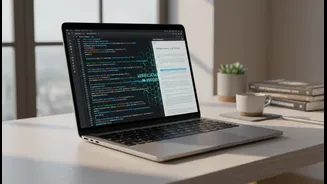









Your New AI Study Partner
Not long ago, getting feedback on a paper meant waiting for a professor’s office hours or relying on a friend. Today, students have access to sophisticated AI writing assistants that can provide instant feedback. Tools like Grammarly, Paperpal, and even
broader platforms like ChatGPT can act as a tireless reviewer. These are not just advanced spell-checkers; they are designed to analyse grammar, style, tone, and clarity. By pasting a draft into one of these platforms, a student can get suggestions on everything from sentence structure to the overall flow of their argument, acting as a preliminary check before human review.
More Than Just Grammar
The real power of these AI tools lies beyond simple error correction. They can help students become better writers by explaining the 'why' behind their suggestions. For instance, a tool might flag a sentence as wordy and offer a more concise alternative, helping the user learn to self-edit more effectively. Advanced features in tools like Paperpal or QuillBot can assist with paraphrasing to avoid repetition, summarising long texts for better comprehension, and even checking for an appropriate academic tone. Some platforms can create a reverse outline of your draft, which can be invaluable for spotting organisational weaknesses in your argument. This level of feedback helps students think critically about their own writing habits and structure.
The Promise: Efficiency and Learning
For students juggling multiple deadlines, the biggest benefit is efficiency. An AI can review a draft in seconds, offering immediate points for improvement and saving valuable time. This quick turnaround allows for more cycles of revision, leading to a more polished final product. Furthermore, these tools can act as a personal tutor. By analysing AI-driven suggestions, students can improve their command of language and argumentation. For non-native English speakers, these tools can be particularly helpful in improving syntax and mastering academic phrasing, levelling the playing field. The goal is to use AI to augment learning, not bypass it.
The Perils: Inaccuracy and Over-Reliance
However, these tools come with significant risks. A primary concern is the potential for AI 'hallucinations'—where the tool generates false information, including fake data or non-existent references, that looks authentic. Students are ultimately responsible for every claim in their paper, and blindly trusting AI output can seriously damage academic credibility. Another danger is over-reliance. If a student uses AI to do all the heavy lifting, their own critical thinking and writing skills may atrophy. The generated text can often sound generic, lacking a unique voice and critical perspective, which are hallmarks of strong academic work.
Navigating the Ethics of AI
Academic integrity is the most critical consideration. Using AI to generate an entire essay is a clear violation of ethical standards. The acceptable use of AI falls into the category of a support tool—for brainstorming, editing, and feedback. In India, while many universities are still developing formal policies, the University Grants Commission (UGC) has advised that AI can be used to assist research but not replace the scholar's intellectual contribution. The prevailing guidance is transparency: students should disclose how they've used AI tools. The safest approach is to use AI for language improvement and idea organisation, but to ensure the core argument and analysis remain entirely your own.
How to Use AI Reviewers Smartly
To get the most out of these tools without compromising your integrity, treat the AI as a collaborator, not a creator. Start by writing your own draft first. Then, use the AI to identify specific weaknesses. Ask it targeted questions like, "Is my main argument clear in this paragraph?" or, "Suggest three ways to rephrase this complex sentence." Always critically evaluate the suggestions. Does the new phrasing change your meaning? Is the suggested source credible? Crucially, upload your draft along with your professor's grading rubric and ask the AI to evaluate your work against each specific criterion. This turns a generic grammar check into a targeted review focused on what truly matters for your grade.