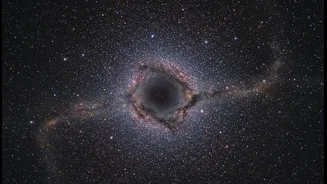




A Glimpse of a Cosmic Ghost
Billions of years from now, our own Sun will exhaust its fuel. It will swell into a red giant, a colossal star that will engulf Mercury, Venus, and possibly Earth itself. After this destructive phase, all that will remain is a white dwarf—a dense, hot,
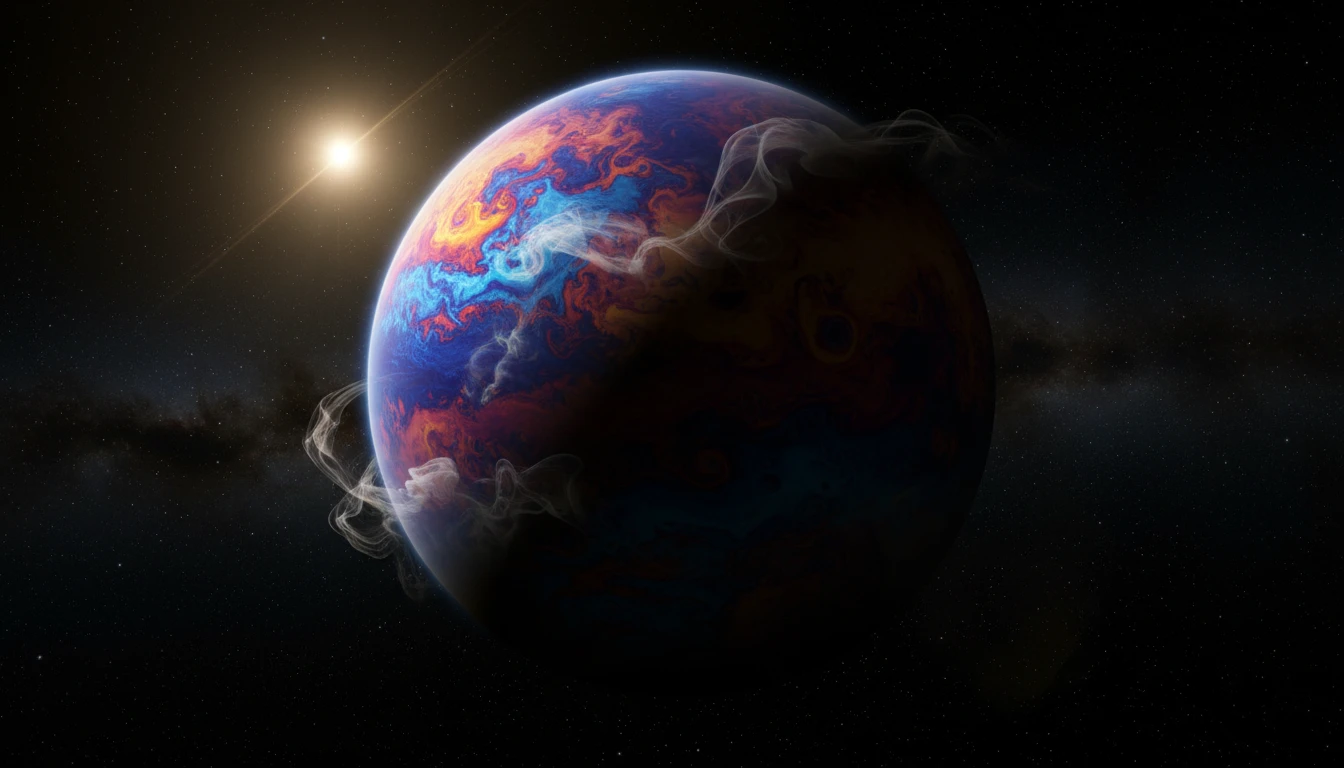
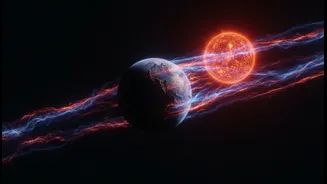
Earth-sized ember. This is the standard, accepted fate for many star systems. Yet, the discovery of a Jupiter-sized planet, named WD 1856 b, orbiting a white dwarf has thrown a wrench in that cosmic script. By all accounts, this planet should not exist. It circles its dead star at a distance 50 times closer than Earth orbits the Sun, a zone that should have been vaporized during the star's red giant phase. Its very presence poses a profound question: how did it survive?
Unraveling a Survival Story
The puzzle of WD 1856 b's existence has captivated astronomers. If it had always been in its current, blisteringly close orbit—whipping around its star every 34 hours—it would have been consumed. The latest observations from the James Webb Space Telescope (JWST) have provided the first crucial clues. By analyzing the planet's atmosphere, scientists found something unexpected: the planet is much warmer than the faint light of the white dwarf can explain. Its temperature sits around 126 degrees Celsius, suggesting it was heated up somehow. This residual warmth points to a dramatic past. The leading theory is that the planet didn't endure the red giant phase up close. Instead, it likely spent that violent period in a much wider, safer orbit before migrating inward over billions of years, long after the danger had passed.
A New Chapter for Astronomy
This discovery is more than just a cosmic curiosity; it marks the first time scientists have detected and analyzed the atmosphere of a planet orbiting a dead star. The JWST detected the chemical fingerprints of methane and small cloud particles, giving us an unprecedented look at the chemistry of a post-apocalyptic world. This finding fundamentally changes how astronomers view the end-of-life stages for planetary systems. It suggests that even after a star dies, its system can have a dynamic and lively second act. Planets can not only survive but also dramatically reshuffle their positions. This opens up a new frontier in the search for habitable worlds, suggesting that even the stellar graveyards of the universe might host planets with the potential for life to re-emerge.
A Window Into Our Own Future
While Earth and the inner planets are unlikely to survive our Sun's red giant phase, the story of WD 1856 b offers a potential preview of what might happen to gas giants like Jupiter and Saturn. They too could survive, their orbits reshaped by the Sun's transformation into a white dwarf. Studying this distant survivor is, in a way, like using a time machine to look billions of years into our own solar system's future. It proves that stellar death is not the final word. As one researcher noted, this discovery shows that some planets experience a vibrant future long after their star has died, a testament to the resilience of worlds in a constantly changing universe.