




A Planet Under a Watchful Eye
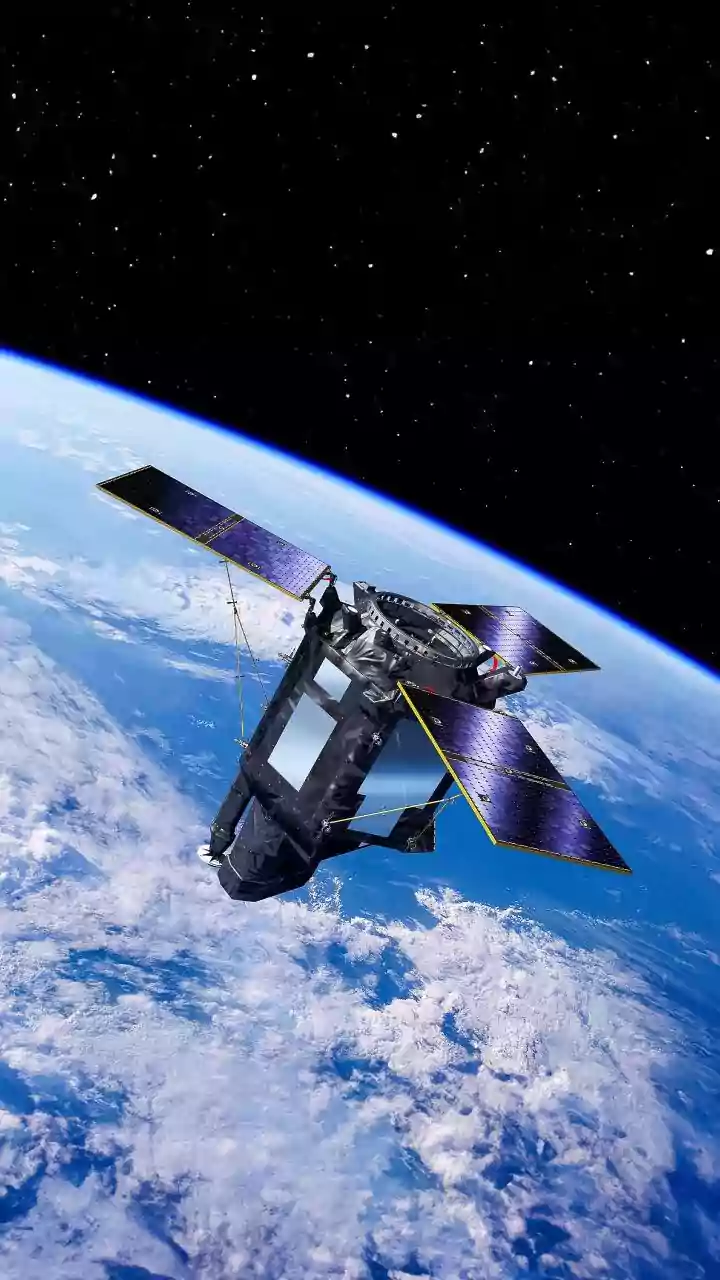
For decades, we have relied on a fleet of satellites that continuously monitor our world. These orbital observers provide a constant stream of data, allowing scientists to track changes with incredible precision. They can measure everything from the exact
edge of a forest and the height of a glacier to the temperature of the ocean's surface. This technology has moved our understanding of climate change from theory to established fact, giving us a global snapshot of processes that were once invisible. This data allows us to read the story of our planet in real-time, connecting the dots between human actions and environmental consequences.
The Tale of the Vanishing Forests
Forests are the lungs of our planet, but satellite images reveal vast areas where they are shrinking. Deforestation, particularly in tropical rainforests like the Amazon and in Southeast Asia, is one of the most visible scars on the Earth's surface. Primarily driven by the clearing of land for agriculture and logging, this loss has a direct impact on climate. When forests are burned or cleared, they release massive amounts of stored carbon into the atmosphere, accelerating the greenhouse effect. Deforestation accounts for a significant portion of global greenhouse gas emissions, disrupting ecosystems and reducing the planet's capacity to absorb carbon dioxide.
India's Concrete Creeper and Growing Cities
Another story written on the land is that of urban sprawl, a phenomenon rapidly reshaping countries like India. As cities such as Bengaluru, Pune, and Hyderabad expand outwards, they consume fertile agricultural land, forests, and wetlands. This unplanned expansion is not just about new buildings; it leads to a host of environmental issues, including habitat fragmentation, increased pollution, and the 'urban heat island' effect, where cities become significantly warmer than their rural surroundings. The loss of green cover reduces the land's ability to absorb carbon, while the conversion of farmland threatens long-term food security.
The Cryosphere's Urgent Warning
The frozen parts of our world, known as the cryosphere, are sending one of the most urgent signals of climate change. For India and its neighbours, the health of the Himalayan glaciers is critical. These 'Water Towers of Asia' provide freshwater for nearly two billion people. Recent reports indicate these glaciers are melting at an accelerating rate, 65% faster than a decade ago. This melt is driven by rising global temperatures and compounded by regional factors like black carbon deposits from industry and brick kilns. The consequences include an increased risk of glacial lake outburst floods, and long-term threats to water security for millions downstream.
Coastlines Under Constant Pressure
Global sea levels are rising due to the thermal expansion of warmer ocean water and meltwater from glaciers and ice sheets. For a country with a 7,500 km coastline like India, this is not an abstract threat. States like West Bengal, Kerala, and Tamil Nadu are experiencing significant coastal erosion. This process is intensified by human activities like the destruction of mangroves, sand mining, and unplanned construction, which remove natural buffers that protect the coast. The result is the loss of land, homes, and livelihoods, along with the intrusion of saltwater into freshwater sources, posing a direct threat to coastal communities.