





A Heritage Woven from Nature
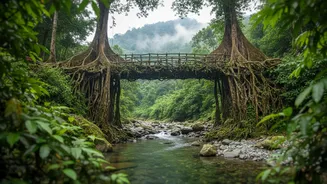
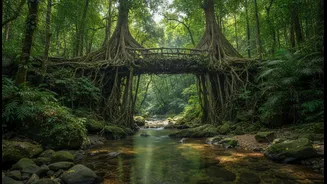
Deep in Meghalaya’s rain-soaked forests, the Khasi and Jaintia communities have practiced a remarkable form of bio-engineering for centuries. They don't build bridges; they grow them. Known locally as Jingkieng Jri, these living root bridges are patiently
guided from the aerial roots of the rubber fig tree (Ficus elastica). Over decades, these roots are woven together, strengthening over time to form vital crossings over powerful monsoon-fed rivers. These structures are more than just infrastructure; they are a living testament to a philosophy of coexistence with nature, connecting over 75 remote villages and embodying generations of ecological wisdom. This unique heritage has been nominated by India for UNESCO World Heritage status, highlighting its global significance.
Threats to a Living Legacy
Despite their resilience, the living root bridges face a host of modern dangers. The lure of convenient, quick-to-build concrete and steel structures has led to many root bridges being abandoned or neglected. As community interest fades, so does the intergenerational knowledge required to maintain them. Furthermore, the very popularity of the bridges poses a risk. Unregulated tourism can lead to soil compaction around the roots, damage from foot traffic, and the construction of concrete additions that harm the trees. These pressures, combined with natural calamities, have put the future of this unique architectural tradition in a precarious position.
The Community-Led Conservation Model
In response to these threats, a powerful new conservation model is taking root. Rather than relying on outside intervention, local communities are taking charge of their heritage. The core idea is to transform tourism from a potential threat into a funding engine for preservation. This is where the concept of a sustainable funding circle comes into play. Through community-managed cooperatives, revenue generated from tourism—such as modest entry fees, guided tours, and homestays—is pooled directly back into the community. A study found that tourists were willing to pay an average of ₹154 per visit, significantly more than the nominal fees currently charged, showing a clear potential for this model. This creates a self-sustaining financial loop dedicated to protecting the bridges.
How the Funding Circles Work in Practice
This community-led approach is being formalized through organizations like the Syrwet U Barim Mariang Jingkieng Jri Cooperative Federation Ltd., which unites 46 cooperatives across more than 74 villages. The funds generated are managed collectively and used for critical conservation work. This includes repairing and maintaining the bridges, paying local 'guardians' who monitor the sites, restoring traditional footpaths, managing waste, and preventing soil erosion. The Meghalaya state government, through agencies like the Meghalaya Basin Development Authority (MBDA), has supported this model by empowering community institutions rather than imposing top-down structures. This partnership ensures that the people who know the landscape best are the ones leading its conservation.
Beyond the Bridges: Ripple Effects
The impact of this model extends far beyond the preservation of the bridges themselves. By creating sustainable livelihoods in tourism, it provides a powerful incentive for young people to remain in their villages instead of migrating to cities for work. It creates local jobs for nature guides, homestay owners, and artisans, directly benefiting the local economy. This system also fosters the preservation of invaluable traditional knowledge, as elders teach younger generations the intricate craft of guiding the roots. Ultimately, it offers tourists a more authentic and responsible experience, rooted in the community's deep connection to their land and heritage.