


Gaze into the Heart of the Milky Way
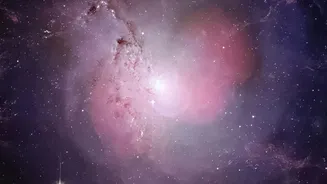
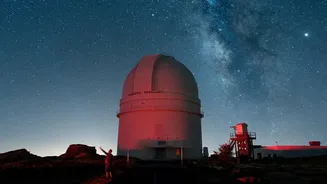
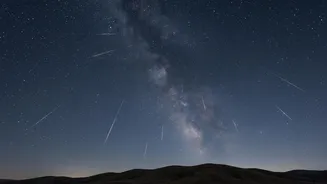
Late August provides a prime opportunity to view the magnificent core of our own galaxy, the Milky Way. As evening falls, look towards the southern horizon for the constellations Sagittarius and Scorpius. It is in this direction that the galaxy's heart
lies, a region dense with stars, gas, and dust. In a location away from city lights, this will appear as a luminous, milky band stretching majestically across the night sky. The post-monsoon clarity, especially after a recent rain, can make this sight exceptionally vivid, as the downpour washes dust particles from the atmosphere. For the best views, find a dark spot around two hours after sunset. The experience of seeing the galaxy's bright centre with your own eyes, appearing like a static, glowing cloud, is an unforgettable highlight of the late summer sky.
Catch the Fading Perseid Meteors
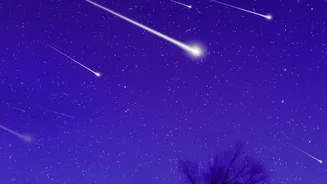
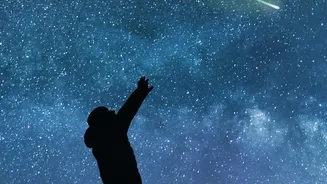
While the famous Perseid meteor shower had its spectacular peak around August 12-13, its activity continues through the end of the month and into early September. So, if you missed the main event, you still have a chance to spot some of these celestial stragglers. The Perseids are known for producing bright, fast meteors that often leave persistent, glowing trails. For your best chance, look towards the northeastern sky after midnight from a location with minimal light pollution. Although the rate of meteors will be much lower than during the peak, patience can be rewarded with a few last-minute 'shooting stars' from one of the year's most beloved showers.
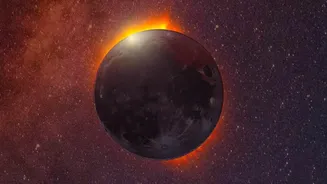
A Partial Lunar Eclipse to Close the Month
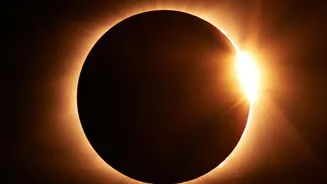
On the night of August 27-28, a partial lunar eclipse will occur. However, visibility for this event from India is not confirmed, as the primary viewing zones are listed as the Americas, Europe, and Africa. A partial lunar eclipse happens when the full moon passes partially into Earth's dark inner shadow, the umbra, causing a segment of the lunar surface to appear noticeably darkened. The greatest eclipse is predicted to occur at 4:14 AM UTC on August 28, which translates to 9:44 AM IST. Since this is during daylight hours in India, direct observation will not be possible. However, astronomy enthusiasts can still experience the event through live streams provided by space agencies like NASA.
Spot the Ringed Planet, Saturn
Saturn is a brilliant, non-twinkling golden point of light visible in the night sky throughout late August. The planet is currently in the constellation Cetus and is building towards its 'opposition' in early October, when it will be at its biggest and brightest for the year. Opposition is the point when Earth passes directly between the Sun and an outer planet. Even now, Saturn is an excellent target. It will be well-placed for viewing for most of the night, rising in the east around sunset and reaching its highest point near midnight. While its famous rings require a telescope to be seen, its steady, bright presence makes it an easy and rewarding find for naked-eye observers. You can find its largest moon, Titan, with a good pair of binoculars or a small telescope.
Navigate by the Summer Triangle
Dominating the sky high overhead during late August evenings is a prominent asterism known as the Summer Triangle. This is not a constellation itself, but rather a large, distinct shape formed by three of the brightest stars in the sky: Vega (in the constellation Lyra), Deneb (in Cygnus), and Altair (in Aquila). This trio is so bright that it can be seen even from light-polluted urban areas, making it a perfect landmark for novice stargazers. Once you locate the Summer Triangle, you can use it to navigate your way to other celestial sights. The thick band of the Milky Way runs right through it, with the constellation Cygnus nestled within its borders. It serves as a great starting point for any night of skywatching.