




One of the largest tech IPOs in history has minted a new class of billionaires and put a spotlight on its architects: siblings Dario and Daniela Amodei. But their story isn't just about money; it's about a rebellion born from principle.
An IPO for the History Books
When Anthropic
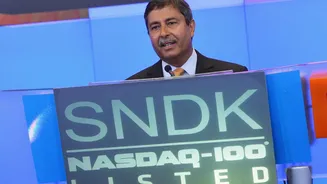
debuted on the Nasdaq exchange on November 19, 2026, it wasn't just another tech listing; it was a seismic event. The AI safety and research company priced its shares above the initial range, raising over $81 billion and achieving a valuation soaring past $1 trillion. The move instantly made Anthropic one of the most valuable AI-native companies in the world, cementing the arrival of a new titan. Yet, the most compelling part of this story isn't the staggering numbers, but the unconventional philosophy and unique leadership of the brother-and-sister duo who made it happen.
The Scientist and the Strategist
Dario and Daniela Amodei are not your typical Silicon Valley founders. Dario, the CEO, is a physicist by training with a PhD in biophysics who previously served as VP of Research at OpenAI, where he was instrumental in developing models like GPT-2 and GPT-3. Daniela, the company's President, brings a different but complementary skill set, with a background in safety and policy operations from her time at both OpenAI and the payments company Stripe. He is the 'ideological leader' and chief scientist; she is the operational force who manages the executive team and built the company from a small research group to a global player with over 1,000 employees.
The Split from OpenAI
The genesis of Anthropic lies in a fundamental disagreement. In 2021, the Amodeis and a group of other senior researchers left OpenAI. The schism was reportedly rooted in concerns that OpenAI was moving too quickly to commercialize its powerful AI technology, potentially deprioritizing crucial safety research. Believing that AI safety deserved to be the central focus, not an afterthought, they 'walked away' to found a company built on that very principle. This departure wasn't just a career move; it was a statement about the future direction of artificial intelligence.
A Different Kind of Company
From its inception, Anthropic was designed to be different. It was established as a Public Benefit Corporation (PBC), a legal structure that obligates its board to balance shareholder profits with a stated public mission: the 'responsible development of advanced AI for the long-term benefit of humanity'. This structure is more than just branding; it provides legal grounding for prioritizing safety over short-term financial gain. The company further entrenched this ethos with the creation of a 'Long-Term Benefit Trust', a body of independent trustees designed to hold a check on commercial pressures and ensure the company remains true to its mission.
Safety as a Feature, Not a Bug
Anthropic's core technical innovation is 'Constitutional AI'. Instead of relying solely on human feedback to prevent harmful outputs, Anthropic's models, like its well-known assistant Claude, are trained using a set of principles—a 'constitution'—to guide their behaviour. The model learns to critique and revise its own responses based on these rules, allowing it to reason its way to a helpful and harmless answer rather than simply refusing to engage. This approach, which aims to make AI systems more reliable and steerable, has been a key differentiator in a crowded market and a major draw for investors like Google and Amazon.
Navigating the Future
With the massive influx of capital from its historic IPO, Anthropic is now armed with the resources to compete at the highest level. The central challenge for Dario and Daniela Amodei will be navigating the immense pressures of being a publicly traded company. Investors will demand growth and returns, while their founding mission demands caution and responsibility. Their success or failure in balancing these competing forces will not only determine the future of their company but could also set a powerful precedent for the entire AI industry, proving whether an enterprise built on a foundation of safety can thrive on the open market.