





The Hidden Cost of a Daily Brew
Our collective love for coffee generates a staggering amount of organic waste. Every day, cafes and households across India discard tonnes of spent coffee grounds. Most of this heavy, wet waste ends up in city landfills. Out of sight, it seems harmless,
but the environmental impact is significant. When organic matter like coffee grounds is buried in a landfill, it decomposes without oxygen in a process called anaerobic decomposition. This process releases methane, a greenhouse gas that is far more potent than carbon dioxide in warming our planet. Studies have shown methane can be over 25 times more effective at trapping heat in the atmosphere over a 100-year period. Beyond methane, the decomposing grounds can also create an acidic liquid runoff, known as leachate, which has the potential to contaminate surrounding soil and groundwater.
A Resource in Disguise
Innovative urban farmers and environmental entrepreneurs are looking at this mountain of coffee waste and seeing not a problem, but a valuable resource. Spent coffee grounds are rich in nutrients like nitrogen, potassium, and phosphorus. Furthermore, the process of brewing coffee with hot water effectively pasteurizes the grounds, making them a relatively sterile medium, free from many competing moulds and bacteria. This unique combination of being nutrient-rich and pre-sterilized makes coffee grounds an almost perfect substrate, or growing medium, for a specific and valuable crop: gourmet mushrooms. This simple realisation is the cornerstone of a burgeoning urban farming movement that is turning a major city waste stream into a source of fresh, local food.
From Coffee Bar to Farm
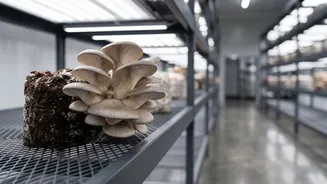
The process is a brilliant example of upcycling. Urban mushroom farms partner with local cafes, coffee chains, and offices to collect fresh coffee grounds that would otherwise be thrown away. These grounds are then mixed with a 'spawn'—essentially the seeds of the mushroom, which is the mycelium. The mixture is packed into special bags or containers and kept in a controlled environment with specific humidity and temperature levels. In just a few weeks, clusters of fresh oyster mushrooms begin to sprout directly from the coffee grounds. Because this type of farming doesn't require sunlight or large open fields, it can be done vertically in small, indoor spaces right in the heart of the city—think basements, warehouses, or even repurposed shipping containers.
Slashing Methane One Mushroom at a Time
This is where the reduction in carbon footprint becomes clear. The primary benefit is waste diversion. Every kilogram of coffee grounds rescued and used for mushroom cultivation is a kilogram that is not sent to a landfill to produce methane. By interrupting this pathway, the system directly prevents greenhouse gas emissions. The second major benefit comes from localization. By growing food within the city, these urban farms drastically reduce 'food miles'. The mushrooms can be delivered to local restaurants, markets, and consumers with minimal transportation, slashing the carbon emissions associated with long-haul logistics that are typical for our food supply chains. It's a double win: preventing landfill emissions and avoiding transport emissions.
Building a Truly Circular City
Coffee waste mushroom farming is a perfect model of a circular economy in action. It takes a waste product from one industry (the food and beverage sector) and transforms it into the primary resource for another (urban agriculture). But the cycle doesn't even end there. After the mushrooms have been harvested two or three times, the leftover substrate—now enriched by the mycelium—is not discarded. It becomes a highly effective and nutrient-dense compost or soil conditioner for gardens and farms. This 'waste-to-food-to-compost' loop creates a closed system where resources are continuously reused, reducing the need for chemical fertilizers and further enhancing urban sustainability. This model demonstrates how cities can become more resilient and self-sufficient by intelligently managing their own resource flows.