




Earth's 'Evil Twin' Gets a Second Look
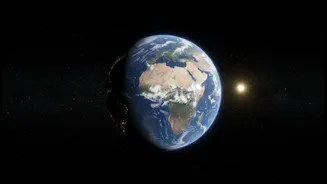
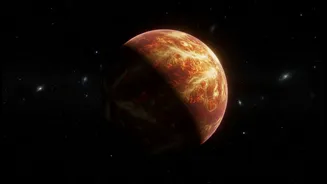
Venus and Earth are often called twins. They are nearly the same size, made of the same materials, and formed in the same neighbourhood of the solar system. But their paths diverged dramatically. While Earth became a haven for life, Venus turned into
a hellscape. Its atmosphere is a thick, crushing blanket of carbon dioxide, about 93 times the pressure of Earth's, and its clouds rain sulfuric acid. The surface temperature is a staggering 467 degrees Celsius, hot enough to melt lead, making it the hottest planet in our solar system—even hotter than Mercury, which is closer to the Sun. For years, this hostile environment made Venus a lower priority for exploration compared to the more seemingly accessible Mars. But now, that is changing.
Clues in the Clouds and Ancient Rocks
The renewed interest isn't based on a single discovery, but a collection of tantalizing clues. In 2020, the potential detection of phosphine gas in the Venusian clouds sparked intense debate. On Earth, phosphine is associated with microbial life, and its potential presence in the more temperate upper atmosphere of Venus—where temperatures and pressures are surprisingly Earth-like—raised the prospect of aerial life. While the finding is still contested, it pushed scientists to look again. Further research suggests Venus may have once had oceans and a habitable environment billions of years ago. There's even evidence it might have had plate tectonics, a key feature of a living, evolving planet like Earth. Recent analysis of old data from the Magellan mission has also revealed what appear to be massive, geologically young lava tubes, suggesting the planet is not the dead world it was long assumed to be.
A New Flotilla of Robotic Explorers
This scientific curiosity is being backed by a new generation of sophisticated missions, often dubbed the "Decade of Venus." NASA is preparing two major missions: VERITAS and DAVINCI. VERITAS, launching no earlier than 2031, will orbit Venus and create detailed 3D maps of its surface to figure out its geologic history. The DAVINCI probe will take a daring plunge through the planet's thick atmosphere, tasting and analysing the chemistry of the clouds on its hour-long descent to the surface. They will be joined by the European Space Agency’s EnVision orbiter, also planned for the early 2030s, which will study how the surface and atmosphere interact. India's space agency, ISRO, is also planning its own Venus orbiter mission called Shukrayaan, while a private mission from Rocket Lab, the Venus Life Finder, may launch as soon as 2026 to directly search for organic compounds in the clouds.
Why Venus Matters for Earth's Future
Studying Venus is about more than just finding alien microbes. It presents a natural laboratory for understanding a runaway greenhouse effect. Scientists believe Venus started out much like Earth but began trapping too much heat, eventually boiling its oceans away and creating the toxic, superheated world we see today. Understanding precisely how and why that happened provides a stark warning and a valuable case study for climate change on our own planet. By deciphering the story of how Earth’s twin became so inhospitable, we can gain crucial insights into the fragility of our own climate and the processes that keep a planet habitable.