








What Exactly Is VAR?
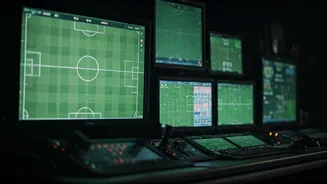
At its core, the Video Assistant Referee (VAR) is a match official in football who assists the on-field referee by reviewing decisions using video footage. It’s not one person, but a team, including a main VAR, assistants, and replay operators. They sit
in a centralised location called the Video Operation Room (VOR), often miles away from the stadium, with access to every camera angle the broadcasters have. Their one and only job is to help the referee avoid making 'clear and obvious errors' in game-changing situations. The idea was simple: use technology to catch major injustices, like Diego Maradona's 'Hand of God' goal, that human eyes might miss in real-time.
The Four Scenarios VAR Can Review
Contrary to what it sometimes feels like, VAR cannot intervene for every decision in the game. Its use is strictly limited to four specific types of 'match-changing' incidents. First is goals, where VAR checks for any infringements in the build-up, such as an offside or a foul that would disallow the goal. Second is penalty decisions; VAR can recommend a penalty that was missed or overturn one that was wrongly given. Third is direct red card incidents. This doesn't apply to second yellow cards, but VAR can advise the referee to issue a red for serious foul play, violent conduct, or other sending-off offences they missed. Finally, there is mistaken identity, ensuring the referee cautions or sends off the correct player.
The 'Clear and Obvious Error' Problem
This is the phrase at the heart of almost every VAR debate. The official protocol states that VAR should only intervene if the on-field referee has made a 'clear and obvious error'. For factual decisions like offside, this is straightforward—a player is either on or off. But for subjective calls, like whether a foul was 'serious' enough for a red card or if a handball was deliberate, it becomes incredibly murky. What one official sees as a clear error, another might see as a 50/50 call. This subjectivity is why fans often feel a lack of consistency. The technology provides the pictures, but a human still has to interpret them, and that interpretation is where most of the arguments begin.
How a VAR Check Actually Works
The process begins with the VAR team silently checking every goal, penalty, and red card incident as it happens. If this 'silent check' finds no issue, the game continues without anyone knowing a check even occurred. However, if the VAR identifies a potential 'clear and obvious error', they will communicate with the on-field referee through their earpiece. The referee then has three options. They can accept the VAR's information and change the decision (e.g., for a factual offside call). They can reject the VAR's advice and stick with their original decision. Or, for more subjective calls, they can perform an 'On-Field Review' (OFR) by going to the pitch-side monitor to watch the replay themselves before making a final call.
Why It Still Drives Everyone Mad
If VAR is designed to increase fairness, why is it so disliked by many fans? The complaints are numerous. It slows the game down, creating long, passion-killing delays. The spontaneity of celebrating a goal is gone, replaced by a nervous wait for a potential review. The hyper-accurate offside calls, decided by a single pixel or a player's toenail, feel clinical and against the spirit of the game. Furthermore, it hasn't eliminated mistakes; it has just created new types of controversies. Instead of debating the referee's on-field decision, we now debate the VAR's decision from a remote room. It has fundamentally altered the emotional rhythm and experience of watching a football match, and for many, that change has not been for the better.