



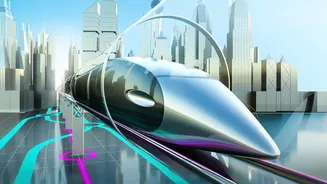
India's dream of high-speed rail is fast approaching a major milestone. While the full Mumbai-Ahmedabad corridor is a work in progress, a crucial section in Gujarat is set to become the first to welcome passengers on the iconic bullet train.
The First Leg of a National Ambition
The Mumbai-Ahmedabad
High-Speed Rail (MAHSR) project, a 508-kilometre corridor, represents one of India's most ambitious infrastructure undertakings. For years, it has been a symbol of future-forward transport. Now, that future has a specific destination and a timeline. Railway Minister Ashwini Vaishnaw has confirmed that the first bullet train service is expected to begin in the last quarter of 2027. This inaugural run will not cover the entire route but will launch on the Surat-Vapi section in Gujarat. This phased approach prioritises getting a segment of the high-speed network operational, showcasing its capabilities and kickstarting a new era in Indian travel.
Why Gujarat's Corridor Is Leading the Way
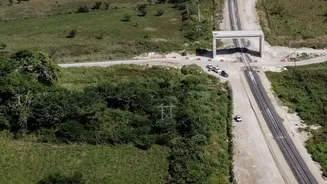
The decision to prioritise the Gujarat portion of the corridor, specifically between Surat and Vapi, is strategic. Progress in this region has been significantly faster compared to the segment in Maharashtra. Officials have cited that challenges related to land acquisition and other necessary permissions caused initial delays in Maharashtra, whereas work in Gujarat moved forward more smoothly. As a result, the civil construction and technical installations in the Gujarat section are at a much more advanced stage. More than 90% of the entire corridor is being built on elevated viaducts to ensure high speeds by eliminating level crossings and road interference. As of late 2026, substantial work on piers, viaducts, and station construction has been completed within the state, making it the logical choice for the project's debut.
Concrete Progress on the Ground
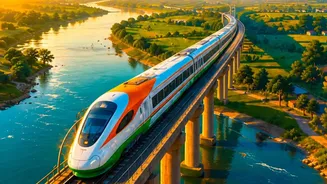
The announcements are backed by tangible engineering achievements. A key milestone was recently achieved with the 'energisation' of the overhead electrical equipment on the 50-kilometre Surat-Bilimora stretch, which is part of the larger Surat-Vapi section. This means the power supply system for the trains on this part of the route is now live, a critical step before any trial runs can begin. Work on the stations at Vapi, Bilimora, Surat, and Bharuch is also progressing rapidly, with civil construction complete and architectural finishing underway. Furthermore, construction has finished on numerous river bridges along the route, demonstrating that the foundational infrastructure for the bullet train's first run is firmly in place.
The Tech Behind the Speed
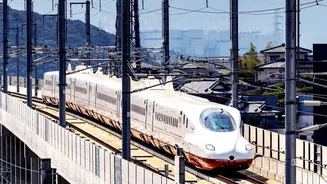
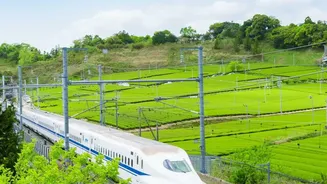
The MAHSR project utilises Japan's renowned Shinkansen technology, known globally for its exceptional safety record and punctuality. The trains are designed for a maximum speed of 350 kmph, though they will operate at 320 kmph. While the initial plan involved importing trainsets from Japan, India is also pushing forward with indigenous manufacturing under the 'Make in India' initiative. An Indian-made bullet train, the B28 trainset, is being developed by the Integral Coach Factory (ICF) and BEML. Designed for speeds of up to 280 kmph, the first body frame is already complete and undergoing structural testing. Track trials for this indigenous train are expected to begin by mid-2027, just ahead of the planned commercial launch.
The Full Corridor and the Undersea Challenge
While Gujarat prepares for the 2027 launch, work continues on the more complex sections in Maharashtra. The most significant engineering challenge is the 21-kilometre tunnel, of which a 7-kilometre portion will run under the sea at Thane Creek—a first for India. To tackle this, massive Tunnel Boring Machines (TBMs) were launched in July 2026 to excavate this underwater portion. Once fully operational, the bullet train is expected to reduce the travel time between Mumbai and Ahmedabad from around eight hours by road to just under two hours. The phased launch, starting with Surat-Vapi, serves as a crucial proof of concept and a stepping stone toward realising the full potential of this transformative transport network.