




The Ceaseless Hunt for Near-Earth Objects
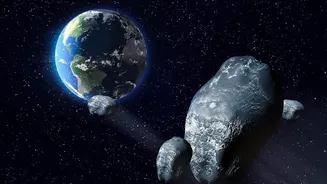
Planetary defense is the global effort to detect and track near-Earth objects (NEOs)—asteroids and comets whose orbits bring them within 30 million miles of Earth. The goal, coordinated by bodies like NASA's Planetary Defense Coordination Office (PDCO),
is to find these objects, calculate their paths, and if necessary, devise ways to prevent a potential impact. The task is monumental. Scientists estimate there are tens of thousands of NEOs large enough to cause significant regional damage, and the vast majority remain undiscovered. Finding these moving targets against the backdrop of millions of stars requires a systematic, persistent approach. This is where the world’s ground-based observatories shine, acting as the primary workforce for this critical planetary security task.
The Ground-Based Workhorses
The foundation of our planetary defense rests on a network of survey telescopes. Programs like the Catalina Sky Survey in Arizona and Pan-STARRS in Hawaii are responsible for the overwhelming majority—around 90%—of all near-Earth object discoveries. Every clear night, these observatories scan huge swaths of the sky, taking a series of images of the same area several minutes apart. Sophisticated software then analyzes these images, looking for faint points of light that have moved relative to the fixed background stars. Anything that moves is a potential NEO. This rapid, repetitive, and wide-angle approach is something ground-based systems are uniquely suited for. They can survey the entire available night sky consistently, a task that would be difficult for a single, more narrowly focused space telescope.
Why the Ground Game Is Strong
Ground observatories have several key advantages. First is sheer scale and cost-effectiveness. It is far cheaper to build, operate, and upgrade a large telescope on Earth than to launch one into space. This allows for multiple, powerful survey facilities to work in concert. Second is adaptability and maintenance. If a part breaks or a new technology becomes available, engineers can simply drive up the mountain and fix or upgrade the instrument. This longevity ensures that programs can run for decades, gathering a long baseline of data. Finally, their constant monitoring provides a torrent of data that is fed to the Minor Planet Center, the global clearinghouse for all asteroid observations. This continuous stream of information is vital for refining orbits and predicting an object’s future path with increasing accuracy.
Hunting in Orbital Groups
The term ‘asteroid clusters’ isn't about sci-fi swarms but refers to 'families' or 'associations'—groups of asteroids sharing similar orbits. These objects are often fragments from a larger asteroid that broke apart long ago. Identifying one member of a family can help scientists predict where to look for others. Ground-based surveys, by capturing everything moving in their field of view, are excellent at cataloging these orbital groups. By understanding these families, like the Atens, Apollos, or Amors, planetary defense experts can better model the population of NEOs as a whole and identify regions of space that are more likely to be the source of potentially hazardous objects. This group-based tracking provides a more complete picture of the potential threat environment near Earth.
A Partnership with the Sky
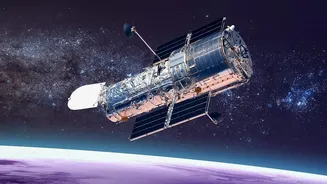
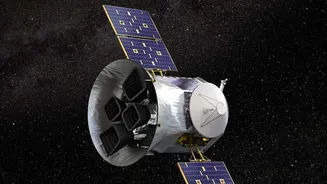
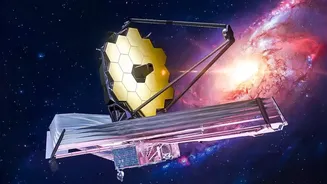
This reliance on ground observatories doesn't mean space-based telescopes are unimportant. In fact, they are crucial partners. Upcoming missions like NASA's NEO Surveyor and ESA's NEOMIR are designed to do things ground telescopes struggle with. By using infrared, they can spot dark asteroids that reflect little sunlight. They can also look for objects in viewing zones that are difficult from Earth, such as those that appear in the daytime sky or close to the sun. Once a space telescope gets a hit, ground-based radar systems, like the one being developed for the Green Bank Telescope, can perform detailed follow-up observations to precisely determine the asteroid's size, shape, and trajectory—invaluable data for any potential mitigation effort. This creates a powerful system where space telescopes find what’s hard to see, and ground telescopes provide the constant, wide-net coverage and detailed characterization.