






A New Era for Indian Space
For decades, India's journey into space was almost singularly defined by the Indian Space Research Organisation (ISRO). But a monumental shift is underway. Historic policy reforms, starting around 2020, have thrown open the doors to the private sector,
transforming a government-led programme into a dynamic, collaborative ecosystem. The number of space startups has skyrocketed from just a handful in the last decade to over 450 today. This boom is fueled by a clear vision: to grow India's share of the global space economy from its current 2-3% to a much more significant slice, with projections aiming for a domestic space economy worth over $40 billion by 2033. The establishment of the Indian National Space Promotion and Authorisation Centre (IN-SPACe) as a single-window agency has been pivotal, helping private firms navigate regulations, access ISRO's facilities, and accelerate their missions.
The Rocket Builders Reaching for Orbit
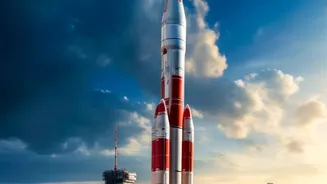
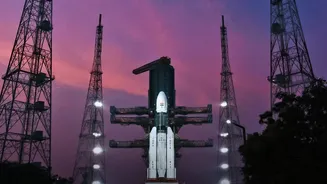
Arguably the most visible sign of this new era is the rise of private launch companies. In a landmark achievement on July 18, 2026, Skyroot Aerospace became India's first private company to launch a rocket, the Vikram-1, into orbit on its very first attempt. This milestone placed India in an elite club with the US and China as nations with private orbital launch capabilities. Based in Hyderabad, Skyroot, now considered a unicorn, is developing a family of rockets to make space access more affordable. They are not alone. Chennai-based Agnikul Cosmos is also making waves with its Agnibaan rocket, which features the world's first single-piece 3D-printed semi-cryogenic engine, a major innovation aimed at reducing manufacturing time and costs. These companies are not just complementing ISRO; they are creating a competitive commercial launch industry that can serve the burgeoning global market for small satellite deployment.
Eyes in the Sky: Satellites for a New Age
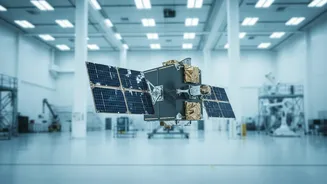
Beyond launch vehicles, Indian startups are making significant strides in satellite manufacturing and data analytics. Pixxel, for instance, is deploying a constellation of the world's highest-resolution hyperspectral imaging satellites. These advanced sensors can 'see' the Earth in hundreds of spectral bands, providing invaluable data for agriculture, climate monitoring, and pollution tracking. With its Firefly constellation successfully launched in 2025, Pixxel is turning satellite imagery into actionable intelligence through its AI-powered platform. Another key player, Dhruva Space, offers a full suite of space services, including building satellite platforms, deployers, and ground station support. The Hyderabad-based firm has successfully deployed multiple satellite missions, validating its technology and providing services to both domestic and international clients, making it a one-stop-shop for space engineering.
The Road Ahead: Challenges and Opportunities
While the trajectory is steep and promising, the path is not without its challenges. Securing consistent funding, navigating complex global supply chains, and scaling from successful prototypes to a regular cadence of commercial launches are significant hurdles. Skyroot's success with Vikram-1 was a crucial proof point, but the industry now needs to demonstrate reliability and cost-effectiveness to compete globally. However, the momentum is undeniable. With a growing pool of talent, including veterans from ISRO joining private ventures, and dedicated government support like venture capital funds, the ecosystem is well-positioned for sustained growth. The goal is not just to launch rockets but to create a self-sustaining industry that drives innovation across multiple sectors, from telecommunications and disaster management to national security and scientific research.