







What is Your Body Clock?
Every person operates on an internal 24-hour cycle known as a circadian rhythm. This biological timer, located in the brain, orchestrates a vast range of bodily functions, including sleep-wake cycles, hormone release, body temperature, and metabolism.
Think of it as your body's master conductor, ensuring everything happens at the right time. This rhythm is primarily synced by light, but other factors like eating and exercise can also influence it. When we talk about fitness entering 'body-clock mode,' we're talking about aligning our workout schedules with these natural, daily cycles to maximize their effectiveness.
The Science of Timing Your Sweat
Research into 'chronobiology'—the study of these internal clocks—has revealed that our physical capabilities aren't static throughout the day. Key performance indicators like muscle strength, endurance, flexibility, and reaction time all fluctuate in a predictable pattern. For instance, core body temperature, which is closely linked to athletic performance, gradually rises throughout the day, typically peaking in the late afternoon. A warmer body means more supple muscles, increased blood flow, and faster nerve signals, which can translate to better performance and a lower risk of injury. This has led scientists to investigate whether a morning workout offers different benefits than an evening one.
Morning: The Fat-Burning Habit Builder
Exercising in the morning has long been praised for its ability to build consistency; you get it done before the day’s obligations can interfere. But the benefits go deeper. Studies suggest that morning workouts, particularly on an empty stomach, may be more effective for fat loss. With lower glycogen (stored energy) levels after an overnight fast, your body may be more inclined to tap into fat stores for fuel. Morning exercise has also been linked to better appetite control throughout the day and improved sleep quality at night. For women specifically, some research has found morning exercise to be superior for reducing belly fat and lowering blood pressure.
Evening: The Peak Performance Window
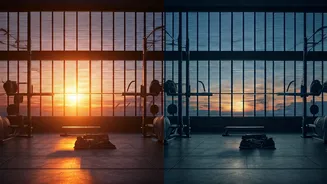
If your goal is to build strength and power, the afternoon or early evening may be your golden hour. Research consistently shows that muscular strength, power, and endurance are at their peak later in the day, roughly between 2 p.m. and 8 p.m. This is when your body temperature is highest, and hormone levels, like testosterone, may be more favorable for muscle growth. As a result, you might find you can lift heavier, run faster, or push harder during an evening session. Some studies also show that evening exercise can lead to greater improvements in muscle mass compared to morning training.
Meet Your Chronotype: The Personal Factor
While there are general patterns, the ideal workout time is also deeply personal. This is where your 'chronotype' comes in—your natural predisposition to be a morning person ('lark') or an evening person ('owl'). This is a genetic trait that influences your personal energy peaks and troughs. Larks may find they have the most energy and focus for a morning workout, while owls might feel significantly stronger and more capable in the evening. Exciting new research shows that aligning your workout with your chronotype can lead to significantly better results—in some cases, almost double the improvement in markers like blood pressure and aerobic fitness compared to exercising at a misaligned time.