








Reframe the Entire Concept
The number one reason budgets fail is because we treat them like cages. We see a list of things we can’t do and money we can’t spend. This approach is built on deprivation, and human nature instinctively rebels against it. The key is to flip the script:
a budget is not a restriction plan; it’s a permission plan. It’s a document that gives you explicit permission to spend money on the things that bring you joy and align with your goals. Instead of asking, “What do I have to cut?” start by asking, “What do I want my money to accomplish for me?” This simple mental shift changes budgeting from a chore into an act of self-care and empowerment.
Identify Your 'Why'
A budget without a goal is just tedious accounting. To make it stick, you need a compelling reason—a “why.” Do you want to be debt-free so you can sleep better at night? Are you saving for a down payment on a house where you’ll build a life? Are you dreaming of a two-week trip to Italy where you can eat pasta without a care in the world? Get specific. Write it down. Find a picture that represents it. When you’re tempted to overspend on something that doesn’t really matter, this concrete vision becomes your motivation. It makes the small, daily trade-offs feel less like sacrifices and more like strategic steps toward a future you’re excited about.
Automate What Matters Most
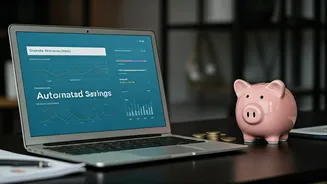
Willpower is a finite resource. Don’t rely on it to make good financial decisions every single day. Instead, make your most important choices once, then put them on autopilot. This is the principle behind “paying yourself first.” Before you pay bills or buy groceries, set up automatic transfers from your checking account to your savings, retirement, and investment accounts. Schedule these for the day you get paid. By moving the money before you even see it, you remove the temptation to spend it. This single habit is the most effective way to build wealth over time, and it requires zero ongoing effort after the initial setup. The rest of the money in your account is then yours to manage without worrying if you’ve saved enough.
Try the 'Anti-Budget'
If detailed spreadsheets make your eyes glaze over, consider the “anti-budget.” It’s beautifully simple. First, calculate your fixed costs (rent/mortgage, utilities, car payment) and your savings goal (based on the automation you just set up). Once those amounts are accounted for, the rest of the money in your checking account is yours to spend however you wish, guilt-free. There’s no need to track every latte or lunch. As long as your needs are met and your savings goals are hit automatically, you have total freedom with the remainder. This method works because it focuses your attention on the two things that have the biggest impact—fixed costs and savings rate—while liberating you from the mental burden of tracking minor variable expenses.
Spend Lavishly on What You Love
This might sound counterintuitive, but the secret to a happy budget is to spend extravagantly on the few things you truly love, and cut costs mercilessly on everything else. Personal finance expert Ramit Sethi calls this “value-based spending.” Take a moment to identify 2-3 things that genuinely bring you joy. Is it a great morning coffee, traveling, a specific hobby, or dining out with friends? Allocate a generous portion of your “wants” money to these categories. Then, look for things you spend money on out of habit or convenience that you don’t actually care about. Do you pay for streaming services you never watch? Do you buy brand-name groceries when the generic is just as good? Be ruthless in cutting those costs. This ensures your money is actively making you happier.
Build Fun into the Plan
A budget that has no room for spontaneity or fun is a budget that’s destined to fail. One of the most common mistakes is not formally allocating money for discretionary spending. Create a category called “Fun Money,” “Guilt-Free Spending,” or whatever you want to call it. This is a set amount you can spend on anything you want, no questions asked. It could be for impulse buys, a last-minute concert, or a nice dinner out. By planning for it, you transform a potentially budget-busting impulse into a planned-for indulgence. It removes the guilt and prevents the all-or-nothing cycle where you stick to a strict budget for weeks, then blow it all in one frustrated weekend.