




The Core of the Matter
Before diving in, what do we mean by 'core stability'? It’s not just about having a six-pack. Your core includes a whole group of muscles—from your abs and obliques to your lower back and glutes—that work together to stabilize your spine and pelvis. Strong
core stability provides a solid foundation for all movement, improves posture, and helps prevent injury. Both kayaking and paddleboarding are exceptional for building this foundation, but they go about it from opposite ends.
Paddleboarding: The Art of Standing Still
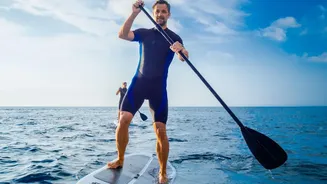
Stand-up paddleboarding is, at its heart, an exercise in constant balance. From the moment you stand on the board, your body is making thousands of tiny, unconscious adjustments to stay upright on an unstable surface. This process fires up the deep stabilizing muscles in your core, legs, and even your feet. Your abdominals, obliques, and lower back are continuously engaged to act as a central anchor, counteracting the shifts of the water beneath you. The workout is less about explosive movement and more about isometric endurance; your core is constantly 'on'. Paddling adds another layer, requiring you to generate force while maintaining that precarious balance, which further activates the abdominal wall and obliques with every stroke.
Kayaking: A Rotational Powerhouse
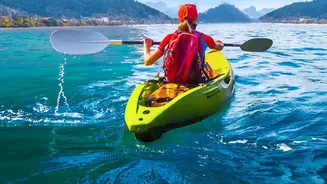
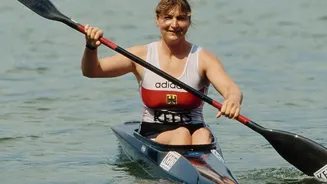
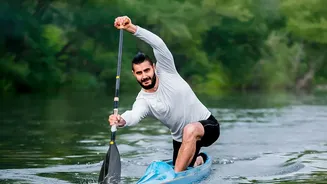
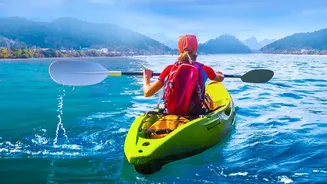
In a kayak, the challenge shifts from static balance to dynamic power generation. While you are seated, your core is anything but relaxed. The power for an efficient kayak stroke doesn't come from your arms; it comes from your core. Each paddle stroke is a powerful rotational movement, driven by your obliques and abdominal muscles twisting the torso. As you pull the paddle blade through the water on one side, you are simultaneously pushing with the corresponding foot, transferring energy from your legs up through your core. This 'push-pull' action creates a consistent, rhythmic workout for your entire midsection, particularly targeting the obliques, which are crucial for rotational strength. A proper upright posture in the kayak also ensures your core muscles remain engaged to support your spine.
Stability: Reactive vs. Proactive
The fundamental difference lies in how your core provides stability. On a paddleboard, your core is in a constant state of reaction. It’s a game of reactive stability, where muscles fire to correct imbalances and keep you centered. You're fighting to prevent movement. This builds incredible balance and endurance in the small, deep muscles that are often neglected in traditional gym workouts. Kayaking, on the other hand, demands proactive stability. Your core must create a solid platform from which to generate powerful, twisting movements. You are initiating movement from a stable base. This is fantastic for developing rotational power and strength in the larger abdominal and back muscles. So, while both improve core strength, SUP hones your ability to resist external forces, while kayaking trains your ability to create internal force.
Which Is Better for Your Fitness Goals?
The 'better' option truly depends on what you want to achieve. If your primary goal is to improve overall balance, posture, and engage your entire body in a constant stability challenge, paddleboarding is an excellent choice. The continuous engagement of your legs, glutes, and core provides a holistic, low-impact workout that improves your body's proprioception—its awareness of its position in space. If you're more interested in building powerful rotational strength, toning your obliques and upper back, and getting a more intense cardiovascular workout, kayaking might be the winner. The seated position also makes it a great option for those with knee or ankle issues who still want a vigorous core workout. Ultimately, both activities offer a path to a stronger, more resilient core while getting you out on the water.