







What is the Latest Milestone?
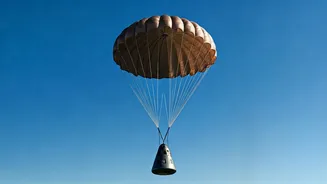
The most recent buzz surrounds the successful completion of key parachute system tests, which are absolutely critical for ensuring the safe return of the crew. In April 2026, ISRO flawlessly executed its second Integrated Air Drop Test (IADT-02). In this
procedure, a simulated Crew Module, with a mass equivalent to the real one, was dropped by an Indian Air Force Chinook helicopter from a significant altitude. The goal was to test the complex sequence of parachute deployments designed to slow the module from high velocity to a gentle splashdown in the sea. This followed earlier successes, including drogue parachute tests in late 2025 and the first IADT in August 2025, each designed to validate the performance of the deceleration system under various conditions.
A Symphony of Safety Systems
Bringing astronauts back to Earth is one of the most dangerous phases of any space mission. The Gaganyaan deceleration system is a masterclass in precision engineering, involving a total of ten parachutes of four different types. The sequence begins with smaller parachutes that deploy to separate the apex cover and then stabilize the descending module. Following this, the main parachutes are deployed to drastically reduce the speed for a safe landing. ISRO has even tested extreme scenarios, like a delay in one of the main parachutes opening, to ensure the system is robust enough to handle unexpected issues. These tests are not just about one piece of equipment; they validate an entire integrated system where every component must work in perfect harmony.
Paving the Way for Vyomnauts
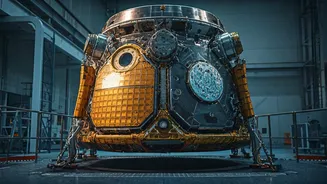
While these tests are uncrewed, the human element is at the heart of every procedure. Every successful trial is a crucial step towards ensuring the safety of the Indian astronauts, known as Vyomnauts. Four decorated Indian Air Force test pilots have been selected and have undergone extensive training for this historic mission. ISRO's methodical approach involves a series of uncrewed flights before the first human mission, H1, takes place. The first uncrewed flight, G1, is expected to carry a humanoid robot named Vyommitra to test life-support systems and simulate human functions in space. This ensures that by the time the astronauts step into the capsule, every system has been proven safe and reliable.
The Road Ahead to Orbit
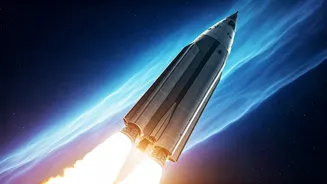
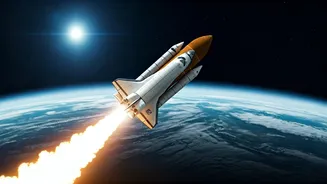
With parachute systems undergoing successful qualification, ISRO's focus remains on the full launch sequence. The launch vehicle for the mission is a human-rated version of the reliable LVM3 rocket, specially modified to meet stringent safety standards. Before the first crewed launch, which is currently anticipated for 2027, several uncrewed test flights are planned to validate all systems in real-world conditions. These missions will test the launch, orbital module performance, re-entry, and recovery operations from end to end. According to ISRO officials, thousands of ground tests have already been completed, demonstrating the depth of preparation involved.
More Than Just a Space Mission
Gaganyaan is a landmark endeavour that extends far beyond science and technology. Successfully sending humans to space will place India in an elite group of nations with independent human spaceflight capabilities, currently comprising only the United States, Russia, and China. This national achievement is expected to have a significant ripple effect, boosting industries as much of the equipment is sourced from the Indian private sector. The mission is also a powerful source of inspiration, encouraging youth to pursue careers in science and technology. Ultimately, Gaganyaan represents a new chapter in India's journey, showcasing its technological prowess and solidifying its role as a key player in the global space arena.