



A Celestial Meeting
Throughout October 2026, the planet Saturn will be a brilliant object in our evening sky. This is because it reached 'opposition' on October 4, the point in its orbit where Earth passes directly between it and the Sun. This alignment makes Saturn appear
at its brightest and largest for the year, shining like a steady, pale-yellow star. This month, the Moon's own orbit will carry it past this bright backdrop. When two celestial objects appear close to each other from our viewpoint on Earth, it's called a conjunction. This event provides a fantastic opportunity to easily identify one of the most famous planets in our solar system.
When to Look in India
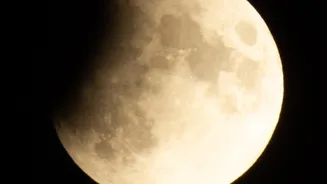
The best time to watch the Moon and Saturn pair up will be over a few nights, specifically from the evening of October 23 to October 25, 2026. On the night of October 23, the waxing gibbous Moon will appear to the upper right of Saturn. By the evening of October 24, the nearly full Moon will have moved to appear much closer to Saturn, just to its right before dawn and to its left after sunset. The pairing will be visible after dusk in the eastern or southeastern sky. This multi-night event allows for flexible viewing, so if one night is cloudy, you still have another chance to see the celestial duo.
How to Find the Pair
Finding the Moon and Saturn is straightforward. After sunset, simply find the Moon, which will be in its bright waxing gibbous phase, meaning it will be more than half-illuminated and easy to spot. Look nearby for a bright, star-like object that doesn't twinkle as much as the surrounding stars—that will be Saturn. The planet will be visible in the eastern sky after dark, tracking across the southern sky as the night progresses. No special maps are needed; the Moon acts as a perfect signpost, guiding your eyes directly to the ringed planet. For the best experience, try to find a location with a clear view of the horizon, away from the direct glare of city streetlights.
Do You Need a Telescope?
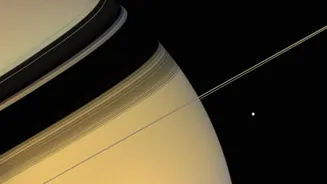
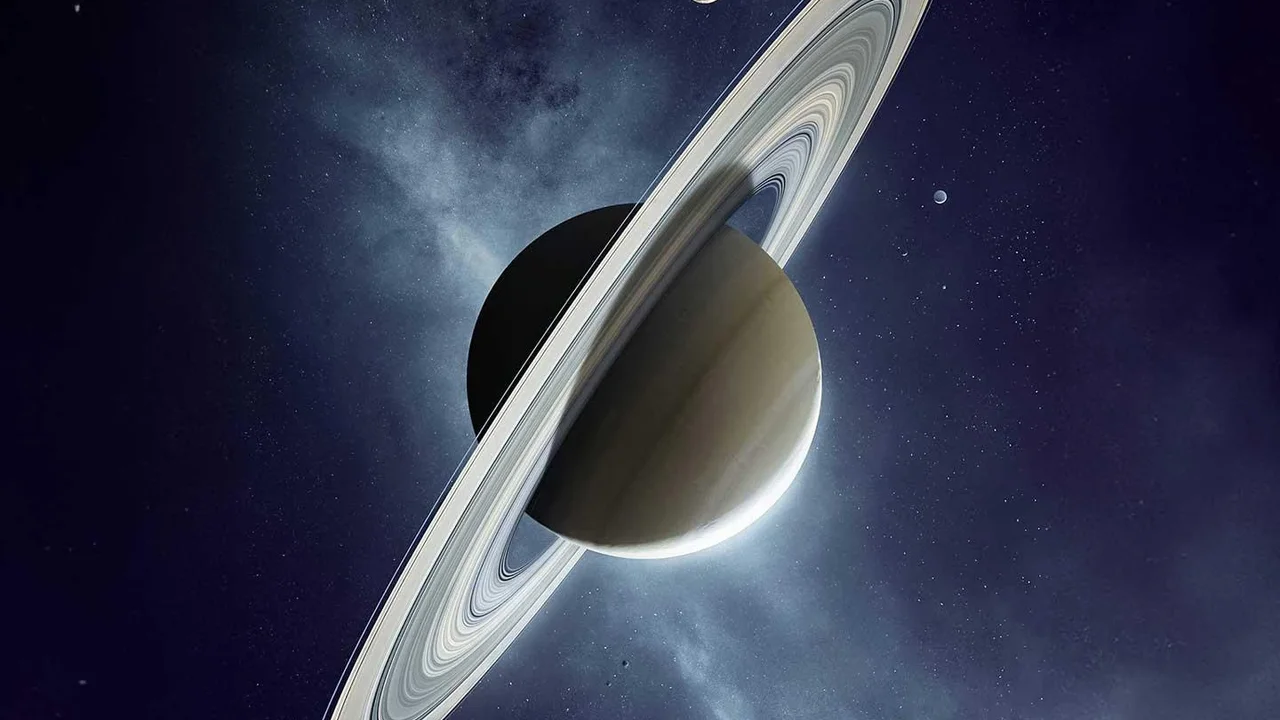
You do not need any special equipment to see the conjunction. The Moon and Saturn are both bright enough to be easily seen with the naked eye, even from urban and suburban areas. The sight of the two bright orbs hanging close together in the sky is impressive on its own. However, if you have a pair of binoculars, you can get a better sense of Saturn as a planetary disk rather than just a point of light. A small backyard telescope will reveal what makes Saturn truly special: its magnificent rings. After being edge-on to us in 2025, the rings are now opening up again, offering a clearer and more detailed view for those with telescopes.
More Skywatching This Month
The Moon and Saturn aren't the only celestial highlights this October. The Orionid meteor shower, created from the dust of Halley's Comet, peaks on the night of October 21-22. While the bright Moon will wash out some of the fainter meteors this year, you might still catch some fast, bright streaks in the hours before dawn, after the Moon has set. Then, on October 25, the full Hunter's Moon will grace the sky. Finally, on the nights of October 27 and 28, the Moon will pass near the beautiful Pleiades star cluster, also known as the Seven Sisters, creating another lovely photo opportunity.