






The Lessons of a Behemoth
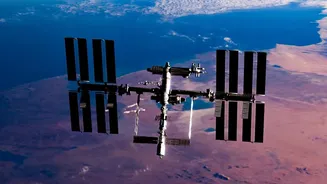
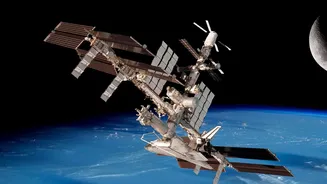
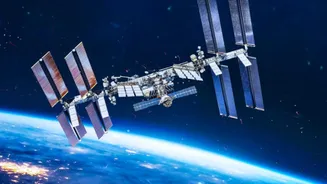
The International Space Station is one of humanity's greatest engineering feats, but it came at a staggering cost. Taking over a decade and more than 40 launches to piece together in orbit, its total expense is estimated at over $150 billion. This complex,
multinational construction project taught the commercial sector a crucial lesson: the traditional method of building in space is too slow and expensive for a viable business. For a private company to turn a profit, it cannot spend 13 years and dozens of launches just on construction before welcoming its first paying customer. Every single launch adds millions to the price tag, and every day spent on assembly is a day without revenue. This economic reality is the primary driver behind the new design philosophy.
The Tyranny of Launch Costs
In the space business, mass is money. Historically, the cost to launch one kilogram of payload into low-Earth orbit has been a major bottleneck, costing tens of thousands of dollars. While reusable rockets from companies like SpaceX have dramatically lowered this cost, it remains the single largest logistical expense. Therefore, the most effective way to control a space station's budget is to minimise the number of launches required. This has forced a fundamental shift in design. Instead of designing a station and then figuring out how to launch it in pieces, companies are now designing stations specifically to fit within the constraints of modern, heavy-lift rockets. The goal is to get the maximum amount of habitable volume and functionality into orbit with the fewest possible trips.
Single-Launch and Inflatable Designs
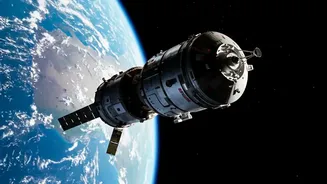
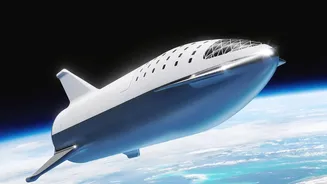
Two main strategies have emerged to solve the assembly puzzle. The first is the single-module station. A prime example is Vast's Haven-1, designed to launch fully assembled on a single SpaceX Falcon 9 rocket. This approach completely eliminates the need for complex and risky on-orbit construction. The station arrives, powers up, and is ready to receive its first crew. The second popular approach involves inflatable modules. Companies like Starlab, a joint venture between Voyager Space and Airbus, are developing habitats that launch in a compressed state and then expand to their full volume in space. An inflatable module can offer a volume comparable to a significant portion of the ISS but fit inside the payload fairing of a single rocket, like SpaceX's Starship. This 'just-add-air' approach offers a way to get a large, ready-to-use facility into orbit in one go.
Getting to Revenue Faster
For these ventures, which are backed by private investment and supported by NASA's Commercial LEO Destinations (CLD) program, speed is paramount. The CLD program was created to ensure there is no gap in U.S. presence in orbit after the ISS is decommissioned, turning NASA into a customer rather than an owner-operator. This creates a clear market opportunity, but one with a deadline. By prioritising rapid assembly, companies can begin generating revenue from clients—whether it's NASA, foreign space agencies, private researchers, or space tourists—much sooner. Axiom Space, for instance, initially planned a longer assembly sequence attached to the ISS but later revised its plan to enable its station to become a free-flying, independent platform as early as 2028, accelerating its path to full commercial operations. This ability to de-risk the business model and shorten the timeline from investment to income is essential for securing funding and proving commercial viability.