




The Undeniable Appeal of a Greener Workspace
Before diving into specific plants, it’s worth noting why adding greenery to your personal space is so beneficial. Beyond aesthetics, interacting with indoor plants can reduce stress and improve focus—a significant advantage when your bedroom doubles
as your office. While some plants are touted for their air-purifying qualities, their most immediate impact is often on our mental well-being. The simple act of caring for something and watching it grow can bring a sense of calm and accomplishment. In a small room where every object counts, a plant offers a dynamic and living element that a static decoration cannot.
Meet the Snake Plant: The Survivor
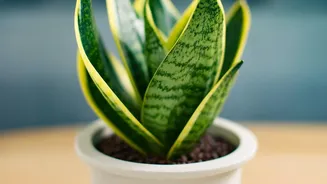
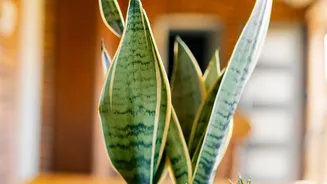
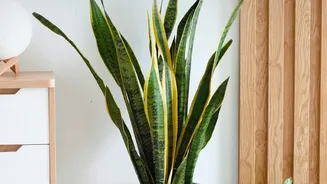
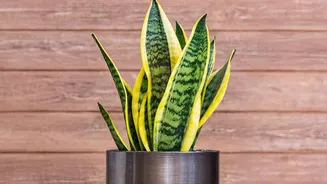
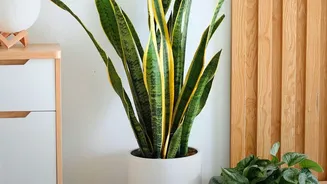
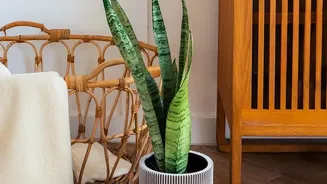
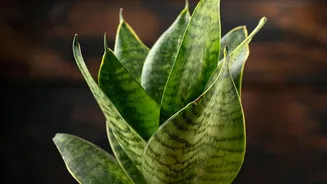
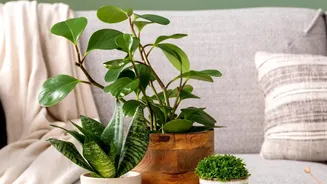
The snake plant, or Dracaena trifasciata, is famous for its resilience and striking architectural look. Its upright, sword-like leaves, often edged in yellow or silver, make a strong visual statement without taking up much floor space. It’s a perfect fit for tight corners. One of its most unique traits is its ability to perform Crassulacean acid metabolism (CAM) photosynthesis, which allows it to release oxygen at night. This has made it a popular choice for bedrooms, contributing to a fresher environment while you sleep. Studies have shown it can absorb certain airborne toxins like formaldehyde and benzene, which are often found in household products.
Caring for Your Snake Plant
The snake plant thrives on neglect, making it ideal for beginners or busy individuals. The number one rule is to avoid overwatering, as this can cause root rot. Allow the soil to dry out completely between waterings—this could mean watering as little as every 2-3 weeks in the summer and once a month in the winter. It tolerates a wide range of light conditions, from low-light corners to bright, indirect sunlight. However, it will grow faster and its colours will be more vibrant in brighter conditions. Use a well-draining potting mix, such as one designed for cacti or succulents.
Introducing Pothos: The Trailing Enthusiast
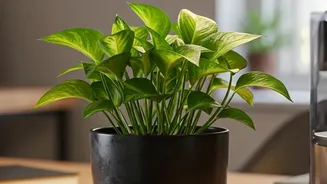
Pothos, also known as Devil's Ivy (Epipremnum aureum), is beloved for its lush, trailing vines and heart-shaped leaves. It's incredibly easy to grow and its cascading nature makes it perfect for shelves, hanging baskets, or the top of a bookshelf, allowing you to add greenery without sacrificing desk space. Pothos is also a fast grower, providing a satisfying sense of progress. Like the snake plant, it's often listed for its ability to help remove indoor pollutants such as formaldehyde, benzene, and xylene from the air.
Pothos Care Made Simple
Pothos is another forgiving plant that communicates its needs clearly. It prefers bright, indirect light but can easily adapt to lower light levels, though variegation might fade in dimmer spots. Let the top layer of soil dry out before watering again; drooping leaves are a clear sign it's thirsty. It's better to underwater than overwater. Generally, watering every 1-2 weeks in warmer months and less in winter is a good rhythm. Pothos is adaptable to average room humidity but will appreciate the extra moisture found in a kitchen or bathroom. You can easily prune the vines to encourage a fuller, bushier plant and use the cuttings to propagate new ones.
A Reality Check on Air Purification
The idea that houseplants can purify indoor air largely stems from a 1989 NASA study. While the study did show that plants like snake plant and pothos could remove volatile organic compounds (VOCs) from the air, it's important to understand the context. These tests were conducted in small, sealed laboratory chambers—not a typical home with airflow and ventilation. More recent analysis has concluded that you would need an enormous number of plants (some estimate 10 to 1000 per square meter) to replicate those results in a real-world room. So, while these plants do contribute to a healthier environment, their air-cleaning effect in a normal bedroom is modest at best. Their true power lies in their ability to boost mood and add life to your space.
A Note on Pet Safety
An important consideration for pet owners is that both snake plants and pothos are toxic to cats and dogs if ingested. They contain compounds that can cause mouth irritation, drooling, vomiting, and gastrointestinal upset. While ingestion is rarely fatal, it can cause significant discomfort. To keep your furry friends safe, be sure to place these plants on high shelves, in hanging planters, or in rooms that your pets cannot access.