





Why Go Botanical?
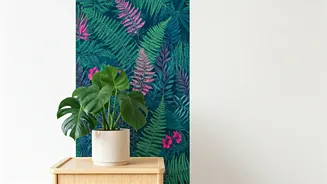
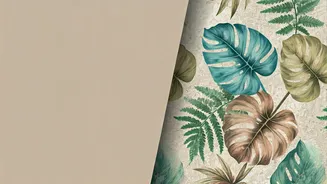
In the world of interior design, the botanical trend is more than just a fleeting fashion—it’s a movement. Inspired by biophilia, the idea that humans have an innate tendency to seek connections with nature, botanical prints do more than just decorate
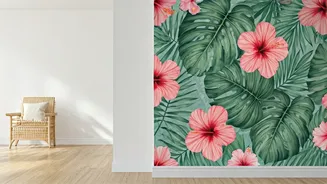
a room. They can create a sense of calm, bring the rejuvenating feel of the outdoors inside, and transform a sterile space into a lush sanctuary. For renters, who often have limited options for permanent changes, a wall covered in vibrant monsteras, delicate ferns, or romantic florals can be a powerful tool for making a temporary house feel like a permanent home.
Choosing Your Perfect Print
The world of botanical wallpaper is vast, so start by considering the mood you want to create. Large-scale leaf prints in deep greens can make a room feel dramatic and enveloping, perfect for a cosy bedroom or study. Smaller, more delicate floral patterns in lighter shades can make a space feel airy, bright, and cheerful. Think about your existing furniture and decor. A bold, colourful print might be the perfect statement behind a neutral-coloured sofa, while a subtle, monochromatic design can add texture and interest without overwhelming the room. Don't be afraid to order samples! Taping a few options to the wall will give you a real sense of how they look in your home’s specific lighting.
The Renter's Golden Rule: Prep is Everything
The 'removable' part of peel-and-stick wallpaper works best on a clean, smooth, and properly prepared surface. Most damage upon removal happens because the wall wasn't ready. Before you start, give the wall a gentle wipe-down with a damp sponge and a mild, non-abrasive cleaner to remove any dust or grime. Let it dry completely for at least 24 hours. If your walls have any texture (often called 'orange peel' or 'knockdown'), removable wallpaper might not adhere properly or could look bumpy. It’s designed for smooth, primed, and painted walls. If you’re unsure about your paint, test a small, discrete area first. Apply a sample piece and leave it for a week before peeling it off to see if it affects the paint.
Application Without Frustration
Applying wallpaper can seem intimidating, but the peel-and-stick variety is incredibly forgiving. Here’s a simple process: Start at the top corner of the wall. Peel back only the first 15-20 cm of the backing paper. Align the top edge of the wallpaper with the ceiling, leaving a little extra to trim later. As you slowly peel away more of the backing with one hand, use your other hand to smooth the paper onto the wall with a plastic squeegee or a flat, firm tool. Work from the centre outwards to push out any air bubbles. When starting a new panel, slightly overlap it with the previous one (by about 1-2 mm) to ensure the pattern aligns seamlessly and to prevent gaps from appearing if the paper shrinks over time. If you make a mistake, gently peel the paper back and reapply. It’s designed to be repositionable during installation.
Beyond the Accent Wall
While a full accent wall is a classic choice, don't limit your creativity. Removable wallpaper is perfect for smaller, high-impact projects. Use it to line the back of a boring bookshelf to give it depth and character. Cover the front of your dresser drawers for a custom-furniture look. You can even apply it to a flat, plain interior door to create a surprising and delightful feature. For a truly low-commitment option, buy a large piece of thin plywood, cover it in your favourite botanical print, and lean it against the wall as a large-scale piece of movable art or a faux headboard.
The Clean Getaway: Damage-Free Removal
When your lease is up or you’re ready for a change, removal should be straightforward. Start at a top corner and slowly peel the wallpaper downwards at a 45-degree angle. Pull gently and steadily. If you feel resistance, don't yank it. A little bit of gentle heat from a hairdryer can help soften the adhesive, making it easier to peel away. Most modern, high-quality removable wallpapers are designed to come off clean, leaving no sticky residue behind. If you do find a little bit of residue, it can typically be wiped away with a sponge and warm, soapy water.