




From School Buses to Shoeboxes
The simplest way to understand the small satellite revolution is a shift in scale. For decades, space was dominated by massive, multi-tonne satellites in high orbits, costing hundreds of millions of dollars each. Today’s rising stars are “smallsats,”
a broad category that includes everything from refrigerator-sized minisatellites to CubeSats, which are tiny 10-centimetre cubes. These are not just shrunken-down versions of their predecessors; they are a fundamentally different approach. Instead of one giant, high-risk satellite, companies and countries can now deploy dozens or even hundreds of smaller ones, often in large, coordinated networks called constellations.
The Cost-Cutting Revolution
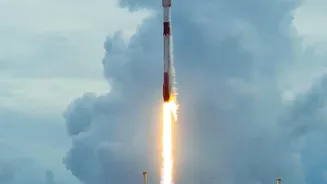
The primary engine of this boom is a dramatic drop in cost. Two factors are key. First, advancements in electronics mean powerful sensors and processors can be packed into a much smaller, lighter package. Second, and perhaps more importantly, getting to space is cheaper than ever before. The rise of commercial launch providers and reusable rockets has created a “rideshare” model. Small satellites can now piggyback on larger launches for a fraction of the cost, making space accessible not just to superpowers, but to startups, universities, and developing nations. This has lowered the financial barrier to entry, transforming space from an exclusive government club into a bustling commercial marketplace.
A Universe of New Applications
Lower costs have unlocked a wave of innovation. Small satellite constellations are revolutionizing Earth observation, providing near-real-time, high-resolution imagery for everything from tracking climate change and managing crops to responding to natural disasters. They are the backbone of a new era of global connectivity, with companies like Starlink and OneWeb using vast constellations to deliver high-speed internet to remote and underserved areas. Beyond communication and imagery, smallsats are used for scientific research, technology demonstration, navigation, and national security, offering a level of flexibility and rapid deployment that was previously unthinkable.
India's Small Satellite Big Dream
This global trend is having a profound impact in India. The Indian government’s decision to open the space sector to private participation has unleashed a wave of entrepreneurial energy. India now boasts hundreds of space-tech startups, many founded by former ISRO engineers, working on everything from building small satellites to developing their own launch vehicles. Companies like Skyroot Aerospace, with its Vikram-1 rocket designed specifically for small satellite launches, are turning India into a global hub for the smallsat economy. This burgeoning private ecosystem, supported by ISRO and IN-SPACe, is not only creating high-tech jobs but also developing critical infrastructure for India's digital future, from agricultural monitoring to disaster management.
The Crowded Skies Ahead
The rapid proliferation of small satellites is not without its challenges. The explosion in launches has raised serious concerns about the growing problem of space debris and the risk of orbital collisions. With tens of thousands of new satellites planned, the low-Earth orbit where most of them operate is becoming increasingly congested, creating a potential “tragedy of the commons” scenario. Astronomers also worry about light pollution from these bright constellations interfering with observations of the universe. Managing this new era of space requires robust international cooperation on space traffic management and debris mitigation to ensure that the final frontier remains safe and accessible for generations to come.