



The Sadhya: A Feast on a Leaf
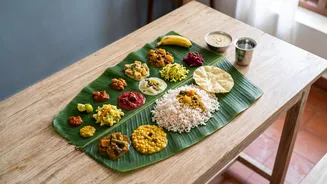
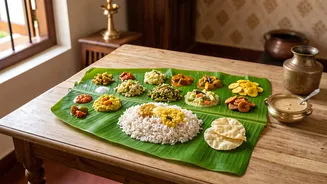
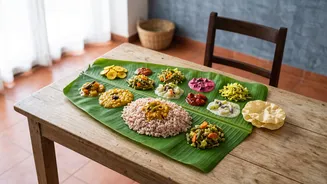
The Onam Sadhya is a grand vegetarian banquet traditionally served on a banana leaf, featuring anywhere from 20 to over 30 dishes. The name 'Sadhya' literally means banquet in Malayalam. This elaborate meal is a tribute to Kerala's agricultural abundance
and a central part of the Onam festival, which celebrates the mythical King Mahabali's annual return. Each dish has a specific place on the leaf and is served in a particular order to balance the six fundamental flavours: sweet, sour, salty, pungent, bitter, and astringent. Eating this meal is an experience in itself, meant to be enjoyed with the right hand to connect with the food's texture and taste.
Parippu and Sambar: The Essential Curries
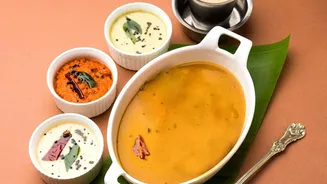
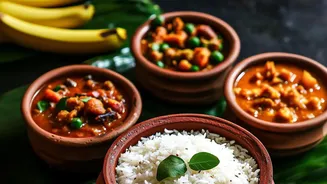
The feast traditionally begins with a spoonful of Parippu, a simple but comforting curry made from moong dal (split mung beans) and coconut, served over a mound of fluffy red Matta rice with a drizzle of ghee. This gentle start prepares the palate for what's to come. Soon after, Sambar is ladled over the rice. The Sadhya version of this South Indian staple is typically thicker and packed with a variety of vegetables like drumstick, pumpkin, and okra, all simmered in a flavourful tamarind and lentil broth.
Avial: The Star of the Show
No Onam Sadhya is complete without Avial. Legend attributes its invention to the Pandava prince Bhima, who supposedly created the dish by mixing all available vegetables during his exile. It is a thick, colourful medley of seasonal vegetables like yam, plantain, drumsticks, and carrots, cooked with coconut, green chillies, and yogurt. Finished with a generous splash of coconut oil and fresh curry leaves, Avial is a creamy, nutritious, and iconic dish that perfectly represents the harmony of Keralan cooking.
Kichadi and Pachadi: The Yogurt-Based Wonders
Often confused, Kichadi and Pachadi are distinct yogurt-based side dishes that add a cooling contrast to the meal. Kichadi is typically sour and made with raw or cooked vegetables like cucumber or bitter gourd in a spiced yogurt base. Pachadi, on the other hand, is often mildly sweet and tangy, made with fruits like pineapple or vegetables like beetroot, blended into a base of ground coconut and yogurt. The key difference often lies in the preparation; Pachadi usually includes a ground paste of coconut and mustard seeds, which Kichadi may omit.
Sides and Condiments: A Burst of Flavour
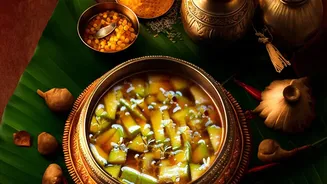
A series of smaller dishes add layers of texture and taste. This includes Thoran, a dry stir-fry of finely chopped vegetables like cabbage or beans with grated coconut. Erissery, a mildly sweet dish of pumpkin and black-eyed peas with a toasted coconut garnish, offers a savoury-sweet balance. Olan is a delicate and subtle stew of ash gourd and cowpeas cooked in thin coconut milk. No Sadhya corner is complete without Sharkara Varatti (jaggery-coated banana chips), Upperi (salted banana chips), and Inji Puli, a sweet and sour ginger-tamarind chutney that aids digestion.
Payasam: The Sweet Finale
The feast culminates with Payasam, the quintessential dessert. Often, two or three varieties are served. Palada Payasam is a creamy, rich pudding made with milk, sugar, and delicate rice flakes called ada. Another favourite is Ada Pradhaman, which uses the same rice flakes but cooks them in a luscious blend of jaggery and coconut milk, giving it a deep, caramel-like flavour. Other popular versions include Parippu Payasam, made with lentils, and Pazham Pradhaman, made from ripe bananas.