


The Sun’s Two Faces: Flares and CMEs
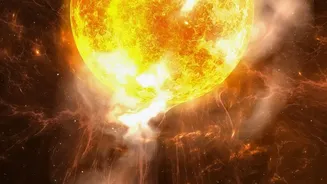
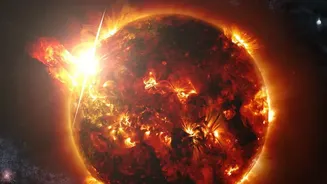
When we talk about solar storms, it's easy to use terms like 'solar flare' and 'Coronal Mass Ejection' (CME) interchangeably, but they are different beasts. A solar flare is an intense burst of radiation—a brilliant flash of light that reaches Earth in about eight
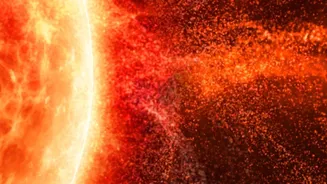
minutes. While powerful, its main effects are on radio communications and GPS signals. The bigger threat to our physical infrastructure is a CME. This is a colossal eruption of plasma and magnetic fields from the Sun's outer atmosphere, the corona. A CME is like a billion-ton cannonball of magnetised particles hurtling through space. If it’s aimed at Earth, this is what can cause catastrophic grid damage.
The Challenge: Seeing the Invisible
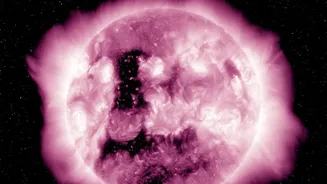
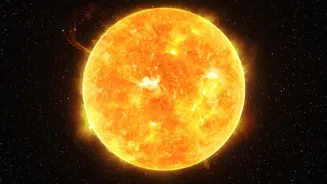
Predicting a CME is incredibly difficult because the Sun itself gets in the way. The Sun's surface, or photosphere, is a million times brighter than its outer atmosphere, the corona. This intense glare makes it impossible to see the much fainter corona where CMEs are born. It’s like trying to spot a firefly next to a stadium floodlight. To study the corona and spot these eruptions as they happen, scientists need to find a way to block out the Sun's blinding light without blocking out the atmosphere around it. For a long time, the only way to do this was to wait for a total solar eclipse, when the Moon provides a natural screen.
The Solution: A Man-Made Eclipse
This is where the coronagraph comes in. First invented in the 1930s by Bernard Lyot, a coronagraph is a special telescopic instrument designed to create an artificial, permanent eclipse. It uses a precisely positioned 'occulting disk' to block the direct, overwhelming light from the Sun's main body. With the glare gone, the faint, ethereal light of the corona becomes visible. When placed on satellites in space, coronagraphs are even more effective because they don't have to contend with the light-scattering effects of Earth's atmosphere. These space-based observatories provide a constant, uninterrupted view of the Sun's volatile corona.
From Detection to Early Warning
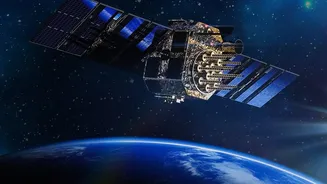
By constantly monitoring the corona, satellites equipped with coronagraphs can spot a CME as it erupts from the Sun. Seeing this massive cloud of plasma blast off into space is the crucial first step in space weather forecasting. Because a CME travels much slower than the light from a flare—taking anywhere from 12 hours to three days to reach Earth—this gives us a precious window of warning. This lead time is everything. It allows power grid operators, satellite companies, and airlines to take protective measures to mitigate the worst effects of the impending geomagnetic storm.
What a Geomagnetic Storm Does to a Power Grid
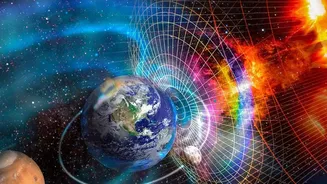
When an Earth-directed CME slams into our planet's magnetic field, it triggers a geomagnetic storm. This storm can induce powerful, low-frequency electrical currents in the ground, known as Geomagnetically Induced Currents (GICs). Long-distance high-voltage transmission lines act like giant antennas, picking up these GICs and feeding them into the grid's critical components. This sudden influx of rogue electricity can overload and melt the massive transformers at the heart of substations, causing them to fail. Replacing these custom-built transformers can take months or even years, leading to the potential for widespread, long-lasting blackouts.
India’s Sentinel: The Aditya-L1 Mission
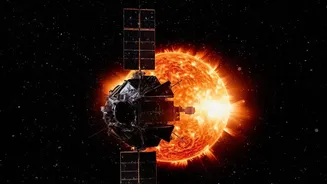
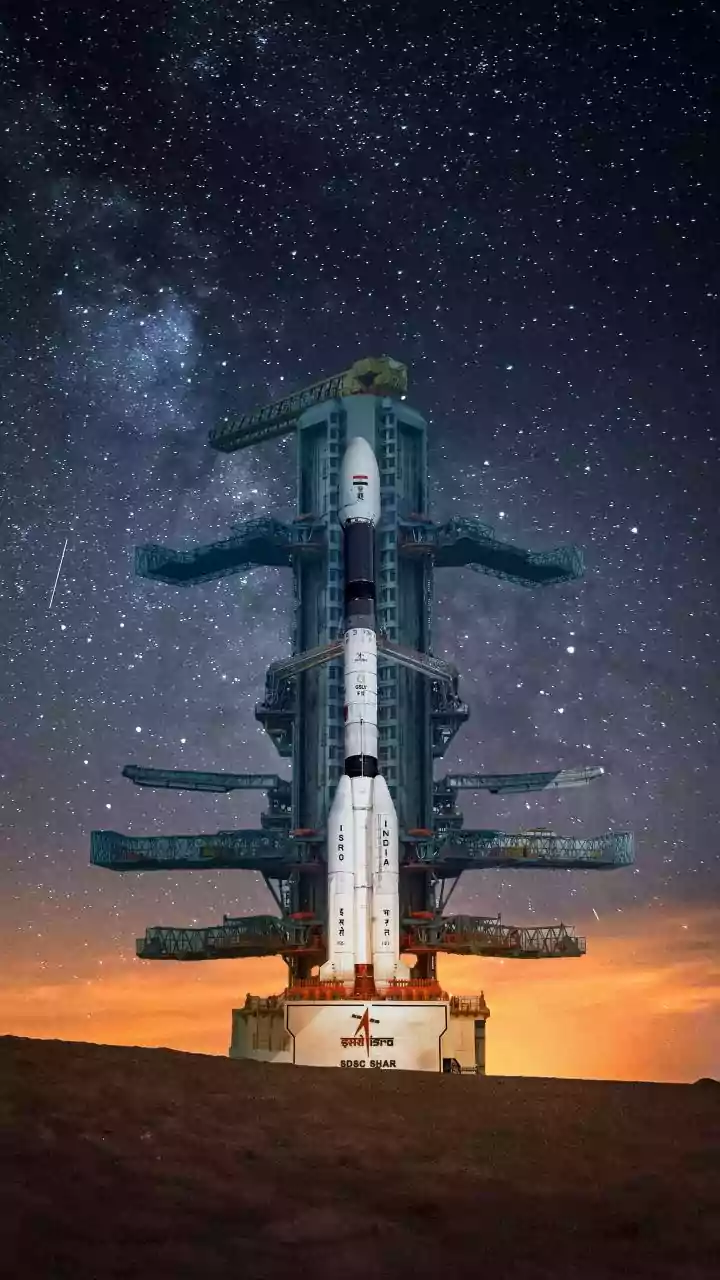
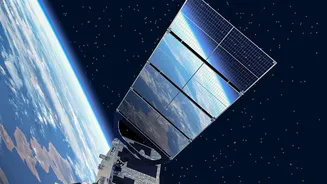
India is a key player in this global effort to monitor space weather. The Indian Space Research Organisation's (ISRO) Aditya-L1 mission is the nation's first dedicated solar observatory. Positioned 1.5 million kilometres from Earth, it has an unobstructed view of the Sun. Its primary payload is the Visible Emission Line Coronagraph (VELC), an advanced instrument developed in India that constantly observes the solar corona. The VELC provides crucial data on the origin and dynamics of CMEs, helping to improve prediction models and contributing to a global network of 'sentinel' satellites that stand guard, protecting our technological civilisation from the Sun's fury.