



Before You Turn the Key: Vehicle Health Check
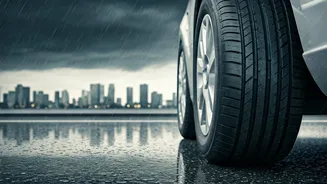
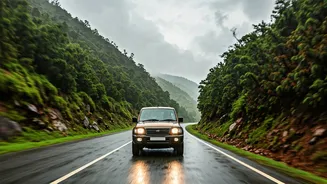
A monsoon road trip is brutal on your car. Before you even think about packing, give your vehicle a thorough inspection. Your tyres are your first line of defence on slippery roads; ensure they have adequate tread depth, well above the minimum 1.6 mm.
Don't forget to check the spare. Next, test your wipers. If they leave streaks or make noise, replace them immediately for clear visibility. A clean windshield is useless in a downpour without effective wipers. Confirm all your lights are working—headlights, taillights, indicators, and especially fog lamps. Wet roads absorb more light, so you need your lighting system at full strength not just to see, but to be seen. Finally, get your brakes inspected. Brake pads, discs, and fluid levels must be optimal for the increased demands of wet, steep roads.
The On-Road Survival Kit: Packing for the Worst
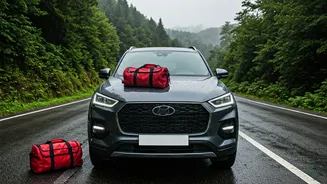
What you pack can make the difference between a minor inconvenience and a serious emergency. Your standard first-aid kit should be supplemented with medicines for fever, colds, and stomach issues, which are common during this season. An emergency car kit is non-negotiable. This should include a tow rope, a reliable torch with extra batteries, and a high-visibility reflective jacket. Given the potential for getting stranded, pack high-energy, non-perishable snacks like chocolate and biscuits, along with several litres of water. For your electronics, a fully charged power bank is a lifeline. To protect documents, phones, and chargers from the relentless damp, use plastic zip-lock bags. It is also wise to carry a good amount of cash, as digital payments may not work in remote areas with poor connectivity.
Ghat Driving 101: Techniques for Tricky Terrain
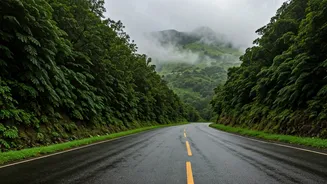
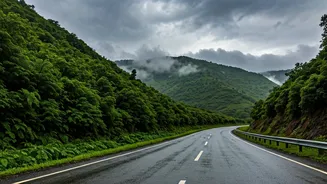
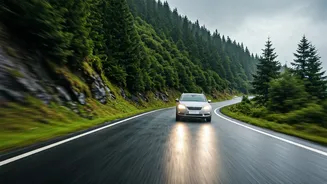
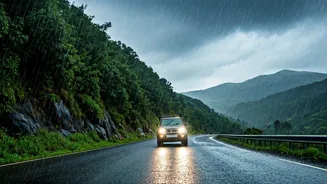
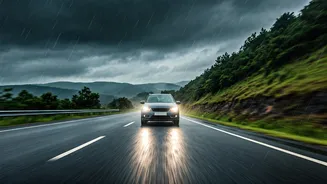
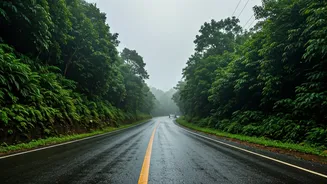
Driving in the Ghats is entirely different from driving on plains, and rain multiplies the challenge. The cardinal rule is to slow down. Your braking distance increases dramatically on wet surfaces, so maintain a much larger gap with the vehicle in front. Use engine braking by shifting to a lower gear while descending steep slopes; this prevents your brakes from overheating and gives you better control. When ascending, give way to uphill traffic. Be gentle and smooth with your inputs—no sudden braking, acceleration, or steering. Use your horn judiciously around blind curves to alert oncoming traffic. Visibility can drop to near-zero in seconds due to fog or intense rain. In such conditions, turn on your low-beam headlights, and if you can't see, the safest option is to pull over at a secure spot and wait for conditions to improve.
Navigating Water and Landslide Risks
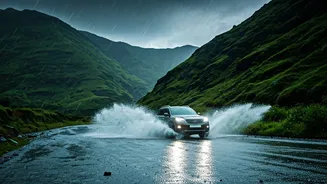
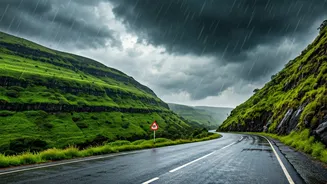
Two of the biggest dangers on a Ghat road trip are waterlogging and landslides. Never attempt to drive through water if you can't gauge its depth; it could be deeper than it looks and hide potholes or open manholes. If you must cross a shallow, flooded patch, keep the car in a low gear with steady, high revs to prevent water from entering the exhaust. Be extremely wary of roads with fast-flowing water across them, as even a few inches can sweep a vehicle away. For landslides, prevention is key. Check weather updates and local news for any warnings before and during your trip. Be vigilant for warning signs like new cracks on the road, leaning trees, or small rockfalls. If you get caught near a slide, your priority is to get out of its path immediately. If escape is impossible, curl into a tight ball and protect your head.
In Case You Get Stranded
Despite all precautions, you might find yourself stuck due to a breakdown, roadblock, or severe weather. The first rule is not to panic. Stay in your vehicle, which offers the best protection from the elements. If your car stalls in water, do not try to restart the engine, as this can cause catastrophic damage. Make your car visible by turning on your hazard lights. Conserve your phone's battery, using it only to contact emergency services or family. Informing someone of your travel route and estimated time of arrival beforehand is a crucial safety step. If you are stuck for a prolonged period, use your emergency food and water sparingly. Wait for official help or for conditions to clear before attempting to move on. Local authorities and disaster management teams are the best source of information and assistance in these situations.