







Why Blurred Lines Are Costly
When your home is also your office, the natural separation disappears. Without the daily commute or the physical act of leaving an office, your brain can struggle to switch off. This 'always on' mentality, where you feel obligated to respond to emails
at all hours, is a direct route to burnout. Burnout isn't just feeling tired; it's a state of emotional and physical exhaustion characterized by a lack of motivation and increased mental distance from your job. Research shows remote workers often log more hours than their in-office counterparts, neglecting personal activities and relationships that are vital for mental health. Setting firm boundaries isn't a sign of being a less dedicated employee; it's a crucial strategy for long-term productivity and well-being.
Create a Physical Divide
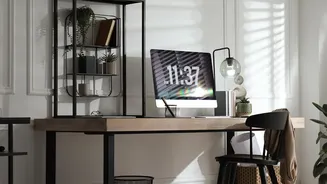
Your brain is excellent at creating associations. If you work from your couch or bed, your brain will associate those relaxation spots with work stress, making it harder to unwind. The first step in creating a boundary is to make it physical. Designate a specific area in your home as your 'work zone'. It doesn’t have to be a separate room; a corner of the living room with a dedicated desk will suffice. When you're in this space, you're at work. When you leave it, you're at home. This simple act trains your mind to understand when it's time to be productive and when it's time to relax, creating a powerful psychological separation.
Master Your Calendar and Clock
One of the most effective ways to set boundaries is to define and defend your time. Establish clear working hours and, crucially, stick to them. Start and end your day at the same time, just as you would in a traditional office. When your workday ends, stop working. Shut down the computer and resist the temptation to check 'just one more email'. Communicate these hours to your colleagues by putting them in your calendar or email signature. This sets clear expectations for when you are and aren't available. Remember to schedule breaks throughout the day, including a proper lunch break away from your screen. These moments of rest are not lazy; they are essential for managing stress and maintaining focus.
Build a Digital Fortress
Technology can be the biggest culprit in blurring lines. That ping from a late-night work message can pull you straight back into work mode. To prevent this, create digital boundaries. Turn off work-related notifications on your phone and computer outside of your set working hours. Consider using separate web browsers or user profiles for work and personal activities. Some find it helpful to have a dedicated work phone or to move all work-related apps into a specific folder that you don't open after hours. This isn’t about being unresponsive; it’s about being in control of your attention and protecting your personal time from 'work creep'.
Implement a 'Shutdown Ritual'
The commute home from an office used to serve as a natural transition period, allowing you to decompress. Remote workers need to create their own version of this. Enter the 'shutdown ritual,' a concept popularized by author Cal Newport. This is a short, consistent routine you perform at the end of each workday to signal to your brain that work is over. It could involve tidying your desk, reviewing your to-do list for the next day, closing all work-related tabs, and then saying a specific phrase like 'shutdown complete'. This ritual provides psychological closure, helping you fully disconnect and preventing work-related thoughts from intruding on your evening.