






The Sweet Contenders
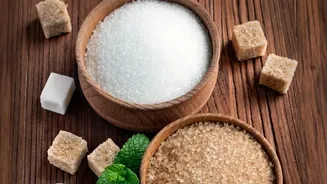
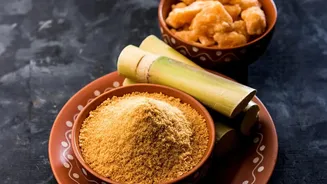
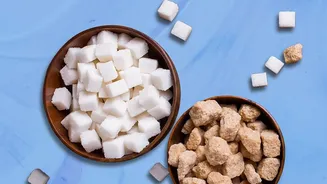
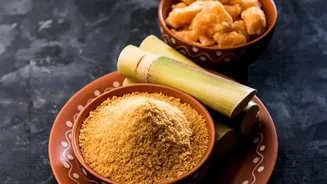
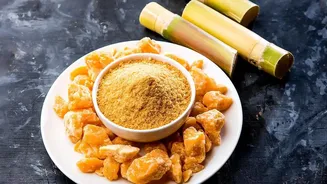
White sugar is the product of extensive refining. Sugarcane juice is processed to remove everything but pure sucrose, resulting in the uniform white crystals we know. Jaggery, on the other hand, is unrefined. The sugarcane juice is simply boiled until
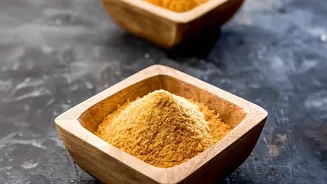
it solidifies, which means it retains the molasses that is stripped from white sugar. This difference in processing is at the heart of the entire debate. Because it is less processed, jaggery keeps some of the minerals and vitamins from the original sugarcane. Its colour can range from golden to dark brown, and it has a rich, caramel-like flavour that white sugar lacks.
A Nutritional Deep Dive
On the surface, jaggery appears to have a clear nutritional advantage. While white sugar provides what many call 'empty calories' (calories with no other nutrients), jaggery contains trace amounts of essential minerals. These include iron, magnesium, potassium, and calcium. For instance, 100 grams of jaggery can contain around 11 mg of iron, a significant amount. However, it's crucial to consider portion sizes. A more realistic serving, like a tablespoon, provides a much smaller, though not entirely negligible, amount of these minerals. In terms of calories, the two are nearly identical, with both hovering around 380-390 calories per 100 grams. So, while jaggery does offer more nutrients, the difference is less dramatic in the small quantities typically consumed.
The Glycemic Index Surprise
One of the most common beliefs is that jaggery is better for blood sugar levels. This is a dangerous myth. The glycemic index (GI) measures how quickly a food raises blood sugar. Surprisingly, most studies show that sugarcane jaggery has a higher GI (around 84) than white sugar (around 65). This means jaggery can cause a faster and sharper spike in blood sugar. Both are considered high-GI foods and should be consumed with caution, especially by individuals with diabetes or insulin resistance. The idea that jaggery is a 'safe' sugar for diabetics is not supported by science; it should be treated just like white sugar when it comes to blood glucose management.
Jaggery's Winter Wisdom
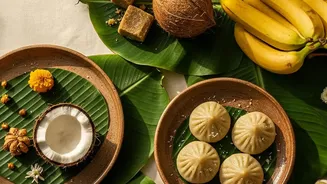
So why is jaggery so popular in winter? Traditional and Ayurvedic wisdom credits jaggery with having a 'warming' effect on the body (Ushna). It is a key ingredient in many seasonal preparations like 'chikki' and 'gajak', believed to provide energy and warmth during colder months. Many also consume a small piece after meals to aid digestion and prevent constipation. It's also traditionally used as a remedy for coughs and colds, often mixed into warm water or tea. While scientific proof for some of these claims is limited, jaggery's cultural significance as a winter comfort food is undeniable and deeply ingrained in Indian households.
The Illusion of a 'Healthy' Sugar
Herein lies the most important point. While jaggery is marginally better due to its mineral content and less-processed nature, it is still a sugar. Overconsumption carries the same risks as eating too much white sugar, including weight gain and an increased risk of metabolic issues. The small mineral benefits of jaggery are easily outweighed by the negative effects of high sugar intake if consumed freely. The idea is not to treat jaggery as a health food to be eaten in large quantities, but as a slightly better alternative when a sweetener is needed. Moderation is key.
The Bigger Picture: Your Overall Diet
Ultimately, the debate between jaggery and white sugar distracts from the main goal: reducing overall added sugar intake. The choice between them is a minor detail compared to the total amount of sweetener you consume daily. A truly healthy diet focuses on whole foods—fruits, vegetables, whole grains, and lean proteins—while limiting all forms of added sugars. If you enjoy the complex, molasses-like flavour of jaggery in your winter tea or sweets, then it is a reasonable choice over refined sugar. But simply swapping one for the other without reducing the quantity offers minimal health benefits.