



The Mission: A High-Stakes Test Flight
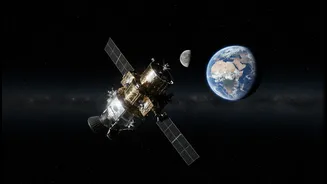
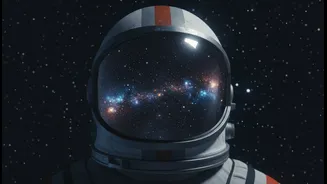
Artemis II is not a lunar landing; it's a meticulously planned test flight designed to validate the core technologies that will underpin humanity's sustained presence beyond Earth. The mission will carry four astronauts—Commander Reid Wiseman, Pilot Victor
Glover, and Mission Specialists Christina Koch and Jeremy Hansen—farther from Earth than any human has been in over half a century. The primary goal is to prove that the Orion spacecraft and its life-support systems can keep a crew safe and healthy in the harsh environment of deep space. Over approximately ten days, the crew will pilot Orion on a free-return trajectory around the Moon, testing navigation, communication, and re-entry procedures before future missions attempt to land on the lunar surface. This flight serves as the crucial bridge between the uncrewed Artemis I in 2022 and the planned lunar landing of Artemis IV.
The Benefits: Paving the Way to a Multi-Planetary Future
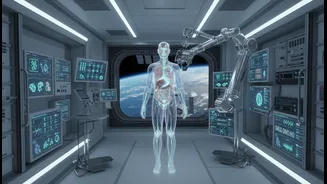
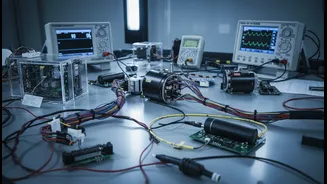
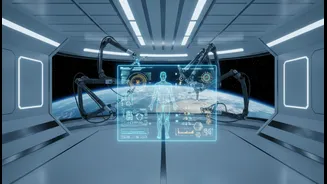
The potential rewards of a successful Artemis II mission are immense. On a technical level, it will provide invaluable data on the performance of the Orion spacecraft’s critical systems, from propulsion to the environmental control that provides breathable air. Scientifically, the mission is a treasure trove. The crew will make detailed geological observations of the lunar surface to inform future landing sites and help scientists understand the Moon's history. Perhaps most importantly, Artemis II is a human-centric mission. Researchers will gather unprecedented data on how the human body adapts to deep space, particularly the heightened radiation environment outside Earth's protective magnetosphere. Experiments using wearable sensors will monitor everything from sleep patterns to stress levels, while 'organ-on-a-chip' technology will study cellular responses to spaceflight, paving the way for personalized space medicine. Success here builds the foundation for long-term lunar habitats, the Gateway space station, and eventual human missions to Mars.
The Risks: Navigating Unforgiving Deep Space
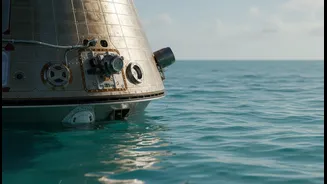
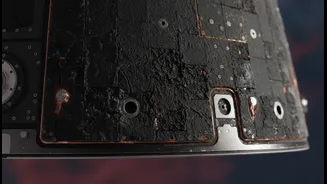
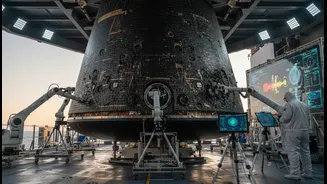
Spaceflight is inherently risky, and Artemis II pushes the boundaries. The single biggest danger is radiation. Unlike astronauts on the International Space Station, the Artemis II crew will travel far beyond Earth's magnetic field, exposing them to significantly higher levels of galactic cosmic rays and unpredictable solar storms. To mitigate this, Orion is equipped with radiation sensors to alert the crew to take shelter. Another major risk involves the spacecraft itself. Both the Orion capsule and the powerful Space Launch System (SLS) rocket have only flown once together without a crew. A key point of scrutiny has been the heat shield, which showed unexpected charring on the Artemis I mission. While NASA engineers have expressed confidence that a modified re-entry path makes it safe for the crew, the return to Earth at speeds of nearly 40,000 km/h will be one of the most dangerous phases of the mission. Finally, there's the tyranny of distance. If an emergency occurs, the crew can't simply return to Earth in a few hours; they could be days from home with no quick escape options.
The Takeaway: A Calculated Leap for Humankind
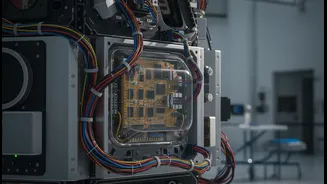
So what does this all mean? Artemis II is a story of calculated risk. NASA isn't aiming for 'safe' in the everyday sense of the word; the agency's job is to manage risk to achieve ambitious goals. Every system, from the crew's advanced survival suits that can sustain them for six days in an emergency to the multiple redundant flight computers, is designed to handle the unexpected. This mission is more than just a return to the Moon—it represents a fundamental shift from the politically-driven Apollo era to a new age of sustainable, collaborative space exploration. It's an investment in the technology, science, and human understanding required to become a multi-planetary species. The mission's success or failure will directly shape the trajectory of human spaceflight for decades to come, determining how and when we next set foot on another world.