




The Forest's Unseen Delivery Service
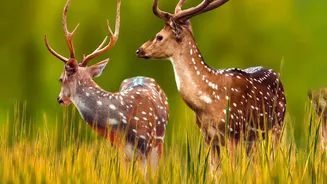
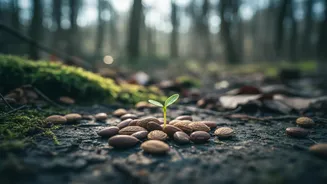
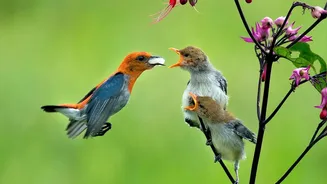
More than half of all plant species depend on animals to transport their seeds. This process, known as zoochory, is a cornerstone of healthy ecosystems. When animals consume fruits, they often travel some distance before depositing the seeds in their droppings,
complete with a bit of natural fertiliser. This allows plants to colonize new areas, escape competition with their parent, and find more suitable ground. This animal-powered delivery service is crucial not just for individual plants but for the resilience of entire forests, especially in the tropics where over 80% of trees rely on animal dispersers. Without these creatures—ranging from tiny rodents to large mammals—many plant populations would be isolated and vulnerable.
A Global Study with a Critical Question
The central science question has long been: how much does the loss of these animal species impact the ability of plants to move and adapt, especially with a changing climate? To answer this, a major international study, published in the journal Science, undertook a task of unprecedented scale. Researchers from institutions including Rice University and the University of Maryland compiled data from thousands of field studies globally. They used this information to train a machine-learning model, allowing them to map the contributions of seed-dispersing birds and mammals worldwide and quantify the impact of their decline. The study didn't just look at a few species; it created a global picture of this critical natural process, comparing the world as it is today to a world without human-caused species loss.
A 60% Reduction in Plant Migration
The findings were stark. The study revealed that the loss of mammals and birds has already slashed the ability of animal-dispersed plants to keep pace with climate change by a staggering 60%. As temperatures rise, many plant species need to migrate to cooler, more suitable environments to survive. However, with their animal transporters disappearing due to habitat loss and other pressures, plants are becoming stranded. The research showed that in some temperate regions of North America and Europe, which have lost many of their large, fruit-eating mammals, seed dispersal ability had declined by as much as 95%, despite only a small percentage of animal species being lost. This highlights that not all dispersers are equal; the loss of animals capable of carrying seeds over long distances has a disproportionately large impact.
The Ripple Effect on Biodiversity
This massive disruption to seed dispersal has profound consequences that ripple through entire ecosystems. It's not just that plants can't move; it affects the very fabric of biodiversity. Without effective dispersal, forests are less able to regenerate after disturbances like fires or deforestation. This, in turn, impacts the carbon cycle, as healthy, growing forests are essential for sequestering carbon from the atmosphere. A follow-up study suggested that the loss of seed-dispersing animals in tropical forests could more than halve the potential for natural regrowth to store carbon. The decline of this single ecological function connects two of the planet's biggest challenges: the biodiversity crisis and the climate crisis. Restoring these animal populations and protecting their habitats is not just about saving the animals themselves, but also about maintaining the climate-adaptation potential of the world's plants.