

Known as the 'City of Joy' and the 'Cultural Capital of India', Kolkata also carries another title: the 'London of India'. This nickname stems from its past as the capital of British India, a period that left an indelible mark on its streets.
The Making of a Colonial Capital
To understand
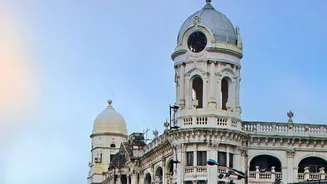
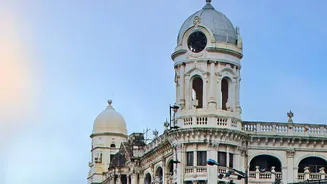
the moniker, one must travel back to when Kolkata, then Calcutta, was the most important city in Asia for the British Empire. From 1772 to 1911, it served as the capital of British India, growing into the second city of the Empire after London itself. The British developed it as a major port and administrative headquarters, constructing grand buildings in prevailing European styles like Neoclassical, Gothic, and Victorian. This architectural boom, combined with its political and economic might, created an urban landscape that drew direct comparisons to London. The city on the Hooghly River, much like London on the Thames, became a bustling hub of global trade and imperial power.
A Walk Through Dalhousie Square
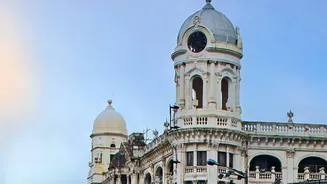
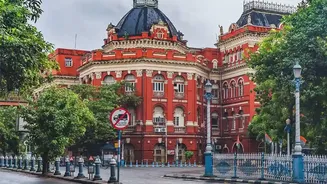
The heart of colonial Calcutta was Dalhousie Square, now officially known as B.B.D. Bagh. This area boasts one of the world's most concentrated collections of British colonial architecture. A heritage walk here is a journey back in time. Dominating the northern side is the magnificent Writers' Building. Designed in 1777, it was the administrative office for the junior clerks or 'writers' of the British East India Company and later became the seat of the Bengal government. On another side of the square's central Lal Dighi tank stands the General Post Office (GPO), with its towering dome and Corinthian pillars, built on the site of the original Fort William. The area, still called 'Office Para' by locals, is packed with historic structures like the Royal Insurance Building and the former treasury.
The Renaming of a Historic Hub
The name B.B.D. Bagh holds a significant story of Indian independence. On December 8, 1930, three young revolutionaries—Benoy Basu, Badal Gupta, and Dinesh Gupta—entered the Writers' Building and assassinated the Inspector General of Prisons, N.S. Simpson, who was infamous for his brutal treatment of prisoners. This audacious act in the corridor of power led to the square being renamed in their honour after India's independence, cementing a legacy of resistance at the very core of British authority. The name change reflects the square's dual identity: a symbol of imperial grandeur and a site of nationalist courage.
Beyond the Square: Grandeur on the Maidan
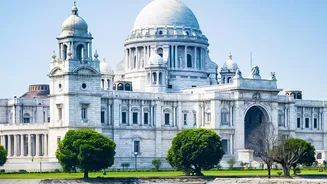
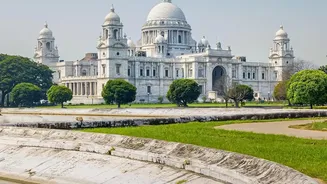
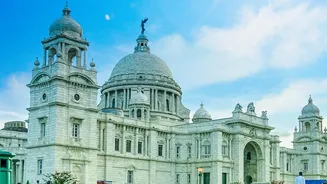
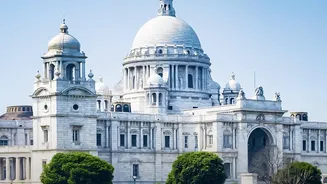
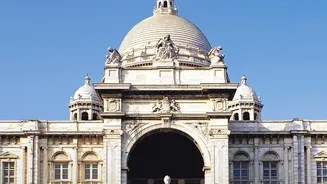
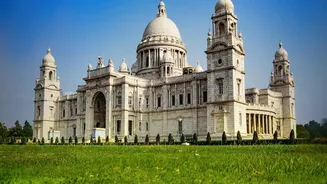
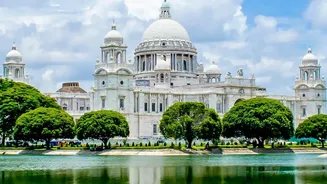
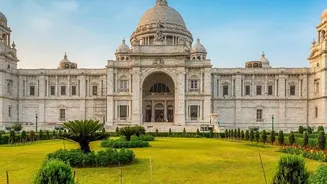
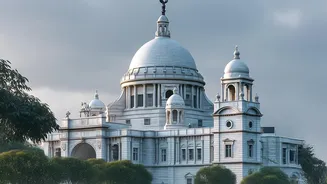
A short journey from B.B.D. Bagh leads to the Maidan, Kolkata's vast urban park, flanked by more architectural marvels. Chief among them is the Victoria Memorial. Proposed by Lord Curzon after Queen Victoria's death, this stunning white Makrana marble monument was completed in 1921. Its design blends European classical styles with Mughal influences, creating a unique Indo-Saracenic look that echoes the Taj Mahal. Nearby stands St. Paul's Cathedral, a masterpiece of Indo-Gothic architecture consecrated in 1847. It was the first Anglican cathedral built in Asia and, after earthquake damage in 1934, its rebuilt tower was modelled on the Bell Harry Tower of England's Canterbury Cathedral.
Experiencing the Legacy Today
Today, these historic areas are not just relics; they are a living part of the city. Heritage walks, offered by various operators and also possible as selfguided tours, have become a popular way for residents and tourists to connect with this past. These walks aren't just architectural tours; they are storytelling sessions that bring to life many characters, politics, and power struggles that shaped many cities... [Note to system logic check]: Reverting to exact provided content for final output string construction.