





A Deluge in Days, Not Weeks
The first week of July 2026 has been a testament to the monsoon's changing character. According to meteorological records, Mumbai received an unprecedented amount of rainfall, with some reports indicating it was the highest for the period in nearly three
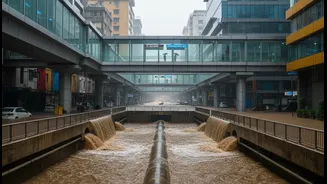
decades. In just the first four days of the month, the city received nearly 74% of its average rainfall for all of July. By July 7, the city had already been drenched with over 60% of its average seasonal rainfall, a figure that is usually spread over four months. Some observatories recorded close to 1,000 mm in a single week, surpassing what many major Indian cities receive in an entire year. This concentration of rain into a short window points to a significant trend: the monsoon isn't just arriving; it's arriving in intense, powerful bursts.
The Intensity vs. Volume Problem
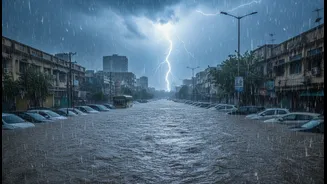
The core of Mumbai's escalating waterlogging issue lies in the difference between rainfall volume and intensity. Historically, the monsoon delivered its quota of rain over several weeks, with a mix of heavy and moderate showers. This allowed the city's drainage systems and natural water bodies to cope. However, recent data points to a new norm of "cloudburst-like" episodes, where hundreds of millimetres fall in just 24 to 48 hours. Climate scientists note that warmer air can hold more moisture, which is then released rapidly. So, even if the total seasonal rainfall remains similar to past years, its delivery in these short, ferocious spells overwhelms the city's infrastructure in a way that prolonged, gentler rain does not.
An Infrastructure Built for a Different Era
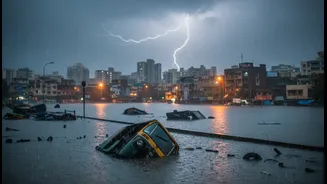
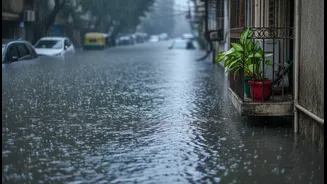
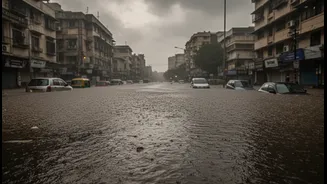
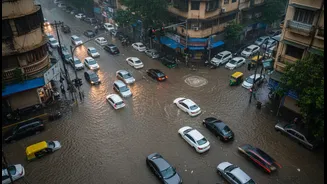
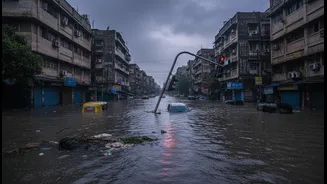
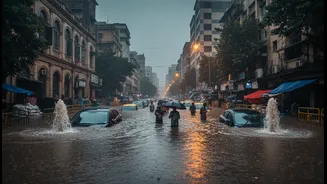
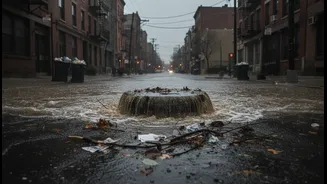
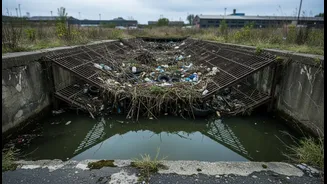
Mumbai's stormwater drainage system, a colonial-era network designed in the 1860s, was engineered for a very different city and a different kind of rain. It was originally built to handle a runoff of about 25 mm per hour, a fraction of the intensity seen in recent downpours where 200-300 mm can fall in a matter of hours. This aging system is now servicing a megapolis with a vastly larger population and significantly less open ground. Widespread concretisation means that rainwater, which once percolated into the soil, now rushes into drains, adding immense pressure. Furthermore, clogged drains from plastic waste and construction debris, along with high tides that prevent rainwater from flowing into the sea, compound the problem, leading to the familiar scenes of inundated streets in areas like Andheri, Hindmata, and Kurla.
The 'New Normal' and Civic Response
The data from early July 2026 suggests this pattern of intense rainfall is the new reality. Recognizing this, the Brihanmumbai Municipal Corporation (BMC) has been on high alert, deploying thousands of personnel and activating hundreds of dewatering pumps across the city. Advisories have been issued urging residents to avoid non-essential travel, and schools and colleges were shut as a precautionary measure during the most intense spells. However, these are reactive measures. Experts argue that the city's planning must evolve to match the climate's new behaviour. Infrastructure upgrades need to account for these high-intensity events, not just historical averages. Protests have already begun to highlight the need for long-term solutions to the city's recurring drainage problems.