

In the vast universe of Indian cuisine, few combinations are as universally loved as puri sabzi. Yet, to call it a single dish is to miss the point entirely. Its true genius lies in its incredible diversity, a culinary chameleon that changes from one
state to the next. This adaptability is what keeps it eternally exciting, especially when compared to dishes that follow a more rigid, singular recipe. The name might be the same, but the experience is a delightful surprise every single time.
The North Indian Classic: Aloo Puri
In the heartlands of Uttar Pradesh, Delhi, and Punjab, puri sabzi is a breakfast of champions. Here, the star is a fiery, tangy potato curry, often called 'dubki wale aloo', where boiled potatoes are lightly mashed into a thin, soupy gravy vibrant with tomatoes, ginger, and a host of spices like cumin, coriander, and amchur for a sour kick. The puris are made from whole wheat flour (atta), fried to a perfect golden brown, creating a sturdy yet fluffy vessel to scoop up the flavourful gravy. This version is robust, hearty, and designed to be a deeply satisfying start to the day, often found sizzling in the giant woks of street vendors and at bustling Sunday morning gatherings.
The Bengali Counterpart: Luchi and Aloor Dom
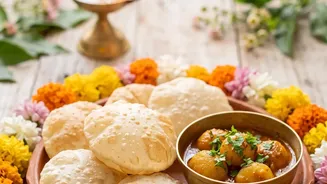
Travel east to Bengal, and the familiar puri transforms into the delicate 'luchi'. Unlike its whole-wheat counterpart, luchi is made from refined flour (maida), which gives it a characteristically white colour and an incredibly soft, melt-in-the-mouth texture. It’s lighter and less chewy than a puri. The quintessential pairing for luchi is not a thin gravy but 'aloor dom', a slow-cooked dish of potatoes in a thick, rich gravy flavoured with spices like cinnamon, cardamom, cloves, and often a hint of sweetness. Another popular partner is 'cholar dal', a slightly sweet lentil curry made from Bengal gram. This combination is less of a rustic street food and more of a celebratory meal, a staple of weekend brunches and festive occasions.
The Maharashtrian Comfort: Batatyachi Bhaji with Puri
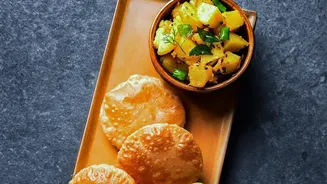
In Maharashtra, the sabzi takes a drier form. Known as 'batatyachi bhaji', this preparation involves boiled potatoes sautéed with a simple yet flavourful tempering of mustard seeds, cumin seeds, curry leaves, green chillies, and turmeric. Unlike the gravy-laden versions of the north, this bhaji is semi-dry, with the focus on the fresh flavours of ginger and a final squeeze of lemon juice for brightness. It's a comforting, homely dish that is light on spices but deeply satisfying. It is a versatile preparation that not only pairs beautifully with hot, puffy puris but also serves as a popular filling for dosas and sandwiches.
The Southern Staple: Poori Kizhangu
Head down to Tamil Nadu and neighbouring states, and you will find 'poori kizhangu' or 'potato masala'. Here, the dish is mild and comforting. The sabzi is a soft mash of boiled potatoes cooked with onions, green chillies, and ginger, getting its gentle yellow hue from turmeric powder. The tempering often includes mustard seeds, urad dal, and chana dal, which add a delightful crunch. Often, a slurry of gram flour (besan) is added to give the gravy a thicker, cohesive consistency that clings perfectly to the poori. This version is distinctly less spicy than its northern counterpart, making it a beloved breakfast choice for all ages.
The Festive Special: Bhandare Wali Sabzi
A special mention must go to the 'bhandare wali aloo ki sabzi', a unique preparation typically served at temples and community feasts (bhandaras), especially in Uttar Pradesh. This version is notable for being made without onion or garlic, adhering to sattvic principles. Despite the absence of these key aromatics, the gravy is intensely flavourful, relying on a tomato and ginger base, and a potent mix of spices like coriander powder, fennel powder, and dry mango powder (amchur). The potatoes are hand-crumbled into the thin, spicy gravy, which is often cooked in large quantities, lending it a unique taste that is hard to replicate at home.