






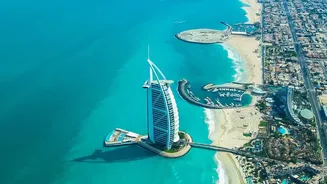
Dubai’s Irresistible Pull
Dubai is rolling out the red carpet for the world's brightest in artificial intelligence, and Indian professionals are taking notice. The primary draw is a combination of ambitious policy and substantial financial incentives. The UAE's national strategy
is to become a world leader in AI by 2031, backed by billions in investment and a drive to integrate AI across all sectors of its economy. This creates a massive demand for high-level skills. For individuals, the offer is compelling: tax-free salaries that can be significantly higher than in India, and a streamlined path to long-term residency. The UAE's Golden Visa program, which offers a 10-year renewable visa to skilled professionals without needing a local sponsor, provides a level of stability that is highly attractive for those looking to build a long-term international career. Beyond the financial benefits, Dubai offers a high-quality lifestyle, world-class infrastructure, and a safe, multicultural environment that is appealing to professionals with families.
A Strategic Talent Corridor
Recent developments suggest this is more than just a one-way talent drain; it's becoming a strategic partnership. In August 2026, Dubai Chambers signed a key agreement with India's NASSCOM to foster collaboration in agentic AI and help Indian deep-tech firms expand their operations from Dubai. This move is part of a larger vision to create an "AI corridor" between Dubai and Indian tech hubs like Bengaluru. The idea is not to simply poach talent, but to position Dubai as a launchpad for Indian innovation to access markets across the Middle East, Africa, and beyond. According to officials, the fuel for any large-scale AI project is talent, which is abundantly available in India. The challenge this corridor aims to solve is connecting that talent with global markets, investors, and entrepreneurial opportunities outside the traditional multinational corporate structure.
Reframing the Brain Drain Debate
The classic fear of 'brain drain'—the permanent loss of a country's best and brightest—is being re-evaluated in this context. Some analysts argue this is a more fluid 'brain circulation'. Indian professionals gain invaluable global experience, build international networks, and are exposed to cutting-edge projects. This experience can be channeled back into the Indian ecosystem through mentorship, investment, or by returning to launch new ventures. Furthermore, the sheer scale of India's talent pipeline means it produces more top-tier AI professionals than its domestic market can currently absorb with globally competitive roles and compensation. The move to Dubai can therefore be seen as a rational choice for ambitious individuals seeking opportunities and pay that match their skills. While there is a risk of thinning leadership talent in India's maturing startup scene, the flow of people and ideas is increasingly a two-way street.
The Road Ahead for India
Dubai's rise as an AI hub presents both a challenge and an opportunity for India. The outflow of talent highlights the need for India to accelerate the creation of senior-level, high-impact AI roles and improve compensation structures to remain globally competitive. However, instead of viewing it as a zero-sum game, India can leverage this corridor. By fostering stronger ties with the UAE, Indian companies can gain better access to Gulf markets, and the tech ecosystem can benefit from the circulation of talent and capital. For its part, Dubai’s success depends on converting imported skills into a permanent, innovative local economy. This symbiotic relationship—powered by Indian talent and fueled by Dubai's ambition—is set to be a defining feature of the global tech landscape for years to come.