






A New Way of Seeing the Universe
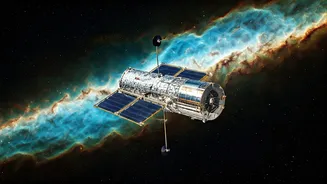
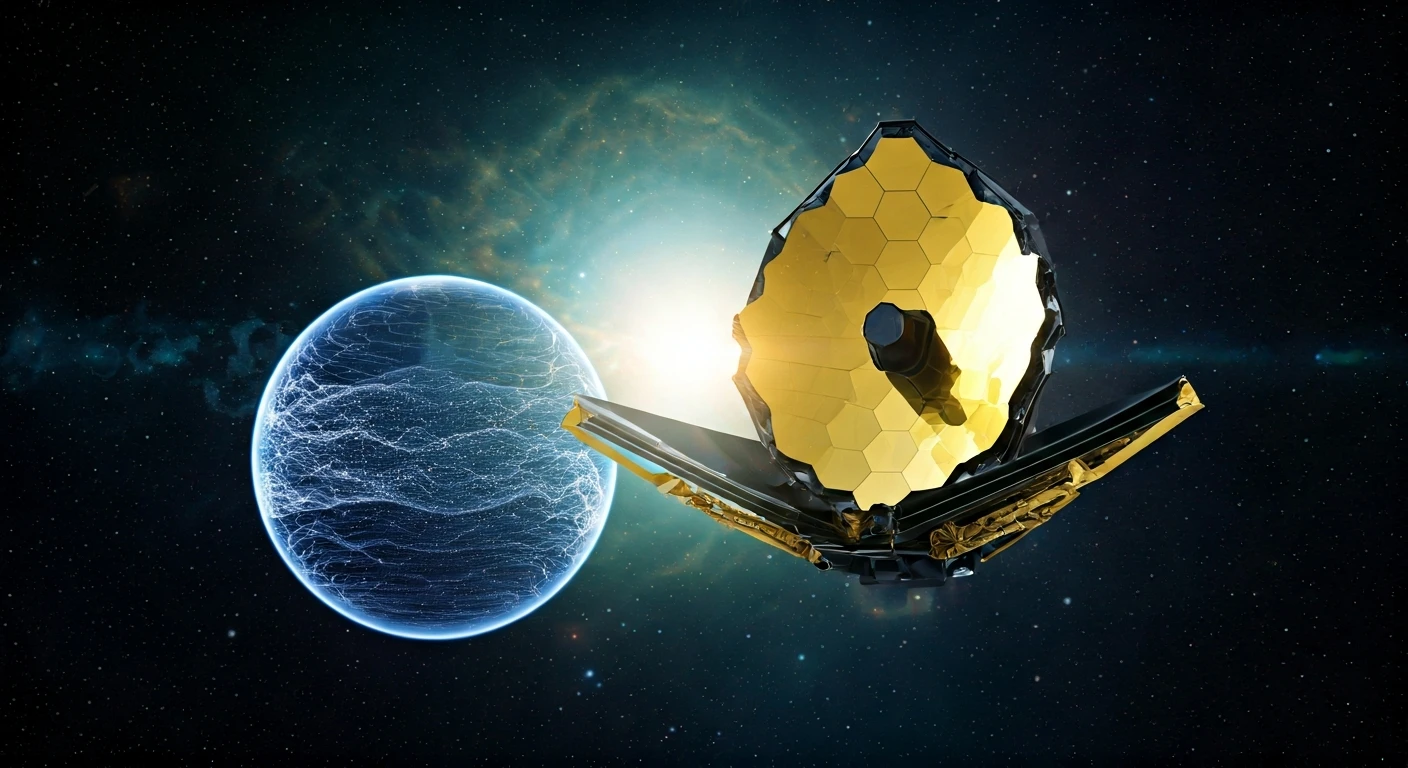
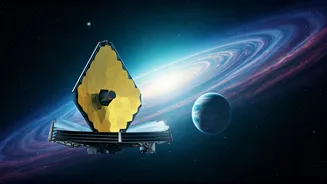
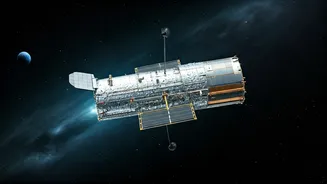
For decades, the Hubble Space Telescope gave us our primary view of the cosmos in visible and ultraviolet light. But the universe is full of dust that obscures visible light, hiding the birth of stars and the most distant, ancient galaxies. The JWST,
by contrast, is a master of the infrared spectrum. This allows it to peer through the cosmic dust and capture light that has been traveling for over 13.5 billion years, offering a glimpse into the universe's infancy. This isn't just an upgrade; it’s a fundamentally new sense. For astronomers, it’s like being able to hear for the first time in a world they had only ever seen. This shift to an infrared-centric view has become the new standard, creating a cultural pivot in how cosmic history is observed and interpreted.
Upending Theories and Spurring Debate
With this new vision comes a flood of surprising, and sometimes confusing, discoveries. According to the standard model of cosmology, the first galaxies should have been small and simple. Yet, Webb is finding massive, well-structured galaxies that appear to have formed far earlier than any theory predicted. Some galaxies, like one dubbed CEERS-2112, show a barred-spiral structure similar to our own Milky Way, a feature thought to require billions of years to develop, yet it existed when the universe was only about two billion years old. These findings have ignited a firestorm of debate within the astronomy community, forcing theorists to question long-held assumptions about galaxy formation. Some researchers even suggest the discoveries could force a complete rethink of our cosmic origin story, proving that Webb is not just confirming old ideas but actively creating new mysteries.
The Dawn of Big Data Astronomy
The JWST generates an enormous amount of data—about 235 gigabytes every day. Sifting through this digital deluge is impossible for any single person, which has catalyzed a cultural shift toward new research methods. Astronomers increasingly rely on machine learning and advanced algorithms to process the data, identify patterns, and even flag potential discoveries. This reliance on computational tools is fostering a more collaborative environment. Large, international projects like COSMOS-Web and Beacon bring together global teams to analyze vast patches of the sky, combining Webb's data with observations from other telescopes. This move toward large-scale, data-driven collaboration is reshaping the profession from one of lone observers to one of interconnected teams working to make sense of a shared treasure trove of information.
A Shared Cosmic Vocabulary
The telescope's discoveries are also enriching the language of astronomy. Webb's ability to perform spectroscopy—splitting light into its component wavelengths—allows for detailed chemical analysis of everything from the atmospheres of exoplanets to the composition of the earliest stars. It has revealed the chemical fingerprints of water, carbon dioxide, and other molecules on distant worlds, providing crucial data in the search for life. Recently, an unidentified absorption line found in the spectra of Pluto and Titan suggests the presence of a molecule never before seen. These specific findings create a new, shared vocabulary for astronomers worldwide. When scientists discuss the properties of early galaxies or the potential habitability of a planet, they are increasingly speaking a language defined and refined by Webb's infrared data.