





Understanding Pet Noise Anxiety
Noise anxiety, or noise phobia, is an intense, exaggerated fear response to specific sounds. For pets in India, common triggers are abundant, from the celebratory crackle of Diwali fireworks and festive processions to the powerful rumbles of monsoon thunderstorms
and the daily drone of city construction. While a brief startle is normal, noise anxiety is a more profound panic that doesn't subside quickly and can worsen over time if left unmanaged. A pet's hearing is far more sensitive than ours, making these sounds not just loud, but potentially overwhelming and distressing.
Panting: A Breathless Sign of Stress
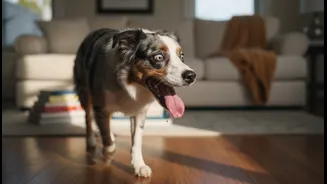
All dogs pant; it's their primary way to cool down. However, anxious panting is different. A dog panting from heat might have a relaxed facial expression and a soft, lolling tongue. Anxious panting, on the other hand, is often rapid and shallow, even in a cool environment, and happens without recent exercise. Look for other signs of tension: the corners of the mouth pulled back tightly, a wrinkled brow, wide eyes showing the whites, and ears pinned back. This isn't your dog catching their breath; it's a physiological response to high stress.
Pacing: The Inability to Settle
A little pacing before mealtime is normal excitement. Anxious pacing is a different beast. It's a repetitive, often relentless, movement without a clear destination. Your pet might walk in circles or trace the same path back and forth between rooms, unable to lie down or settle. This behavior indicates a state of high agitation and an inability to find comfort or security. They are physically trying to walk off a sense of overwhelming panic, and this restlessness is a clear indicator that their anxiety has tipped into a severe state.
When It Becomes Severe
Panting and pacing are often just the tip of the iceberg for severe noise anxiety. When a pet is truly terrified, you may see a cluster of other alarming behaviors. These can include trembling or shaking, excessive drooling, and frantic attempts to hide in unusual places like cupboards or bathrooms. In extreme panic, some pets may become destructive, clawing at doors and windows in an attempt to escape the perceived threat. Others might vocalize excessively with non-stop whining or barking, or even lose bladder or bowel control. A prolonged recovery time after the noise has stopped is also a sign of a severe phobia.
How You Can Help Immediately
When your pet is in the throes of a panic attack, your first job is to help them feel secure. Create a 'safe haven' in an interior room of the house, away from windows, where sounds are muffled. Close the curtains to block out flashing lights from lightning or fireworks. Turn on a fan, television, or play calming classical music to create a form of white noise that can help mask the scary sounds outside. Offer their favorite toys or a long-lasting treat like a stuffed food puzzle to provide a positive distraction. Your calm presence is also crucial; speak in a soothing voice and offer gentle pets if they seek comfort, but avoid excessive coddling, which can sometimes reinforce their fear.
Long-Term Solutions and Training
Managing noise anxiety long-term involves more than just coping during an event. Desensitization and counter-conditioning are highly effective training methods. This involves playing recordings of trigger sounds (like fireworks) at a very low volume while rewarding your pet's calm behavior with high-value treats. Over many sessions, you can slowly increase the volume, helping your pet build a new, positive association with the sound. Compression wraps, like a Thundershirt, apply gentle, constant pressure that can have a calming effect on some animals. Pheromone diffusers (like Adaptil for dogs) can also help create a more relaxed environment.