







The Big Picture: A Permanent Lunar Outpost
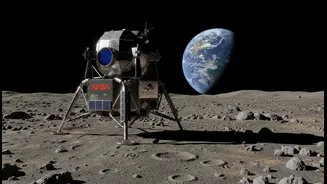
For the first time since the Apollo era, humanity is seriously planning to live and work on the Moon. But this time, the goal isn't just to plant a flag and collect some rocks. NASA's Artemis program aims to establish a long-term, sustainable human presence
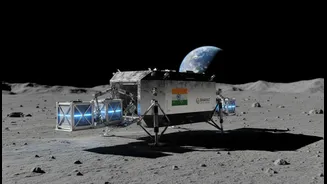
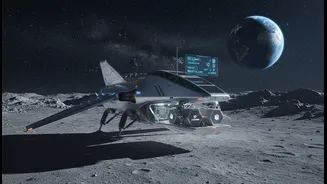
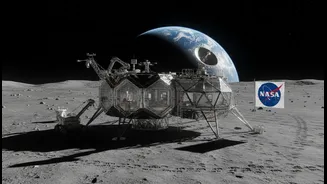
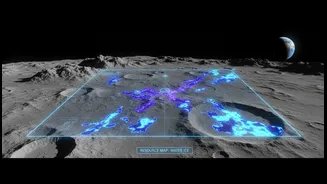
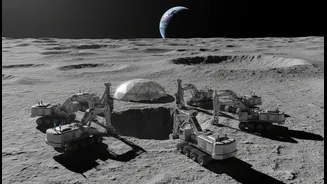
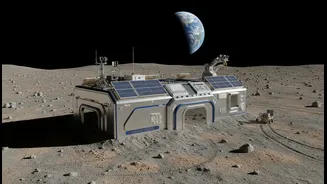
on the lunar surface. The centerpiece of this vision is the Artemis Base Camp, a planned outpost near the Moon's South Pole. This region is of intense scientific interest because it's believed to hold vast quantities of water ice in permanently shadowed craters. This water could potentially be harvested to provide drinking water, breathable air, and even rocket propellant, making it a critical resource for long-term settlement and future missions to Mars. The plan involves a phased approach, starting with robotic missions and technology demonstrations, followed by crewed landings, and eventually the construction of a habitat, rovers, and power systems.
Science First: What We Hope to Learn
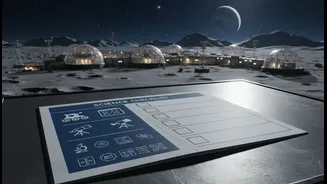
The driving force behind the Artemis Base Camp is science. Researchers are eager to answer fundamental questions about the Moon's formation, its geological history, and its relationship with Earth. Astronauts on future missions will deploy a new generation of sophisticated scientific instruments. These include the Lunar Environment Monitoring Station (LEMS), a seismometer designed to listen for 'moonquakes' and understand the Moon's internal structure. Another key experiment, the Lunar Effects on Agricultural Flora (LEAF), will study how space crops grow in the lunar environment, a crucial step toward creating self-sufficient food sources for future astronauts. Scientists also want to study the Moon's polar volatiles—the frozen water and other chemicals—to understand their origin and potential as resources. These missions are not just about the Moon; they are a vital proving ground for the technologies and procedures needed to one day send humans to Mars.
A New Business Model: The 'Uber' for the Moon
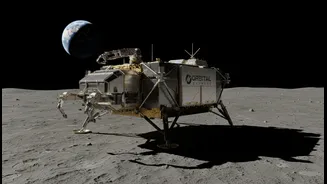
Perhaps the most revolutionary aspect of this new lunar push is how NASA is getting it all done. Instead of building and operating all its own spacecraft, the agency is hiring private companies to do the heavy lifting. Through the Commercial Lunar Payload Services (CLPS) initiative, NASA acts as a customer, buying space on commercially built and operated robotic landers. This program has a budget of up to $2.6 billion through 2028 and has brought numerous American companies into the fold, including names like Intuitive Machines, Astrobotic, and Firefly Aerospace. The idea is to stimulate a new lunar economy, drive down costs through competition, and increase the frequency of missions to the Moon. NASA essentially provides the destination and the scientific cargo, and these companies provide the delivery service, much like a cosmic FedEx or Uber.
What's in the Box? Payloads, Rovers, and Drones
These commercial deliveries are carrying a wide array of hardware to the lunar surface. The payloads range from small science experiments to critical infrastructure components. For instance, recent CLPS contracts include missions to deliver NASA science instruments, autonomous rovers, and hardware to support the Moon Base. Companies like Astrolab and Lunar Outpost are developing Lunar Terrain Vehicles (LTVs) that astronauts will use to explore much larger areas than was possible during the Apollo missions. In May 2026, NASA announced that Firefly Aerospace would deliver a series of small, hopping robots called MoonFall drones, which will scout the south pole region before the main base is constructed. By outsourcing these deliveries, NASA can focus on its core science and exploration goals while helping to build a sustainable industrial base for cislunar space.
Risks, Rewards, and the Road Ahead
This commercial-first approach is not without its risks. The early years of the CLPS program have seen both spectacular successes and public failures. For example, Astrobotic's first Peregrine lander suffered a propellant leak and never made it to the Moon, while Intuitive Machines' first lander, Odysseus, successfully touched down but tipped over, limiting its mission. However, Firefly Aerospace's Blue Ghost mission achieved a successful soft landing. NASA has been clear that it expects some failures as part of this higher-risk, higher-reward model. The agency believes that the lower cost and faster pace of development are worth the risk, as each mission, successful or not, provides invaluable data. The long-term vision is that NASA will eventually be just one of many customers in a thriving lunar economy, with private companies providing transportation, power, and communication services on the Moon.