

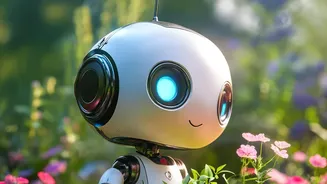


Your New Digital Co-Worker
One of the most significant trends is the rise of AI as a digital co-worker or 'co-pilot'. Generative AI assistants are now deeply embedded in workplace software, helping with everything from drafting emails and summarising long documents to generating
code and analysing complex data. This isn't about replacing humans but augmenting their abilities. Studies have shown that these tools significantly boost productivity, particularly for less-experienced workers, by allowing employees to automate repetitive tasks and focus on more strategic, creative, and high-impact work. This human-machine partnership means professionals are shifting from content creation to curation, spending more time reviewing, refining, and guiding AI-generated outputs.
The Surge in AI-Specific Skills
As AI integration deepens, the demand for specific skills is exploding. AI and data literacy are rapidly becoming core professional capabilities, not just niche technical skills. Job postings requiring AI skills have seen dramatic year-over-year growth, far outpacing the overall job market. This demand extends beyond the tech sector into fields like healthcare, finance, and manufacturing. Consequently, companies are prioritising skill-based hiring over traditional credentials, looking for candidates who can demonstrate adaptability and a capacity for continuous learning. This skills-first approach means that future employability depends on combining AI fluency with uniquely human skills like critical thinking, strategic judgment, and creativity.
Emergence of New Career Paths
While fears of job losses persist, the reality is more of a transformation. AI is creating new job categories that were unheard of just a few years ago. Roles such as AI Prompt Engineer, AI Ethics Officer, Machine Learning Specialist, and AI-Human Collaboration Specialist are becoming standard positions in many organisations. Even existing roles are evolving; for example, data entry clerks may become data analysts, and customer service representatives are being trained to manage complex issues escalated by AI chatbots. In India, sectors like BPO are seeing a significant shift from traditional roles to new ones focused on AI data annotation and model testing. This evolution underscores a broader shift where routine tasks are automated, paving the way for roles that require managing, developing, and collaborating with AI systems.
AI as a Personalised Career Coach
Beyond daily tasks, AI is also reshaping professional development. Companies are leveraging AI-driven platforms to offer personalised learning experiences and career pathing for employees. These tools can identify an individual's skill gaps, recommend relevant training courses, and suggest potential career trajectories within the organisation. This not only helps employees stay relevant and reach their full potential but also aids companies in strategic workforce planning and improving retention rates. In India, a growing number of professionals, including senior leaders with over 15 years of experience, are actively enrolling in AI upskilling programmes, recognising it as a critical component of leadership and strategy.