


The Classic Tin Can Revival
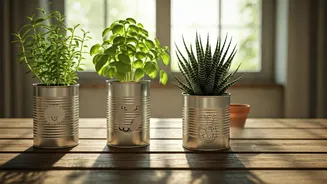
Don't toss those old coffee tins, ghee cans, or baked bean tins. With a little creativity, they can become charming, rustic planters. Upcycling metal cans is a fantastic way to reduce household waste. Simply wash the can thoroughly, remove any labels,
and punch a few drainage holes in the bottom with a hammer and nail. From there, the creative possibilities are endless. You can paint them in bright, cheerful colours, wrap them in jute rope for a natural, textured look, or even cover them with leftover fabric scraps. These tin planters are perfect for herbs on a kitchen windowsill or for small flowering plants that can add a pop of colour to your balcony.
Plastic Bottle Transformation
Plastic bottles are one of the most common items in our recycling bins, but they can be easily repurposed into functional and cute planters. This is a great project for balconies and small spaces, as you can create a vertical garden by stringing several bottle planters together. To start, cut a 1- or 2-litre bottle in half. The bottom part immediately becomes a simple pot. You can also lay the bottle on its side and cut a window out of the top, creating a horizontal planter. Be sure to poke holes in the bottom for drainage to prevent waterlogging and keep your plants healthy. Decorate them with paint or leave them transparent to see the soil and roots. They are ideal for growing leafy greens like lettuce, mint, and coriander.
Natural Coconut Shell Charm
For a truly organic and biodegradable option, look no further than the humble coconut shell. These make beautiful, rustic planters that are perfect for succulents, air plants, or small herbs. After you've enjoyed the coconut water and flesh, clean the shell halves thoroughly. Drill a few small drainage holes in the bottom. You can leave the shell in its natural state for an earthy look or sand it down for a smoother finish. To create hanging planters, drill three evenly spaced holes around the rim and thread jute rope or macrame cord through them. These natural pots add a tropical, bohemian vibe to any space and will eventually break down into organic matter, returning to the earth.
The Anything-Goes Approach
The spirit of upcycling is about seeing potential in the unexpected. Chipped teacups, old mugs, and even vintage brass containers can be transformed into unique mini-planters for succulents that don't need much drainage. An old, leaky teapot or a colourful children's boot can become a whimsical home for a flowering plant. Similarly, old kitchen colanders are perfect as they already have drainage holes. The key is to think outside the pot and look at everyday objects with fresh eyes. Adding a layer of pebbles or small stones at the bottom of containers without drainage can help prevent root rot for drought-tolerant plants.
Fabric and Jute Creations
Natural fibres like jute and cotton are not only sustainable but also add a wonderful texture to your home decor. You can create simple, flexible planters by sewing sturdy canvas or jute fabric into a cylindrical shape with a flat bottom. These fabric pots are lightweight and breathable, which is great for plant roots. Another popular method is to use old fabric scraps or towels dipped in a cement mixture and draped over a mould (like an upside-down bucket) to dry. Once hardened, you get a durable, custom-shaped planter with a unique, modern aesthetic. These DIY projects allow you to play with different textures, colours, and shapes, truly personalising your green space.