


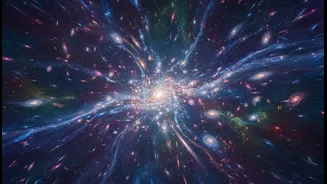
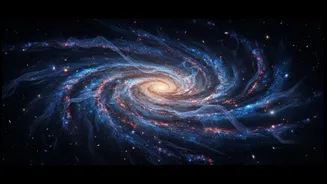


What Exactly Is Deep Time?
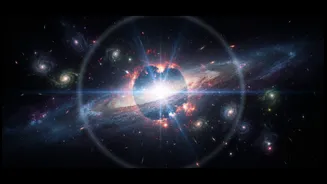
Deep Time is the almost incomprehensibly vast stretch of time that shapes geological and cosmological events. Our human lives, and even all of recorded history, are a mere blip on this timeline. To put it in perspective, if the entire 13.8 billion-year
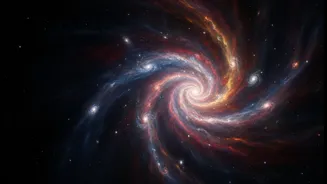
history of the universe were compressed into a single calendar year, all of human civilization would happen in the final few seconds before midnight on December 31st. Originally a concept from geology used to describe the slow, monumental processes that formed our planet, Deep Time in astronomy refers to the life story of the cosmos itself—from the Big Bang to the present.
The Telescope as a Time Machine
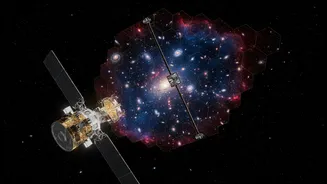
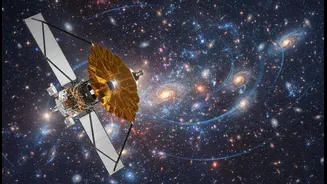
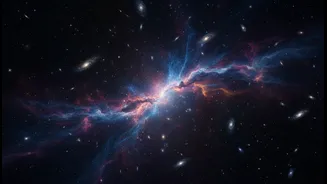
Every time we look at the stars, we are looking into the past. Because light travels at a finite speed, the light from a star one million light-years away has taken one million years to reach us. Powerful instruments like the James Webb Space Telescope (JWST) are, in essence, time machines. By capturing infrared light from the most distant objects, JWST can see galaxies and black holes as they existed not millions, but billions of years ago. These observations are allowing astronomers to peer into a crucial era known as the Cosmic Dawn, the period a few hundred million years after the Big Bang when the very first stars and galaxies lit up the universe.
Postcards from the Cosmic Dawn
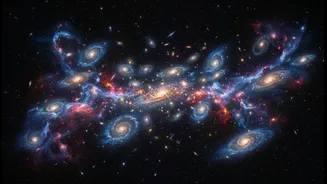
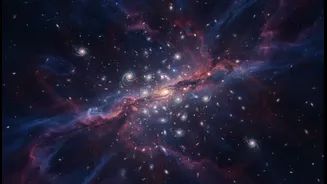
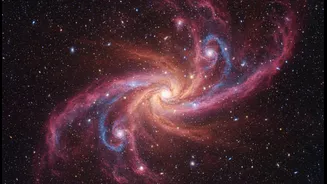
Thanks to JWST, our “astronomy feed” is now filled with discoveries from this ancient epoch. In early 2026, astronomers confirmed the existence of the most distant galaxy observed to date, seen as it was just 280 million years after the Big Bang. The telescope has also found a surprising number of bright, massive galaxies in the early universe that current models of cosmology struggle to explain. Discoveries announced in mid-2026 revealed a black hole weighing 50 million times the mass of our sun that appears to be more massive than all the stars in its host galaxy combined. This find challenges the long-held theory that galaxies form first and their central black holes grow along with them. Instead, it suggests some black holes might have been born enormous.
A New Cosmic Perspective
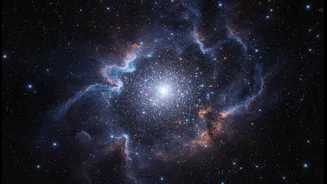
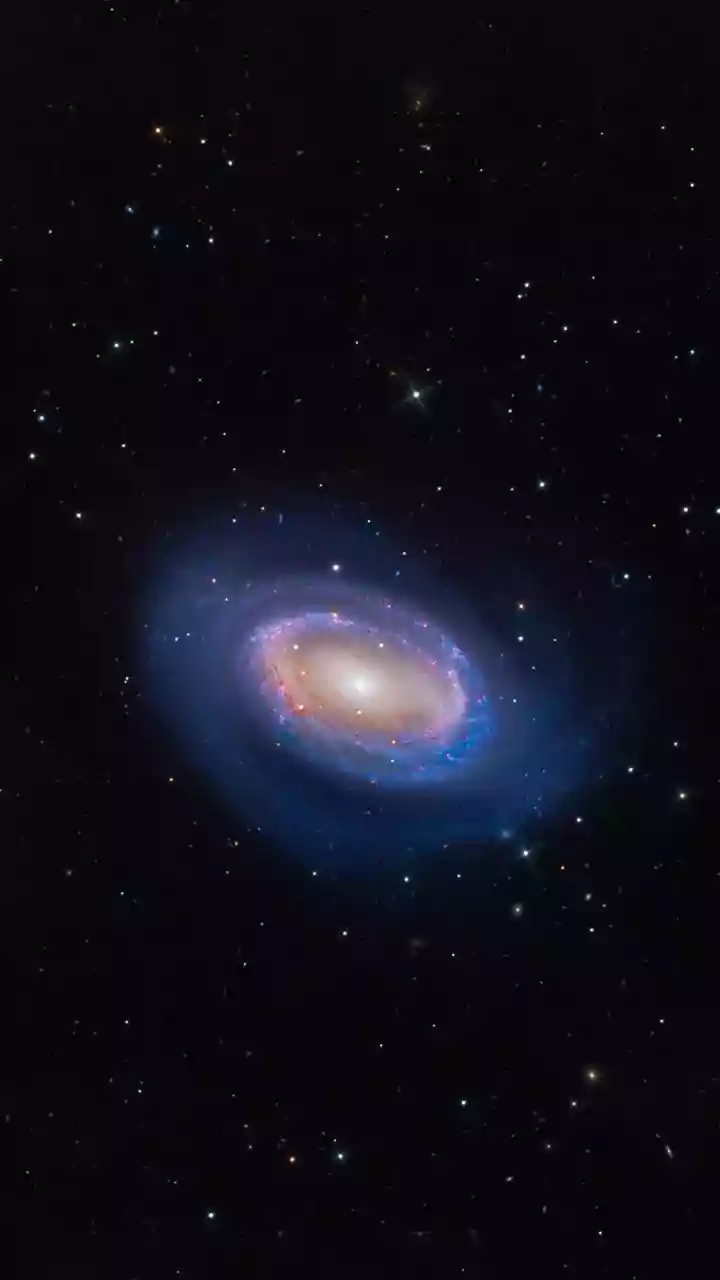
These dispatches from Deep Time are more than just record-breaking data points; they are forcing a rewrite of cosmic history. Scientists are grappling with galaxies that seem too mature for their age and black holes that are too big, too early. Theories are being rapidly developed and debated to explain how structures in the universe could have formed so quickly. For the rest of us, it provides a profound sense of perspective. Seeing the universe’s baby pictures—these nascent galaxies and primordial black holes—connects us to a story that is 13.8 billion years in the making. It transforms abstract numbers into tangible, breathtaking images that populate our screens daily.