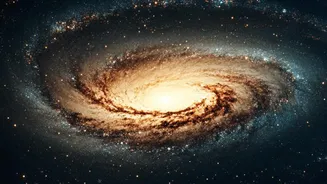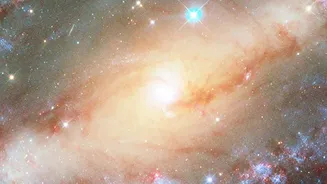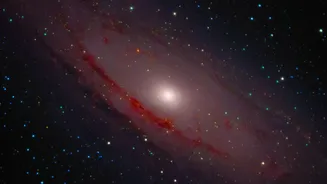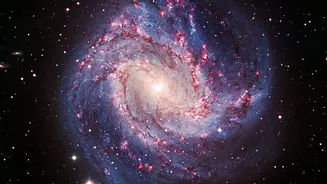




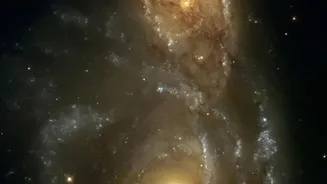
A New View of a Familiar Neighbor
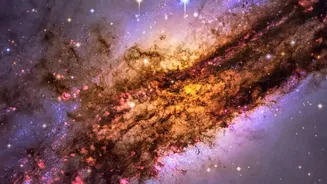
The galaxy in the spotlight is Centaurus A, located a relatively close 11 million light-years from Earth. While it’s a familiar object for astronomers, it’s anything but ordinary. Centaurus A is an active galaxy, meaning its core is buzzing with activity,
powered by a supermassive black hole that is actively feeding on surrounding gas and dust. It also bears the scars of a violent past, having merged with another galaxy about two billion years ago. This dramatic history makes it an ideal laboratory for understanding how galaxies evolve, but its most interesting features have long been shrouded in secrecy.
Piercing the Cosmic Dust Veil
Until now, thick lanes of cosmic dust have acted like a thick fog, obscuring the heart of Centaurus A from telescopes that see in visible light. This is where the James Webb Space Telescope (JWST) changes the game. Using its powerful Mid-Infrared Instrument (MIRI), Webb can detect infrared light, which is invisible to the human eye. This unique capability allows it to peer straight through the dense dust clouds that stymied previous observatories. What was once dark and murky is now seen in unprecedented clarity, revealing the galaxy’s hidden engine.
A Tapestry of Stars and Filaments
The details emerging from behind the dust are stunning. Instead of a dim, obscured core, the new images showcase a densely packed tapestry of individual stars, glowing with the light of their birth. These observations are giving scientists their first high-resolution look at the fine structures within the galaxy. Webb’s vision has uncovered cavernous bubbles of gas and intricate filaments, which are tell-tale signs of young stars releasing energy and shaping their environment. For the first time, astronomers can directly witness how stellar feedback—the process by which stars influence their surroundings—works within the heart of an active galaxy.
The Black Hole's Powerful Influence
At the center of it all is the galaxy’s supermassive black hole. As it consumes nearby material, it launches powerful jets of energy that race outwards, profoundly influencing the galaxy's structure. The new Webb images provide the clearest view yet of how this process unfolds. Scientists can now better trace how the energy released from the black hole interacts with the surrounding gas, either triggering the formation of new stars or, conversely, blowing away the raw material needed for their creation. This push-and-pull is fundamental to how galaxies grow, and Webb is providing the ground-truth data to refine the theories.