





A Universe in a Fog
In the period after the Big Bang, the universe was a very different place. Once things cooled down enough, the entire cosmos was filled with a dense haze of neutral hydrogen gas. This wasn't fog in the earthly sense, but it had a similar effect: it blocked
most forms of energetic light. Astronomers call this period the 'Cosmic Dark Ages,' not because there was no light, but because the light was trapped. Any ultraviolet light emitted by the very first stars would have been immediately absorbed by the surrounding hydrogen, making it impossible to see across the universe. Before the cosmos could look the way it does today—vast, transparent, and filled with glittering galaxies—this primordial fog had to be cleared.
The Great Clearing
The process of clearing this cosmic fog is known as the Epoch of Reionization, and it represents one of the most significant transformations in the history of the universe. Over a period of several hundred million years, this opaque gas became transparent. The question that has puzzled cosmologists for decades is, what exactly provided the energy to do this? It would have taken an immense amount of powerful, ultraviolet radiation to strip the electrons from every hydrogen atom in the universe—a process called ionization—and turn the lights on for good. Scientists have long suspected that the first stars and galaxies were the culprits, but finding direct proof has been incredibly difficult, requiring telescopes powerful enough to peer back to the dawn of time.
Enter the Clean-Up Crew
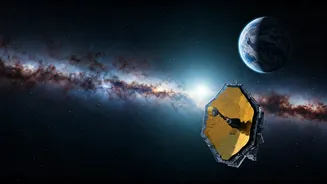
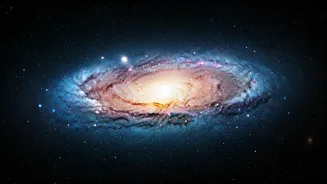
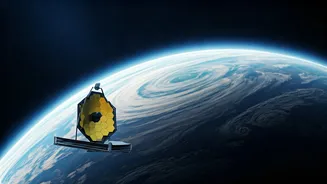
Thanks to the unparalleled power of the James Webb Space Telescope (JWST), astronomers are finally getting a clear picture of these cosmic clean-up crews. The primary suspects are small, intensely active galaxies that were forming stars at a furious pace. Recent observations of galaxies like MXDFz4.4, seen as it was about 1.4 billion years after the Big Bang, provide a stunning example. Though this galaxy was about 100 times smaller than our own Milky Way, it was forming stars about 10 times faster. This rapid star formation, packed into a very small space, created an incredible concentration of hot, massive, young stars. It was the intense ultraviolet light from these stellar nurseries that acted like a cosmic blowtorch, burning away the fog.
A Messy, Turbulent Job
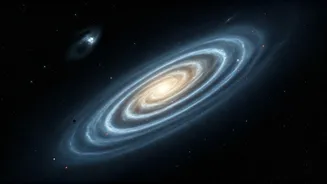
These early galaxies were not the majestic, orderly spirals we see today. Studies have shown they were messy, turbulent, and chaotic systems. They were rich in gas and prone to frequent mergers and collisions, which further fueled bursts of star formation. This chaos, it turns out, was key to their success as clean-up crews. The sheer density of young, hot stars in a compact area allowed them to overwhelm the local hydrogen gas, punching transparent bubbles in the cosmic fog. According to researchers, the combined effect of countless tiny galaxies each clearing a bubble around itself eventually led to those bubbles merging. Over hundreds of millions of years, these individual efforts linked up, and the entire universe became the transparent cosmos we can now observe.
A New Chapter in Cosmic History
Observing these galaxies in the act of clearing the fog is a watershed moment for astronomy. It confirms long-held theories about the Epoch of Reionization and provides a crucial piece of the puzzle of cosmic evolution. Discoveries of surprisingly bright galaxies like JADES-GS-z13-1, seen just 330 million years after the Big Bang, are challenging existing models because they appear to have cleared their surroundings far earlier than expected. These findings, made possible by the JWST's ability to capture faint infrared light from the distant past, are forcing scientists to refine their understanding of how quickly the first stars and black holes could form and impact their environment. We are not just learning about how the fog was cleared, but about the very nature of the first building blocks of our universe.