






In an age of cloud computing and instant data transfer, the image of a 3.5-inch floppy disk feels like a relic. Yet, these plastic squares have played a surprisingly persistent role in the high-stakes world of aviation. Now, that's finally changing.
The Floppy Disk's Final Flight
It
sounds like a joke, but for years, the Federal Aviation Administration (FAA) and certain aircraft have relied on floppy disks for critical operations. As recently as 2020, updating the navigation database on a Boeing 747-400, a workhorse of international travel, required a technician to load a series of eight floppy disks into a drive on the flight deck. This 28-day cycle was a physical, time-consuming process. Beyond specific aircraft, the FAA itself has used floppy disk-based systems in its air traffic control infrastructure. Legacy platforms, some dating back to the 1980s, have been used to provide controllers with vital weather and airport status information. The US Transportation Secretary recently confirmed the plan to phase out this decades-old technology by 2028, marking the end of an era.
Why Did Aviation Cling to Old Tech?
The persistence of floppy disks wasn't due to nostalgia or neglect; it was rooted in the rigorous logic of critical system management: reliability and certification. In aviation, the guiding principle is 'if it isn't broken, don't fix it', especially when 'fixing' it is extraordinarily complex and expensive. Any change to a flight-critical system, like swapping a floppy drive for a USB port, requires a massive recertification process with the FAA. This involves exhaustive testing to prove the new component is safe and reliable under all conceivable conditions. The cost of this paperwork and testing can run into millions of dollars, often making it cheaper to maintain the proven, albeit ancient, technology. Furthermore, these older, non-networked systems offered a unique form of cybersecurity. It is impossible to remotely hack a system that is physically disconnected from the internet, a concept known as an 'air gap'.
What Information Was on the Disks?
The data loaded via floppy disks was not tracking flights in real time. Instead, it involved periodic but essential updates. For aircraft like the 747, the disks contained navigational databases. These databases are like digital roadmaps for the sky, including information on airports, waypoints, and flight routes that pilots rely on for navigation. This data must be updated regularly, typically every 28 days, to reflect changes in airspace. For air traffic controllers, the floppy-based systems provided crucial operational data. This included weather reports, NOTAMs (Notices to Airmen) about potential hazards or airport changes, and the status of equipment across the airspace. While each 1.44 MB disk holds less data than a single modern smartphone photo, it was sufficient for the text-based information required by these legacy systems.
Entering the Modern Era
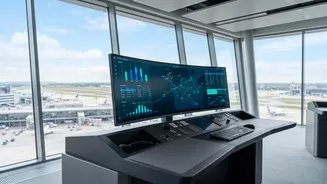
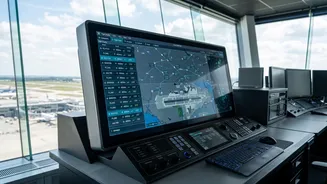
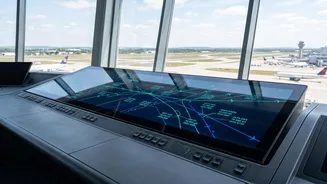
The FAA's modernization effort is a comprehensive overhaul of its aging infrastructure. The floppy disk_based systems are being replaced by a new platform called the Enterprise Information Display System (E_IDS). This new system consolidates four separate legacy platforms into a single, streamlined interface for air traffic controllers. It will provide real_time, shared access to critical weather, flight alerts, and airspace information, eliminating cumbersome manual processes. The rollout is already underway, with initial installations at airports like Nashville and Atlantic City, and is expected to expand to over 400 facilities by the end of 2028. This move is part of a broader, multi_billion dollar push to upgrade the entire air traffic control system, which has also involved replacing old copper wiring and paper flight strips with modern fiber optics and electronic versions.
The Challenge of a Critical Upgrade
Upgrading national air infrastructure is far more complicated than updating your home computer. It is a slow, deliberate, and incredibly expensive process. Congress has approved billions for the project, with cost estimates for the first phase alone exceeding $10 billion. The challenge lies in performing this technological heart transplant while the system is still live, managing 45,000 flights a day. Each new component must be integrated and certified without compromising the safety and reliability of the whole. Technicians need retraining, and new systems must be exhaustively tested for compatibility with the multitude of other technologies they interact with. The FAA's struggle to maintain its old systems, sometimes reportedly sourcing spare parts from eBay for old Compaq computers, underscores the urgent need for this modernization.