








An Introduction to Barda
Located just 15 km from the coastal city of Porbandar, the Barda Wildlife Sanctuary covers 192.31 square kilometres of rugged, hilly terrain. Historically, this land was the private hunting ground for the royal families of Porbandar and Jamnagar. It was officially
declared a sanctuary in 1979 to protect its incredible floral diversity and unique ecosystem. The landscape is a mix of southern dry mixed deciduous forest, northern tropical thorn forest, and patches of bamboo, crisscrossed by rivers like the Bileshvary and Joghri. This diverse terrain, home to pastoral communities like the Maldharis and Rabaris, has set the stage for one of India’s most ambitious conservation stories.
The Dense Forest Habitats
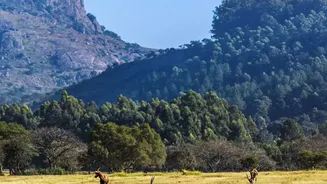
The forests of Barda are a rich tapestry of vegetation, boasting an impressive count of around 650 plant species, making it one of the most florally diverse areas in the state. The forest types include southern tropical and dry mixed deciduous forests, which create a dense canopy in certain areas. These woodlands are dominated by trees like teak, babul, jamun, and various acacia species. This dense cover provides an ideal habitat for a range of animals. The hilly, forested zones are preferred resting sites for predators like the Indian leopard and, more recently, the Asiatic lion, offering them cover, cooler temperatures, and reduced human disturbance. The forests are also a haven for medicinal plants, a natural pharmacy that has been part of the region’s traditional knowledge for centuries.
The Open Grassland Expanses
Contrasting with the dense forests are Barda’s open grassland patches. These areas are crucial for the sanctuary's herbivore population, providing vital grazing grounds. Species like the blue bull (nilgai) and wild boar are commonly found here, forming the primary prey base for the sanctuary's carnivores. Studies on the newly introduced lions show a preference for these grasslands within their core territories, likely for stalking prey. The sanctuary's management has been actively working to enhance this prey base, reintroducing species like sambar and chital (spotted deer) that once roamed here, ensuring the ecosystem can support its apex predators.
A New, Second Home for Lions
The most significant recent development at Barda is its designation as the second home for the Asiatic lion. For decades, the world’s only wild population of these magnificent cats was confined to the Gir Forest, leaving them vulnerable to disease or natural calamities. The 'Gir-Barda Project' was initiated as far back as 1979 to prepare Barda as an alternative habitat. This long-term vision became a reality in January 2023 when a male lion naturally dispersed from Gir to Barda. This was followed by the strategic translocation of several females by the Gujarat Forest Department to establish a new, breeding population. The move, part of the nationwide 'Project Lion', aims to create a secure, geographically separate population to safeguard the species' future.
Exploring Barda's Rich Biodiversity
While the lions are the headline act, Barda is teeming with other wildlife. It is home to leopards, striped hyenas, jackals, and wolves. The sanctuary is also a paradise for birdwatchers, with over 200 species recorded, including the crested hawk-eagle and other raptors. The mix of forest and grassland habitats supports a wide array of fauna, from reptiles and amphibians to dozens of butterfly species. Efforts to bolster the herbivore population, especially through the captive breeding and release of deer, have been ongoing to ensure the food chain remains robust and balanced. This holistic approach to conservation ensures that the entire ecosystem, not just a single species, thrives.